
Long-term storage is about more than finding room for your belongings. Long-term storage solutions in Adelaide vary in access: some facilities offer 24/7 entry, while others keep set business hours. Security features to look for include video surveillance, gated access and individual unit alarms.
It’s understandable to want household belongings or business stock kept secure and easy to manage while plans are on hold. The right arrangement depends on what you’re storing, how often you’ll need access and how carefully the items need to be protected.
This guide explains what to consider when comparing Adelaide storage locations, access and security, and how to prepare household and commercial goods for a longer stay. You’ll also find practical ways to organise stored items and see how storage can fit alongside a move or business relocation.
Key Takeaways
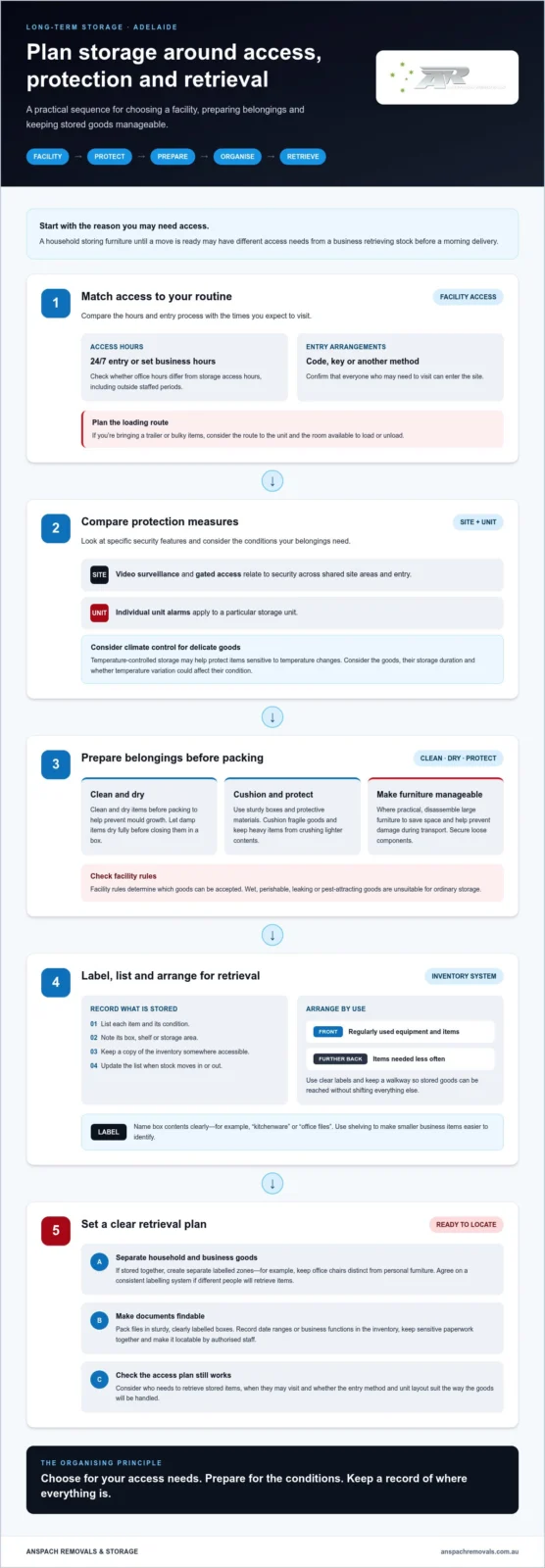
- Match facility access arrangements to how often you’ll need to retrieve household belongings or business stock.
- Compare security features such as video surveillance, gated access and individual unit alarms when assessing a storage facility.
- Keep a clear inventory and note where items are packed so business goods are easier to locate during storage.
- Prepare items carefully: store them clean and dry, use sturdy boxes and protective materials, and disassemble large furniture where practical.
- Consider how storage fits with a household move or commercial relocation to make the transition easier to organise.
Facility access
Access arrangements determine when you can retrieve belongings and how to plan each visit. Before choosing a long-term storage facility, compare its access hours, entry controls and conditions for storing your items.
Facility access hours
Some self-storage facilities offer 24/7 access, while others set specific business hours. A storage unit available around the clock can suit people needing flexible visits, but access still depends on the facility’s entry process. Ask yourself when you’re likely to need stored items, then compare those times with the facility’s stated hours.
What should you compare when choosing a long-term storage facility in Adelaide? Check access hours, entry arrangements, security features and climate control against your belongings and routine. Someone retrieving stock before a morning delivery, for example, needs different access from a household storing furniture until a move is ready.
Look beyond the advertised facility hours. Check whether office hours differ from storage access hours and how customers enter the site outside staffed periods. Find out whether access requires a code, key or another method, and whether everyone who may need to visit can use it. Clear arrangements help prevent a workmate or family member arriving without a way to enter.
Plan the loading process, too. If you’re bringing a trailer, consider whether there’s a suitable route to the unit and enough room to load or unload. Think through the vehicle, bulky items and who will be helping. A convenient entry point can make a practical difference when moving furniture or several boxes.
Security and climate control
Compare security features rather than relying on a general claim that a facility is secure. Features to look for include 24/7 video surveillance, gated access and individual unit alarms. Consider how each feature relates to your needs: gated access controls entry to the site, while an alarm applies to a particular storage unit.
Temperature matters for delicate belongings. Climate-controlled storage may help protect items from temperature changes, so consider it for goods sensitive to fluctuating conditions. Think about what you’re storing, how long it will remain there and whether temperature variation could affect its condition.
How do you prepare and pack belongings for long-term storage? Clean and dry each item before packing to help prevent mould growth. Use sturdy boxes and protective materials to reduce exposure to dust, moisture and damage, and let damp items dry fully before placing them in a closed box.
Pack with retrieval in mind. Cushion fragile goods appropriately, and avoid placing heavy items where they could crush lighter contents. Disassemble large furniture where possible to save space and help prevent damage during transport. Keep boxes stable and label them with their contents, such as “kitchenware” or “office files”, so you can find what you need without opening every container.
Business storage
Business storage can help when stock, equipment or records outgrow the available workspace. The right arrangement depends on what you’re storing, how often staff need access and how quickly operations must resume after retrieval.
Start with an inventory. Record each item, its condition and the box, shelf or area where it will be stored. A café storing spare chairs, for example, can list furniture separately from seasonal supplies. Keep a copy of the inventory somewhere accessible, not inside a box at the back of the unit.
Group goods by purpose and how often they’re needed. Place regularly used equipment near the front and rarely used items further back. Label containers clearly, then update the list whenever stock moves in or out. This simple system cuts down on searching and helps staff find an item without opening several boxes.
A mini warehouse-style space may suit businesses storing stock, tools, display materials or bulky equipment. Before choosing, estimate the volume of goods and consider how they’ll be arranged. Shelving can make smaller items easier to identify, while a clear walkway helps staff reach stored items without shifting everything else.
Think about the type of space as well as its size. An undercover area can keep furniture and equipment out of direct exposure, while a garage may suit goods that need convenient loading. Match the space to the items and the way your team handles them. An affordable option is useful only if its access and layout work for your business.
Household and business belongings can sometimes be stored together, but separate, labelled zones make them easier to manage. Keep office chairs distinct from personal furniture, for example, and mark each group on the inventory. If different people need to retrieve items, agree on a consistent labelling system before packing begins.
Documents need a retrieval plan, too. Put files in sturdy, clearly labelled boxes and record date ranges or business functions in the inventory. Keep sensitive paperwork together and arrange it so authorised staff can locate the right box without disturbing other records. For equipment, remove loose parts and pack them with the item they belong to.
What items are prohibited or need special preparation for long-term storage in South Australia? Facility rules determine which goods can be accepted. Treat anything wet, perishable, leaking or likely to attract pests as unsuitable for ordinary storage. Clean and dry equipment and furniture, secure loose components, and pack documents in closed, labelled boxes.
If your workplace needs room for stock, equipment or office furniture during a change in operations, explore business storage arrangements that fit the items and retrieval plan.
Security features
Security combines site controls, unit-level protection and careful handling. When comparing Adelaide facilities, look at the measures used in shared spaces and individual storage units rather than relying on a general security claim.
Start with the main entry. Gated access can restrict entry to people with authorised access, while 24/7 video surveillance can help record activity around the site. Consider where cameras are positioned, such as entrances, internal roads and loading spaces. Coverage matters: a camera at the gate offers a different view from one near storage areas.
Individual unit alarms add another layer of protection by focusing on a specific space. Consider how this measure works alongside site-wide surveillance and gated entry. These features serve different purposes, so combining them can provide broader oversight than relying on any one measure alone.
Convenient access should still be managed carefully. A clear entry process helps distinguish authorised visitors from others, especially when several staff members need to access business supplies. Limit access details to people who need them, and update your records when staff responsibilities change. This makes access easier to manage over a long storage period.
Use a practical comparison before selecting a facility:
- Site entry: Check whether gated access controls the route into the premises.
- Camera coverage: Look for 24/7 video surveillance, and note which entrances and shared spaces it covers.
- Unit protection: Identify whether individual storage units have alarms.
- Visit routine: Consider how staff or household members will enter and leave during each visit.
Match the security arrangements to the goods. A business storing valuable tools may prioritise unit-level protection, while boxed household items may need a straightforward, controlled access routine. Keep an inventory of stored belongings and record their locations. If a box or piece of equipment moves, update the list so you know what remains in each space.
Good packing supports security measures without replacing them. Use sturdy boxes, close them securely and label the contents clearly. Wrap fragile supplies separately, and don’t leave loose items where they can shift during handling. Photographing valuable items before storage can also help you keep a personal record of their condition and appearance.
Keep your access routine consistent. Close the unit after each visit, return keys or access devices to their usual place, and avoid sharing entry details casually. For a business, nominate someone to maintain the inventory and record visits. These simple steps make storage easier to oversee while the facility’s security measures protect the wider site.
Storage locations across Greater Adelaide
A convenient storage location depends on where you live or work, how often you’ll visit and what you’re moving. Compare the journey from your Adelaide suburb with the route you’ll take on collection day.
For regular access, a facility closer to home or work can make it easier to retrieve furniture, documents or supplies. Someone living near Glenelg might prioritise a western location, while a business in Adelaide’s CBD may prefer a site that fits its usual delivery routes. Consider traffic, loading access and whether each visit requires a separate trip.
Mount Barker may suit people living or working in the Adelaide Hills, particularly when stored goods will eventually return to that area. If you’re moving between Mount Barker and metropolitan Adelaide, consider where the items will be needed next. Storing belongings near their eventual destination can reduce unnecessary handling during a later move.
Greater Adelaide has varied travel patterns, so map the whole journey rather than judging a location by its suburb name alone. Note your starting address, likely route, vehicle access and the destination for stored goods. A site that looks close on a map might be inconvenient if it adds a detour to a regular work or school run.
Before choosing, compare each location against these practical points:
- Journey: Estimate the drive from your home, workplace or moving address.
- Retrieval: Consider how often you’ll collect items and who will visit.
- Loading: Think about the size of your vehicle, trailer or caravan.
- Preparation: Plan where packing supplies will be gathered and used.
Insurance for stored goods depends on the applicable policy and storage agreement, not on one standard cover for every Adelaide facility. Review whether your home or business policy covers belongings away from the insured premises, and check which exclusions, limits or damage events apply.
How much does long-term self-storage cost in Adelaide per month? The price depends on the space required, storage duration, access arrangements and the type of goods. Request a quote, and compare the full terms alongside the unit size rather than choosing by monthly price alone.
Are there minimum rental periods, notice requirements or fees for Adelaide storage units? These terms are set out in each storage agreement. Review the minimum stay, notice required to end the arrangement and any applicable fees before signing.
Vehicles and caravans need a suitable storage arrangement, not simply spare floor space. Consider the vehicle’s dimensions, how it will be moved in and out, and whether the location suits your travel route. For heavy-duty transport and commercial fleets requiring specialised recovery and secure holding yards, looking at operators like JTT Towing and Storage illustrates how heavy vehicle storage differs from standard lock-ups. Keep these needs separate from household boxes so the space and access plan suit each item.
For household goods, choose a location that makes collection manageable if your plans change. For business stock, prioritise a route that works for deliveries and staff visits. A clear destination plan helps you compare storage locations across Adelaide and Mount Barker without adding avoidable travel or handling.
Storage for household and commercial goods
For households comparing long-term storage solutions in Adelaide, the right choice depends on the goods, storage conditions and retrieval needs. A business may need a different arrangement for stock, office furniture or equipment.
What long-term storage options are available in Adelaide? Options include self-storage units for household belongings and storage arrangements for commercial goods such as stock, office furniture or equipment. Choose based on item size, storage conditions and how you’ll retrieve the goods.
For household storage, begin with a room-by-room list. Separate everyday essentials from belongings that can stay packed, such as spare bedding, books or dining chairs. Label each box by room and contents, then keep frequently needed items near the front. This makes settling into a new home easier without unpacking every carton.
Prepare belongings before storing them. Clean and dry items to help prevent mould growth. Use sturdy boxes and protective materials to help guard against dust, moisture and damage. Disassemble large furniture where possible, keeping screws and fittings in a labelled bag with the matching item. This can save space and help prevent damage during transport.
Commercial storage needs a different retrieval plan. A retailer holding seasonal stock can group cartons by product range, while a trades business can keep tools separate from spare materials. Create an inventory recording each item and its location. Update it whenever goods are added, removed or moved, so staff can find supplies without shifting unrelated boxes.
Consider how temperature may affect delicate goods. Climate-controlled storage is worth considering for items that need protection from temperature changes, including sensitive materials, particular furnishings or equipment. Identify these items before packing and keep them together so their storage requirements are clear.
For an office change, sort furniture, files and equipment by destination. Mark cartons for the relevant room or team, and keep essential items accessible for the next stage. A business reopening in a different space, for example, can group desks and chairs by work area rather than mixing them with archived paperwork.
Good packing makes household and commercial storage easier to manage. Wrap breakables individually, avoid overfilling boxes and place heavier cartons where they can be lifted safely. Keep an item list outside the storage space, with labels that match the boxes inside.
Choosing long-term storage solutions in Adelaide works best when the storage plan fits the move and the items involved. If you’re preparing a household move or workplace transition, consider packing and storage services to help organise goods for their time in storage.
Anspach Removals & Storage: Local Moves
Anspach Removals & Storage can help when a move and a period in storage need to fit together. Its Local Moves support household relocations within Adelaide, while Storage Services provide an option for belongings that can’t move straight into their next home.
For a move beyond the city, Country Moves cover relocations across South Australia, while Interstate Moves support journeys between states. Businesses planning a workplace change can also use Office & Commercial Relocations. The right moving service can help organise transport around your goods, destination and moving plans.
If you’re planning a household move or commercial relocation alongside storage, contact Anspach Removals & Storage or visit anspachremovals.com.au to discuss your next step.
Make room for your next move
Storage can provide breathing room when one stage of a move finishes before the next begins. Think about when you’ll need your belongings again, then build your plan around that transition. A clear return date and a simple list of priority items can make unpacking feel more manageable.
For long-term storage solutions in Adelaide, consider the move and time in storage as connected parts of one plan. Anspach Removals & Storage offers Local Moves, Country Moves and Interstate Moves, helping households plan relocations within Adelaide, across South Australia or interstate. Businesses changing premises can also use Office & Commercial Relocations.
Decide what needs to happen next, whether that’s moving household goods or coordinating a workplace transition. Contact Anspach Removals & Storage to discuss your plans and take the next step with confidence.
Frequently Asked Questions
What storage unit sizes are available in Adelaide, and how much space do they provide?
Adelaide storage unit sizes vary by facility, and capacity depends on floor area and usable height. To estimate your needs, list bulky items, measure furniture and count packed boxes. Compare the combined volume with the unit’s internal dimensions, allowing room to reach items you may need later. A clear inventory helps you avoid choosing space based only on the number of boxes.
Which Adelaide storage facilities offer climate-controlled, secure, or 24-hour access?
Some Adelaide facilities offer 24/7 access, while others have set hours. Features to look for include 24/7 video surveillance, gated access and individual unit alarms. Climate-controlled storage can help protect temperature-sensitive goods from temperature changes. Anspach Removals & Storage recommends Hendon’s Self Storage for periods ranging from a week to an indefinite timeframe. Consider access and environmental needs separately when comparing storage arrangements.
How can I protect furniture, documents, and valuables from heat, moisture, pests, and damage in storage?
Use furniture covers that protect surfaces without trapping moisture, and keep items off direct contact with the floor. Store documents in closed cartons, away from liquids and anything that could leak. Avoid storing food or anything with residue that could attract pests. Before packing valuables, photograph them and record identifying details, such as a model or serial number, in your inventory.
Where are long-term storage facilities located around Adelaide, and how do access and transport affect the choice?
Storage options around Adelaide include metropolitan locations and areas such as Mount Barker. Choose based on the route between your current address, the facility and the goods’ eventual destination. Frequent visits favour a convenient trip from home or work, while a one-off move may make the final delivery route more important. Also consider vehicle access, loading space and whether bulky furniture can be moved efficiently.