
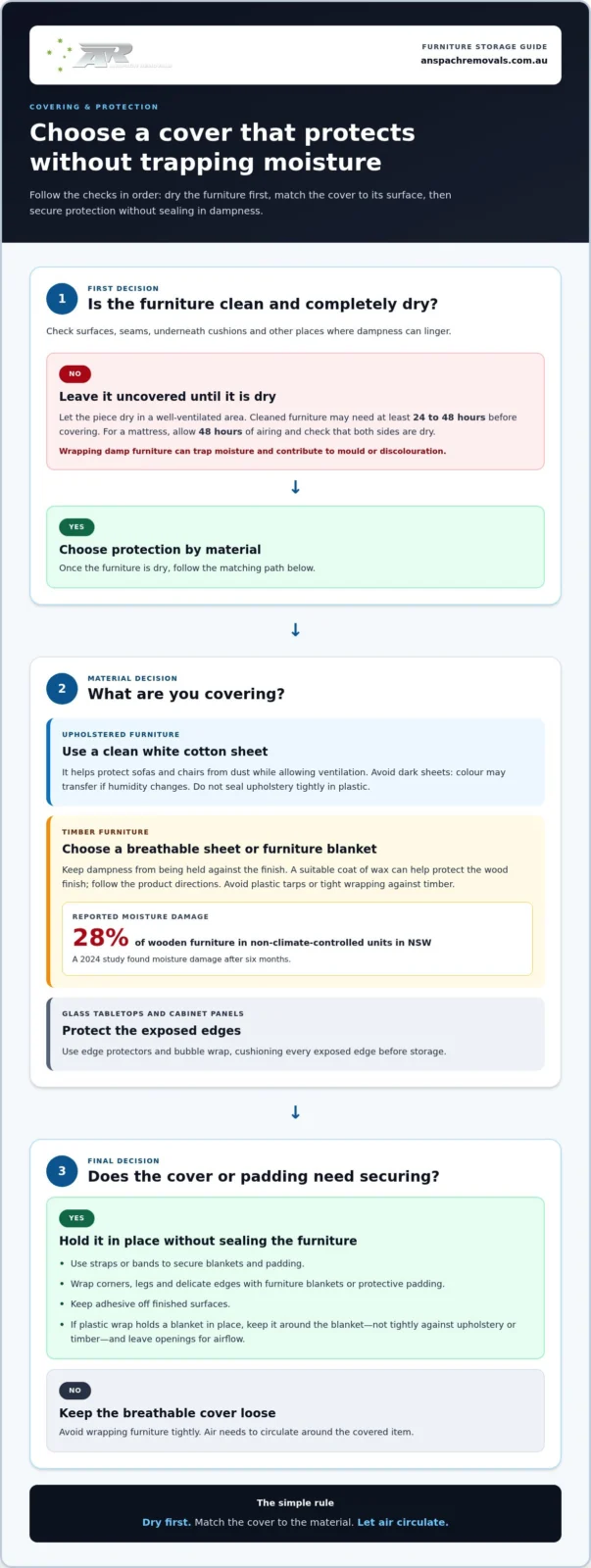
Plastic can protect furniture during a move, but it is a poor choice for long-term storage because it can trap moisture. An important part of preparing furniture for long term storage is to clean each piece, let it dry completely, then cover it with breathable fabric such as a sheet or furniture blanket. Leave items uncovered until they are dry, and avoid wrapping them tightly so air can circulate.
It is natural to want to protect valued furniture from dust, scuffs and knocks. Careful preparation helps reduce those risks and makes furniture easier to move and store. This guide explains how to clean and dry each piece, choose suitable covers, dismantle larger items and check furniture during storage, giving you a practical plan to follow.
Key Takeaways
- Clean furniture by material, then let it dry completely in a well-ventilated area before covering or storing it.
- Choose breathable sheets or furniture blankets; plastic can trap moisture against upholstery and timber.
- Where possible, dismantle large pieces and keep their labelled screws and bolts with the matching furniture.
- Leave space around covered items so air can circulate, and avoid stacking delicate or upholstered furniture.
- Inspect stored furniture every 3 months during the first year to spot moisture or other changes early.
Cleaning and drying furniture before storage
Choose a dry, well-ventilated storage space for long-term furniture storage. A garage or shed can expose items to moisture, pests and temperature changes. Clean each piece and let it dry completely before wrapping it or moving it into storage.
-
Clean wood, upholstered and leather furniture
Clean each surface according to its material. Wipe wooden furniture with a soft cloth and mild cleaner, then check joints and crevices for dust or grime. Vacuum upholstered furniture, including between cushions, and spot-clean marks without soaking the fabric. Use a suitable leather conditioner to help limit drying and cracking during storage. Remove crumbs and oily residue, which can attract pests or leave stains. Avoid excess liquid, especially around timber joints and upholstery seams.
-
Deep-clean and dry furniture
Vacuum, wipe or spot-clean furniture before it enters a storage unit, paying attention to chair legs, table legs and hidden surfaces. After cleaning, leave each piece in a well-ventilated area until it is completely dry. Allow at least 24 to 48 hours for cleaned furniture to dry before covering it. Check underneath cushions and along seams, where dampness can linger. Don’t begin wrapping while a surface still feels damp, as trapped moisture can contribute to mould or discolouration.
-
Clean and position mattresses
Vacuum the mattress and treat visible stains individually with an upholstery or carpet cleaner suited to the fabric. Let it air for 48 hours before bagging it for storage, and check that both sides are dry. A mattress bag can protect it from dust during handling, but only enclose the mattress once it has finished airing. Store the mattress flat rather than upright, so it remains supported across its surface. Keep it away from dirt and damp flooring.
-
Prepare each item for the storage space
Before moving furniture into a unit, container or garage, check that each piece is clean and free of damp patches, food residue and loose debris. A dry, ventilated space is preferable for long-term storage, as poor airflow can leave moisture against surfaces. If a garage or shed is your only option, keep furniture off the ground and away from areas where dampness or pests may be present. Wrapping cannot compensate for wet furniture or a damp storage space, so let each piece dry completely first.
Choosing breathable covers and protective materials
To limit mould, pests and surface damage, cover furniture only when it is completely dry and choose materials that allow airflow. Use padding to guard against knocks, but do not seal moisture beneath plastic.
-
Protect upholstered, wooden and glass furniture
Cover sofas and chairs with clean white cotton sheets. They protect fabric from dust while allowing ventilation. Avoid dark sheets, as colour may transfer if humidity changes, and do not seal upholstery tightly in plastic. For timber, choose a breathable sheet or furniture blanket that will not hold moisture against the finish. Protect glass tabletops and cabinet panels with edge protectors and bubble wrap, cushioning every exposed edge before storage.
-
Shield mattresses from dirt and moisture
Once a mattress has aired and is completely dry, use a clean mattress cover or storage bag to protect it from dust and handling marks. Check inside the cover first, since trapped dirt can rub against the mattress in storage. Keep the covering smooth rather than pulling it tight around the fabric. If you notice moisture before storing the mattress again, remove the cover and let the surface dry before enclosing it.
-
Apply padding and protective treatments
Wrap furniture corners, legs and delicate edges with furniture blankets or protective padding to reduce scratches and bumps during handling. Secure the material with straps or bands, not adhesive applied directly to a finished surface. For timber, a suitable coat of wax can help protect the finish. Follow the product directions. Fabric protection spray may suit upholstered pieces, but follow the label and let the treatment dry completely before covering the furniture.
- Match the wrapping to the item, not just the storage space. Plastic tarps can trap moisture and contribute to mould, discolouration or swelling in wood, so don’t use them as a sealed furniture cover. If you use plastic wrap to hold a blanket in place, keep it around the blanket rather than tightly against upholstery or timber, and leave openings for airflow. Before moving a dismantled table or bed frame, wrap small protruding parts in cloth or bubble wrap. For a relocation that includes stored furniture, storage services may be a practical option for keeping belongings together during the transition.
White cotton sheets remain the safer choice for upholstered pieces: dark sheets can bleed colour onto stored items if humidity shifts. If you need to keep a sheet or blanket in place, plastic wrap, rubber bands or straps can secure the covering. Keep plastic wrap away from upholstered furniture, where trapped moisture can encourage mildew growth.
Wooden furniture needs airflow to help prevent warping and mould, so avoid wrapping it in a way that holds dampness against the surface. A 2024 study found that 28% of wooden furniture stored in non-climate-controlled units in NSW showed moisture damage after six months. Wax offers another layer of care: a coat of wax can help protect wood finishes and reduce the risk of mould developing on furniture. Choose ties that hold a covering in place without pressing it tightly against the furniture, and check that the wood is dry before covering it.
Disassembling large furniture and labelling parts
Dismantle large pieces where practical before storage. A methodical approach protects joints, makes packing easier and keeps each item’s fittings together.
-
Disassemble larger furniture
Start with tables, bed frames and wardrobes that can be safely dismantled. Follow the maker’s assembly instructions where available, and remove only parts designed to come apart. Taking bulky furniture apart can make it easier to move and reduce strain on joints. Keep panels supported as you work, and don’t force a stuck fitting or pull against a fabric-covered section. Professional disassembly can reduce furniture volume by 30%.
-
Label furniture hardware
As soon as you remove screws, bolts and small fittings, place them in a separate labelled bag. Write the furniture name and relevant section on the bag, such as “bed frame, side rail”. Tape it to a sturdy, unfinished part of the furniture, or store it with a clearly labelled component. Keep hardware for different items separate, so wardrobe fittings do not get mixed up with table screws.
- Protect small parts that remain attached. Check each dismantled piece for protruding brackets, hinges or sharp corners before wrapping it. Cover exposed parts with cloth or bubble wrap, then secure the protection without sticking tape directly to timber, paint or fabric. For example, pad an exposed metal bracket on a table leg so it cannot catch on another item during handling or storage.
- Keep dismantled components grouped by furniture item. Stack matching bed-frame rails together, place wardrobe shelves beside their panels, and keep table leaves with the correct table. Label each bundle, not just the outermost piece, so its identity remains clear if components shift. Avoid placing heavy items on thin panels, which can bend or become marked under pressure.
- Make a simple assembly record before packing the last parts. Photograph a table’s leg positions or a bed frame’s rail connections, and note which labelled bag belongs to each piece. Store the record with your inventory, not loose among wrapping materials. Before moving anything, check that every removed fitting is in a labelled bag and every loose panel is protected. This final check makes reassembly more orderly when the furniture leaves storage.
Work through each large item methodically, removing as much as possible without forcing parts that are not designed to come apart. Tables, bed frames and wardrobes should be dismantled where possible, making them easier to move and reducing stress on their joints. Keep the pieces associated with the same furniture item as you work, so that the dismantled components and their fittings remain clearly connected. Small parts that protrude from a component can catch against other items, so cover them with cloth or bubble wrap before the furniture is packed.
As screws and bolts come away, place them in labelled hardware bags and attach each bag to the furniture it belongs to. Keeping the fittings with their item prevents hardware from getting mixed up and makes each bag easy to identify. Check dismantled furniture for protruding parts that could be exposed during handling, and protect them with bubble wrap or cloth. These steps cover the essentials: dismantle large furniture where practical, pad vulnerable parts, and keep each item’s fittings together.
Air circulation and breathable furniture covers
Arrange furniture in the storage unit with an access aisle and gaps between pieces. This leaves room to reach stored items and helps air circulate around covers and surfaces.
-
Use breathable dust covers and furniture pads
Cover each clean, dry item with a breathable fabric dust cover or furniture blanket. These materials help shield wooden tables, sofas and chairs from dust while allowing airflow. Add padding to corners and edges that could be knocked during handling. Secure covers loosely with straps or bands, and check they have not slipped onto the floor or become wound tightly around the furniture.
- Choose breathable fabric instead of a plastic tarp. Plastic can trap moisture against timber and upholstery, contributing to mould, discolouration or swelling. Avoid wrapping furniture so tightly that air cannot circulate. If plastic is needed to hold a furniture blanket in place, keep it over the blanket, not directly against the surface, and leave openings for ventilation.
-
Arrange furniture for access and airflow
Place heavier, stable furniture at floor level, with space between items instead of pressing them together. Keep an aisle through the storage unit if you may need to access belongings during storage. Position fragile pieces away from traffic paths, where passing items could bump them. Leave room around covers, especially where a sofa sits beside a wall or a wooden cabinet is close to another large piece.
- Plan the layout before moving furniture into the unit. Place items you may need first near the aisle, and keep fragile pieces clear of traffic paths. Do not stack chairs, couches or sofas, as extra pressure can strain their joints. Use stable furniture as the base of the layout, not as a platform for delicate items. A clear plan makes it easier to remove one piece without shifting everything around it.
- Inspect the arrangement after the last item is in place. Check that covers are not pinched between furniture, airflow gaps remain open, and no plastic is sealed against a surface. Confirm the aisle is clear and each item rests securely without leaning on another. Adjust any compressed blankets or blocked gaps before leaving. A careful final check can catch problems that were not visible while loading.
Inspecting furniture during long-term storage
Inspect stored furniture every 3 months during the first year, checking for moisture, pests and changes to surfaces. Don’t stack sofas or chairs, as extra pressure can strain their joints; keep upholstered pieces clear of damp and avoid placing heavy items on delicate furniture.
- Set a repeat inspection schedule. Check the furniture at 3 months, then 6 months, then 12 months for genuinely long-term storage. Add each date to a calendar and keep notes with your furniture inventory. A consistent routine helps you notice gradual changes, such as a new mark on timber or a musty smell around upholstery.
- Check for moisture before adjusting covers. Look for dampness on the floor, walls and nearby surfaces, then inspect furniture beneath blankets and around legs, joints and fasteners. Watch for water marks, swelling, discolouration or mould. If a cover feels damp, remove it carefully and let the affected piece dry before covering it again.
- Inspect timber and finishes closely. Check corners, joints and polished surfaces for warping, cracks, cloudy patches or changes in finish. Record any new damage with a dated photograph, then compare it at your next inspection. For valuable wooden pieces, a small hygrometer can help monitor relative humidity in the storage space.
- Inspect upholstery, leather and metal separately. Look between cushions and along fabric seams for damp patches, dust or pest activity. Check leather for signs of drying, then reapply conditioner every 6-12 months during long-term storage. Wipe metal joins and fasteners if dust or moisture appears, and dry them thoroughly before replacing protective covers.
- Review each item’s position during every visit. Confirm stable furniture remains secure, fragile pieces are away from traffic paths and covers have not slipped against sharp edges. Keep sofas, couches and chairs on their own rather than stacking them, as pressure can damage their joints. Check that mattresses remain flat and clear of damp flooring.
- Respond to changes instead of hiding them beneath a fresh cover. Record what you find, move affected pieces away from damp areas and restore airflow around them. If a garage or shed shows signs of moisture, pests or temperature changes, reassess whether it remains suitable for furniture storage. Regular inspection makes small issues easier to spot and address.
Need a storage arrangement that keeps furniture accessible for inspection? Arrange furniture storage as part of your move.
Anspach Removals & Storage: Local Moves
Anspach Removals & Storage can help when furniture needs moving as part of a storage plan. If you’re preparing a home for renovation, downsizing or a change of address, its Local Moves and Storage Services offer relevant support for the transition.
For a move beyond Adelaide, Country Moves and Interstate Moves can suit furniture travelling elsewhere in South Australia or interstate. Office & Commercial Relocations are available for businesses moving workplace furniture. These services can help when moving and storage are part of the same transition, whereas businesses managing commercial stock and e-commerce distribution can turn to 3PL warehousing providers such as boost3pl.com for large-scale fulfilment.
To discuss moving furniture to or from storage in Adelaide, contact Anspach Removals & Storage.
Plan the next move with confidence
Before furniture leaves storage, consider where each piece is going and how it will fit into the next stage of your home or workplace. A simple destination plan helps you decide what needs to be accessible first, what can stay packed and how to coordinate the move with your other commitments.
Careful preparation is one part of protecting your belongings during long-term storage; getting them to their next destination is another. Anspach Removals & Storage can assist with Local Moves, Country Moves and Interstate Moves, helping you plan transport for household furniture as your circumstances change.
When you’re ready to organise the move, share what needs relocating and where it’s heading. Contact Anspach Removals & Storage to discuss your next step. A clear plan can make the transition feel more manageable, and you can move forward at your own pace.
Frequently Asked Questions
Can I wrap furniture in plastic for storage?
Avoid wrapping furniture tightly in plastic for long-term storage, especially upholstered or wooden pieces. Plastic can hold moisture against surfaces and contribute to mildew, discolouration or swelling. If you use plastic wrap to keep a furniture blanket in place during handling, place it over the blanket rather than directly against the furniture. Leave openings around the cover for airflow, and do not use a sealed plastic tarp as a long-term cover.
Does wood furniture really need climate-stable storage?
Climate-stable storage is worth considering for wooden furniture kept longer than 2-3 months. Timber can respond to changes in moisture and temperature, which may affect its finish or shape. Before choosing a space, consider how long the furniture will be stored and whether the area is exposed to dampness or temperature swings. In Adelaide, this is especially relevant when household furniture will remain stored through changing seasons.
How often should I check on long-term-stored furniture?
Check stored furniture every 3 months during the first year, then use your observations to guide later visits. Bring a torch and inspect the back, underside and areas around joins, not just visible surfaces. Note any odour, marks or movement in a simple log, and compare photographs from earlier checks. This makes subtle changes easier to spot and gives you a clear record of which pieces need attention.
What packing materials are best for furniture storage in Australia?
Choose materials suited to the surface: furniture blankets for impact protection, breathable cotton covers for upholstery, and edge protectors with bubble wrap for glass. Labelled bags keep loose fittings organised, while silica gel packs can absorb moisture in enclosed storage spaces. For an Adelaide move, prepare materials before loading so you do not have to improvise with plastic directly against furniture. Make sure every cover is clean and dry before use.
What temperature and humidity conditions are best for long-term furniture storage
Wooden furniture stores best at 55 to 85 degrees Fahrenheit and 30 to 50% relative humidity.