
A few well-placed layers can help protect furniture from scuffs and damage during a move. For furniture protectors for moving, use blankets or furniture pads to cushion timber pieces, stretch wrap to hold coverings and cushions in place, and cardboard or plastic sheets to help protect floors. Pad door frames and wall corners too, where furniture is most likely to bump them.
It’s easy to focus on wrapping furniture and overlook the route it needs to travel. A protected sofa can still scrape a doorway, while loose drawers or detachable cushions can shift as items are carried.
This guide explains how to use moving blankets and stretch wrap, protect floors and doorways, and decide which furniture needs extra care. You’ll also learn how to prepare delicate finishes, glass and removable parts before moving day.
Follow a simple order: assess each item, choose suitable coverings, then protect the route through your home. This helps you move with care and feel more confident about what arrives at your new place.
Key Takeaways
- Choose moving blankets or furniture pads to cushion larger pieces, and secure the coverings without placing tape directly on delicate finishes.
- Protect the route as well as the furniture: cover vulnerable floor areas and pad door frames and wall corners before carrying items through.
- Remove detachable cushions before wrapping upholstered furniture, then use stretch wrap to hold coverings and loose parts in place.
- Give extra attention to glass, delicate finishes and removable components, and decide what needs protection by checking each item before moving day.
Protective blankets as packing materials
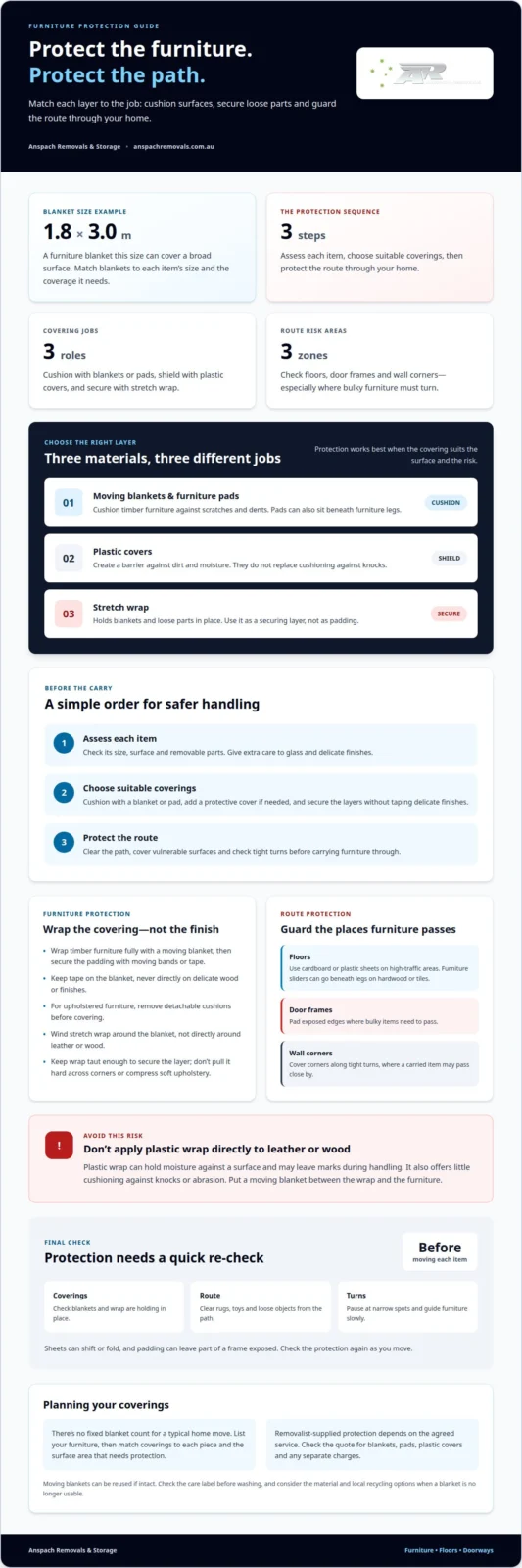
Match each covering to the furniture’s surface and protection needs. Blankets cushion, plastic covers shield items from dirt and moisture, and stretch wrap secures coverings.
Moving blankets and furniture pads
Moving blankets and furniture pads cushion timber furniture against scratches and dents. Wrap a piece fully, then secure the padding with moving bands or tape. Keep tape on the blanket, not a delicate finish. A furniture blanket measuring 1.8 m by 3.0 m can cover a broad surface, while pads can sit beneath furniture legs.
The right furniture protectors for moving depend on which pieces need coverage, their size and how much of each surface the blanket must cover. There’s no fixed blanket count for a typical home move, so list your furniture first and match coverings to each item.
Comparing blankets, covers and stretch wrap
Blankets and pads cushion furniture, while plastic covers create a barrier against dirt and moisture. Stretch wrap holds coverings in place and can keep cushions or drawers from shifting. For a sofa, remove detachable cushions, cover it with a blanket, then secure the layer with stretch wrap. Avoid putting tape directly on delicate wood.
Choose furniture protectors for moving by matching the material to the job: cushioning, surface coverage or fastening. In Australia, protector costs depend on the case and are given after a quote request; factors include material, quantity and furniture size.
Removalist-supplied protection
Australian removalists may supply furniture protection, but whether it’s included in the quote depends on the agreed service. Check the quote for details about blankets, pads and plastic covers, including any separate charges. A clear list helps you plan what to prepare for moving day.
Moving blankets can be reused if they remain intact. Check the care label before washing, and consider the material and local recycling options when a blanket is no longer usable.
Place moving pads beneath furniture legs to help prevent floor scratches and absorb shocks during the move. This focuses protection under the legs, where it can help limit scratches as you shift the item.
Protecting floors, walls and door frames
Map the route from each room to the exit before carrying furniture. Hardwood and tiled floors can be scratched by furniture legs, while tight doorways and wall corners are exposed to bumps. Protect the path as well as the item, especially where a large piece needs to turn.
Start by clearing rugs, toys and loose objects from the route. Then identify vulnerable surfaces, such as a polished timber floor, tiled hallway or narrow doorway beside a staircase. This quick walk-through helps you place protection where furniture and foot traffic will pass, rather than covering areas you won’t use.
For hard floors, furniture sliders can go beneath furniture legs to help move heavy items across hardwood or tiles without scratching them. Position a slider beneath each leg before shifting the piece, and move it steadily. Don’t drag an unprotected leg across the floor. Check the furniture’s balance as you move, particularly when turning through a hallway.
- High-traffic floors: Lay cardboard sheets or a plastic sheet along the route to help prevent scratches and scuffs. Cover the entry, hallway or other areas used repeatedly.
- Door frames: Place padding or a blanket over exposed frame edges where bulky items need to pass. Pay particular attention to the side closest to a sofa, table or wardrobe.
- Wall corners: Cover corners along tight turns with padding or blankets. A table carried sideways, for example, may pass close to the corner even when its centre clears the doorway.
Before moving each item, check the path again. A floor sheet can shift or fold, and a blanket may leave part of a frame exposed. Pause at narrow turns, guide the item slowly and keep its edges clear of walls. These small checks help keep your protection effective throughout the move.
If coordinating furniture and access through your home feels like a lot to manage, explore support for planning your move.
Padding or blankets can cover door frames and wall corners to help prevent damage from furniture bumps. Keep the covering in place on exposed edges as furniture passes, particularly where an item may come close to a frame or corner.
Stretch wrap for securing coverings and cushions
Stretch wrap works best as a securing layer, not as a replacement for padding. Use it to hold a blanket around upholstered furniture and keep detachable parts together.
Avoiding scratches and moisture damage
To wrap furniture safely, first remove detachable cushions and place a moving blanket over the upholstery. Wind stretch wrap around the blanket, not directly around the furniture, to hold the covering in place and help shield the piece from dirt and moisture. Keep the wrap taut enough to secure the blanket, but don’t pull it hard across corners or exposed finishes.
Risks for leather and wooden furniture
Plastic wrap applied directly to leather or wood can hold moisture against the surface and may leave marks during handling. It also offers little cushioning against knocks or abrasion. For a timber cabinet, cover the finish with a moving blanket before using wrap to hold the layers together. Keep tape off the furniture itself.
For a sofa, remove each detachable cushion before wrapping. Set the cushions together, then secure them against the covered sofa with stretch wrap. This helps keep loose parts from sliding separately while the item is carried. Keep the wrap away from delicate surfaces, and don’t use it to compress soft upholstery.
Stretch wrap can also help keep drawers in place during a move. First check that each drawer is fully closed, then wrap around the outside of the covered furniture to hold it shut. If a drawer protrudes or won’t stay closed, remove it rather than tightening wrap across the front. This avoids pressure on handles and drawer edges.
Inspect the covering before moving the item. Check that the blanket covers exposed corners, the wrap holds it securely, and no adhesive touches the finish. For a wooden table, keep the wrap around its padding rather than winding it directly around the timber. Use a fresh layer if the first one has loosened or torn.
Think of stretch wrap as the final fastening step in a simple sequence: remove cushions, cover the furniture, then secure the covering. This helps keep dirt and moisture away while adding a buffer against surface contact. Snug, intact wrap holds the layers together but does not replace a protective blanket.
Assessing which furniture needs extra protection
Protect sofas with a removable cover, mattresses with a mattress bag, and tables with padding. Before wrapping timber furniture, clean it and check for existing marks.
Identifying furniture needing extra protection
Inspect each item before packing. Look for delicate finishes, glass panels, exposed corners, loose fittings and parts that could shift. A glass tabletop or dresser mirror needs separate attention from a sturdy, solid piece.
Remove shelves and drawers from cabinets, wardrobes and bookshelves so they can’t shift during transport. Where needed, disassemble large bed frames, tables and shelving units, then place screws and bolts in clearly labelled bags. This keeps small components together for reassembly.
Protection for sofas, mattresses and tables
For sofas, remove detachable cushions before covering the upholstery. A lounge protector can help cover a larger piece; the 3 Seater Lounge Protector measures 305 cm by 182 cm. Secure coverings around the sofa, and keep cushions together so they’re easier to handle.
Use a mattress bag or mattress box to help shield a mattress from dirt and damage. The Single Mattress Protector measures 225 cm long by 120 cm wide, with a 25 cm gusset. The Queen Mattress Protector measures 250 cm long by 160 cm wide, with a 30 cm gusset. Wrap glass tabletops separately in bubble wrap, then protect both sides with cardboard.
Protecting wooden furniture
Clean timber surfaces before wrapping to make existing wear easier to spot. Cover the finish with a moving blanket or furniture pad, then secure the layer without sticking tape directly onto delicate wood. Pay particular attention to exposed corners and legs on tables.
If a wooden dresser has an attached mirror, remove it and pack it separately with bubble wrap and cardboard. Keep labelled bags of screws and bolts with the corresponding furniture, so the pieces can be reassembled without searching through loose parts.
Use move planning support to organise protection for furniture that needs extra care.
Anspach Removals & Storage: Local Moves
Anspach Removals & Storage can help coordinate your Adelaide move, from preparing household furniture to getting it to your new home. Its Local Moves service is designed for moves within Adelaide, while professional packing services can help protect furniture and belongings.
Moving farther across South Australia? Anspach Removals offers Country Moves and Interstate Moves for relocations beyond local moves. For a workplace relocation, its Office & Commercial Relocations service handles business furniture and equipment. The right option depends on your destination and whether you’re moving home or work.
Before getting in touch, note your origin and destination, the furniture needing extra care, and any access details that could affect the move. These practical details help make the conversation more focused. Contact Anspach Removals & Storage to discuss your move and the support you need.
Set up your next move with confidence
Build furniture protection into your moving plan instead of leaving it until moving day. A short preparation list can help you decide which pieces need careful handling, what to get ready beforehand and how to keep the move organised around your household. Choosing furniture protectors for moving is part of that preparation, as is allowing time to get furniture ready and keeping important details easy to find. A little planning can make the change of home feel more manageable.
If you’re arranging a move and want support with the bigger picture, speak with Anspach Removals & Storage about your plans. Share where you’re moving from and to, and which belongings matter most to you. Discuss your move with Anspach Removals & Storage and take the next step at a pace that feels right.