
Plan a move across Australia at least six to eight weeks ahead, and check which belongings can travel with you. Moves across state lines may restrict items such as certain plants. These are the DIY moving mistakes to avoid if you want to prevent last-minute surprises and make moving day easier to manage.
It’s easy to focus on packing and leave practical details until later. But unclear box labels, late utility arrangements and belongings you no longer need can all add pressure to moving week.
This guide covers when to start planning, how to organise boxes and an inventory, and what to arrange for utilities and accommodation. You’ll also find practical ways to declutter before moving and keep essentials close at hand while settling into your new home.
Key Takeaways
- Start planning a cross-country move at least six to eight weeks ahead, then map key tasks against moving day.
- Label each box with its destination room and contents, and keep an inventory to make unpacking more straightforward.
- Arrange utilities and accommodation early, and let relevant parties know promptly if your moving plans are delayed.
- Declutter before packing by sorting belongings into what to keep, donate or sell, so you have less to move.
1. Labelling boxes and keeping an inventory
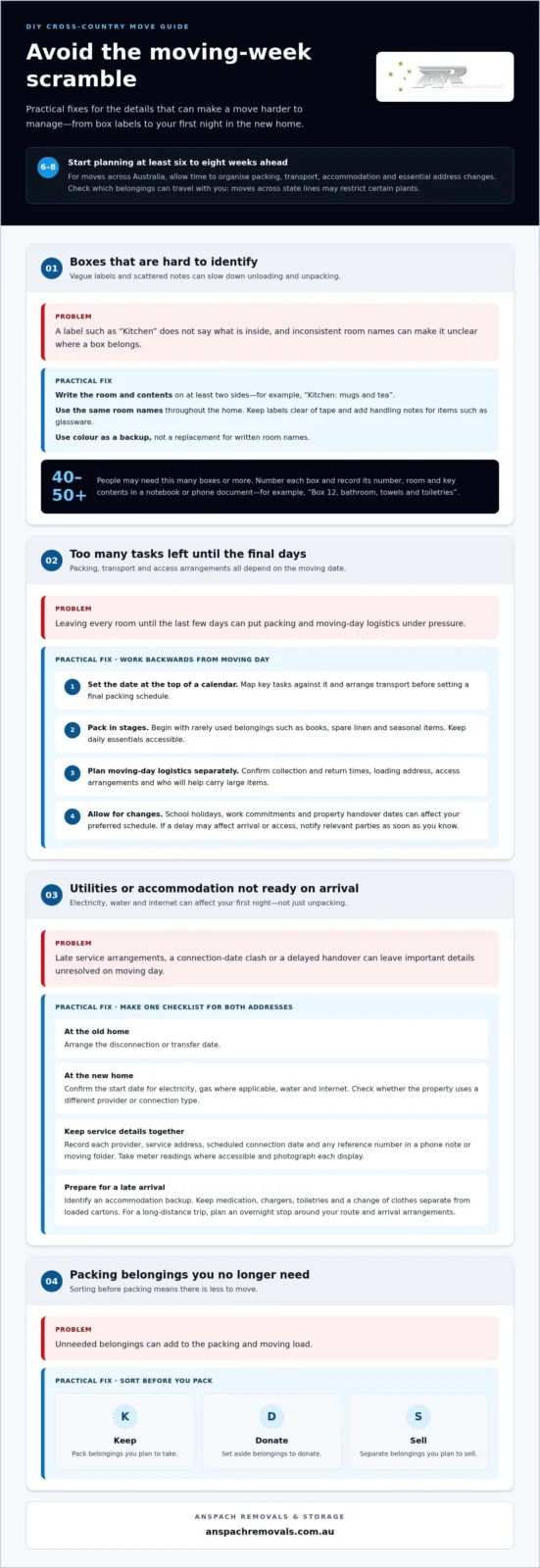
Treat each box as a separate destination, not just another container. Write the room name and a short description of the contents on at least two sides, so labels stay visible when boxes are stacked. For example, mark a carton “Kitchen: mugs and tea” rather than simply “Kitchen”. Clear labels make it easier to direct boxes and find everyday items after arrival.
Use the same room names throughout your home. Write “main bedroom” rather than switching between “bedroom”, “upstairs room” and “our room”. Add a handling note for items such as glassware, and keep the label clear of tape. Colour-coded markers can help, but include written room names in case colours are hard to distinguish.
Create a simple inventory as you pack. Give each box a number, then record that number, its room and key contents in a notebook or phone document. A line such as “Box 12, bathroom, towels and toiletries” is more useful than a vague entry. People may need 40–50 or more boxes, so a running list can help locate items without opening cartons.
Is DIY moving cheaper than hiring removalists in Australia? It can be, but compare the full cost of truck hire, fuel, insurance, packing supplies, tolls and accommodation with a removalist quote. Factor in your time and the effort of loading and unloading, not just the vehicle charge.
What Australian driver licence do you need to drive a rental moving truck? It depends on the truck’s vehicle class and the licence rules in your state or territory. Before booking, compare the truck’s gross vehicle mass with your licence conditions and the rental company’s requirements.
How do you safely lift and carry heavy furniture? Clear the route, remove loose items such as drawers, and use a suitable trolley for bulky pieces. Get help with awkward furniture and agree on the route first. Put the item down if you can’t control it comfortably.
To find free boxes, ask local shops or community groups whether they have clean, sturdy cartons available. Check each box for damp patches, crushed corners or weak seams before packing. Choose sizes you can lift when filled, and reserve stronger cartons for books or kitchenware.
2. How far in advance should I start planning my cross-country move?
Start planning a move across Australia at least six to eight weeks ahead. This gives you time to organise packing, transport, accommodation and essential address changes. Put the move date at the top of a calendar, then work backwards through tasks that depend on it. For example, arrange transport before setting a final packing schedule.
How far in advance should you plan and book a DIY move in Australia? Begin at least six to eight weeks before moving day, then book a suitable truck once you know your route, load and dates. School holidays, work commitments and property handover dates can affect your preferred schedule, so allow for flexibility.
Break packing into manageable stages instead of leaving every room until the final days. Start with belongings you rarely use, such as books, spare linen and seasonal items. Keep daily essentials accessible, and set a final packing day for things you use every day. A written timeline can assign a packing date to each room and show what remains.
Plan moving-day logistics separately. Confirm collection and return times, the loading address, access arrangements and who will help carry large items. Share the route and meeting point with everyone helping. If a delay looks likely, notify relevant parties as soon as you know it could affect arrival or access.
What are the rules for parking a moving truck and reserving a loading zone in Australian cities? Parking and loading rules vary by council and street, so check the signs and local requirements at both addresses. Include truck access, stopping restrictions and any loading-zone booking process in your moving-day plan.
How do you estimate the right moving truck size for a home? Make an inventory of furniture, appliances and packed boxes, then compare the total load with the vehicle’s usable capacity. Account for bulky items and access limits, not just the number of rooms.
What insurance covers belongings damaged during a DIY move in Australia? Read the policy wording to see whether belongings are covered during loading, transit and unloading. Compare exclusions, excesses and claim requirements before relying on the cover.
For a country move, professional moving support can take transport and handling tasks off your list.
3. Arranging utilities and accommodation
Electricity, water and internet affect your first night, not just your unpacking schedule. Contact each utility company well before moving day and arrange for services to be connected before you arrive. Record connection dates alongside your property handover details so you can spot a clash early.
Make a simple service checklist for both addresses. At the old home, arrange the disconnection or transfer date; at the new home, confirm the start date. Include electricity, gas where applicable, water and internet. If the new property uses a different provider or connection type, note that while setting up the account rather than discovering it among unpacked boxes.
Keep account details together in a phone note or moving folder. Record each provider, the service address, scheduled connection date and any reference number supplied. On moving day, take meter readings where accessible and photograph the display at each property. This gives you a clear record of the handover.
Have a practical accommodation backup in case keys, settlement or transport run late. Identify where you could stay, and keep essentials accessible for that night. Pack medication, chargers, toiletries and a change of clothes separately from cartons already loaded. If you’re travelling a long distance, plan an overnight stop around your route and arrival arrangements.
If a delay becomes likely, tell relevant parties as soon as you know it will affect the move. Contact the accommodation provider, utility companies and anyone managing access to the property. Share updated arrival or handover details, then ask what changes are needed to existing arrangements. A prompt message can help prevent a booked stay or service connection from being missed.
Before leaving the old address, check every room for belongings and note any access instructions for the next occupant. At the new home, test the arranged services before unpacking appliances or setting up work. If the internet connection isn’t active, organise your first evening around mobile access or another workable option. Keep the utility checklist handy until every service is running.
4. Decluttering before a move
Sort belongings before packing, while each item is still easy to assess. Work through one area at a time, such as the laundry cupboard, spare room or garage shelves. Create three clear groups: keep, donate and sell. This prevents unwanted items from being packed, carried across the country and unpacked again.
Use a practical test for each item: will it suit the new home, and do you use or value it? For example, measure a bulky bookcase against the new room’s layout before deciding to move it. If it won’t fit, selling or donating it may be simpler than transporting it.
Set aside donations in a clean, labelled bag or box, separate from packed belongings. Choose a local charity or community organisation whose needs match the items you have. Group sale items together and take clear photos before listing them or arranging a garage sale.
Start with belongings you rarely use, such as spare kitchenware, old sporting gear or out-of-season clothes. Keep daily essentials until closer to moving day. This leaves the kitchen, wardrobe and bathroom usable while reducing the number of items still waiting to be sorted.
Check cupboards, drawers and storage areas again after your first sorting pass. Small items often hide in bedside tables, under beds or at the back of a pantry. Make a short room-by-room checklist and tick off each space once it’s clear. Keep important documents and personal keepsakes together, away from donation and sale piles.
For a garage sale, group items by type and display them where visitors can see them clearly. Set aside anything unsold for donation or another planned use, rather than returning it automatically to storage. If you want help managing the move after decluttering, arrange moving support to suit your household and destination.
Anspach Removals & Storage: Local Moves
Anspach Removals & Storage can take transport and handling off your moving-day list with its Local Moves service. If you’re moving within Adelaide and would rather not coordinate a truck, helpers and heavy furniture yourself, professional moving support can make the practical side easier to manage.
For moves beyond Adelaide, Anspach Removals & Storage also handles Country Moves across South Australia and Interstate Moves. Businesses planning a workplace move can use Office & Commercial Relocations. Consider which parts of the move you want help with, then choose the service that suits your destination and needs.
If managing every detail yourself is becoming too much, contact Anspach Removals & Storage to discuss your move.
Choose how you want to move forward
Decide which parts of moving day you want to manage yourself and which you’d rather leave to experienced movers. Use the DIY moving mistakes to avoid as a final planning check: where does your plan still rely on last-minute effort, extra hands or a tight schedule? Identifying those pressure points can help you choose a practical level of support.
Anspach Removals & Storage can help with professional transport and handling for your move. Get in touch when you’re ready to discuss what you’re moving and where you’re headed. A clear conversation about your needs is a useful starting point for planning the next stage.
Contact Anspach Removals & Storage to discuss your move. With a plan that fits your circumstances, you can approach moving day with greater focus and confidence.
Frequently Asked Questions
How far in advance should I start planning my cross-country move?
Start planning at least six to eight weeks before moving day. Work backwards from your settlement and arrival dates, marking tasks that rely on other people or bookings. For example, confirm property access before finalising the truck collection plan. Keep deadlines in one calendar and contacts in one list, so changes don’t get lost across messages.
What should I do if I encounter unexpected challenges or setbacks during my cross-country move?
First identify what the setback affects: your travel, property access, arrival time or ability to unload. Then adjust the parts of your plan that depend on it. If your keys are delayed, for example, organise a safe place for essential belongings and confirm where you can stay. Keep receipts, messages and revised arrangements together to track decisions while managing the disruption.
What are the most common DIY moving mistakes to avoid?
Common DIY moving mistakes to avoid include overloading cartons, blocking narrow walkways and packing important documents where they’re hard to reach. A box of books can become awkward to carry, even if it closes neatly. Keep pathways clear, use manageable cartons and put keys, identification, medication and moving paperwork in a bag that stays with you.
How should you pack fragile items and protect furniture when moving yourself?
Wrap fragile items individually, then pack them snugly in a sturdy carton with cushioning around each piece. Pack plates upright rather than stacking them flat. Protect furniture with clean covers, and pad corners that could scrape walls or doorframes. Remove loose parts, such as shelves or table legs, and keep screws in a labelled bag attached to the item.
What should you do about utilities, address changes and mail before moving in Australia?
Make one address-change list covering your bank, employer, insurer, subscriptions and relevant government records. Update each account with the date your new address becomes current, and keep confirmation emails together. Contact utility providers separately about connection or disconnection arrangements. Arrange mail forwarding or redirection before leaving, and tell regular senders your new address so important letters don’t go to your former home.