
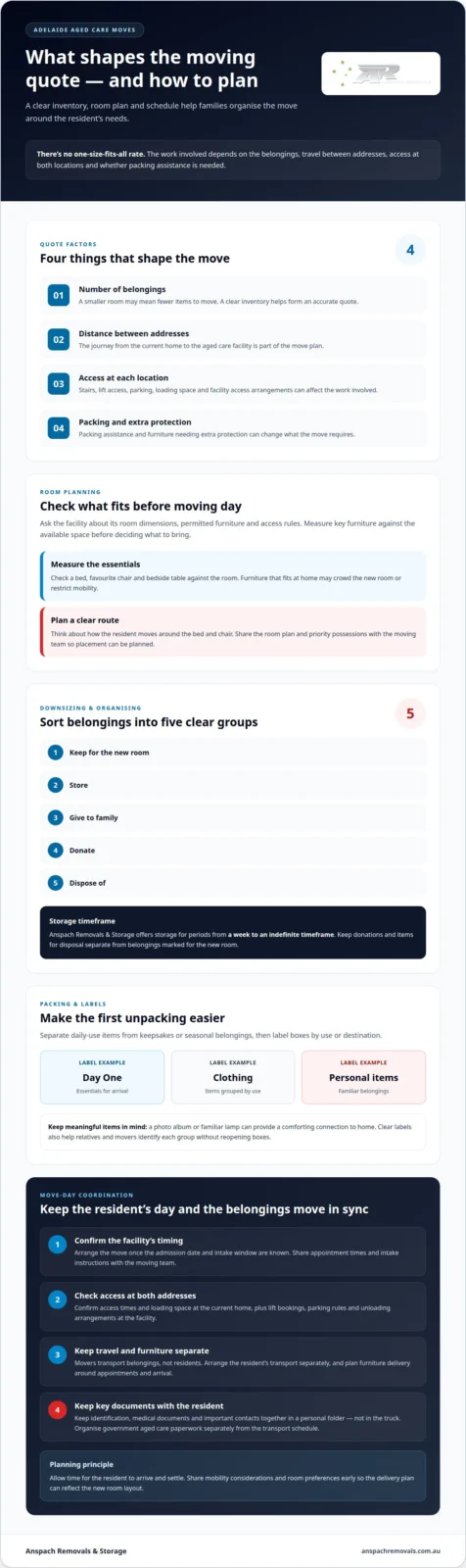
The cost of an aged care move in Adelaide depends on the details of the move, not a one-size-fits-all rate. For aged care facility moving services in Adelaide, the main factors include the number of belongings, the distance between addresses, access at each location and whether packing assistance is needed.
It’s understandable to want a clear budget while making sure a loved one’s belongings are handled with care. A smaller room may mean fewer items to move, while stairs, lift access, parking arrangements or furniture needing extra protection can affect the work involved.
This guide explains what shapes a moving quote and how to plan around facility intake times and appointments. You’ll also learn how packing, labelling and protective wrapping can keep belongings organised for transit, helping you prepare with greater confidence.
Key Takeaways
- Moving costs depend on the belongings, distance, access at each location and packing support required, so a clear inventory helps shape an accurate quote.
- Room dimensions, permitted furniture and facility access arrangements help determine what can move and where it should be placed.
- Coordinating the move around appointments and facility intake times can make moving day easier to manage.
- Professional packing, clear labels and protective wrapping help keep essentials organised and fragile or sentimental belongings secure in transit.
Support with moving to retirement living
Moving from home to retirement living involves more than transporting furniture. Start by asking the aged care home about room dimensions, access rules and permitted furniture. Measure a bed, favourite chair and bedside table against the available space. This helps the family decide what to move and where each item may fit before moving day.
To compare aged care moving companies, look for relevant experience, clear written details of insurance cover and reviews that describe specific moving experiences. Consider whether feedback mentions careful handling, communication and coordination with a care home. These details help families assess how a company approaches the practical needs of a retirement move.
Movers transport belongings, not residents. Families should arrange the older person’s transport separately, coordinating with the facility where appropriate. Keeping the resident’s travel plan separate from furniture collection makes it easier to account for appointments, arrival times and personal comfort.
Professional movers can coordinate access, lift bookings, parking and timing for the belongings move. Families can share the facility’s move-in requirements, a list of items and room measurements. A hospital social worker can also help families plan a transition into residential aged care, according to South Eastern Sydney Local Health District.
Involve the older person in decisions about familiar belongings, such as a favourite chair, photographs or a bedside lamp. Keep identification, medical documents and important contacts together in a personal folder. Discuss clinical and daily living needs with the facility separately from the furniture plan, so care arrangements don’t get confused with moving tasks.
Furniture placement can affect safety and everyday movement. Plan clear routes around the bed and chair, taking into account how the resident moves through the room. Confirm meal arrangements with the aged care home, including where dining takes place. A family contact can share preferences and help the resident settle into new routines.
Move-day scheduling by professional movers around medical appointments and intake times
Arrange the move once the residential aged care admission date and intake window are known. The schedule should account for medical appointments, facility check-in and the time needed to load and deliver belongings. If an appointment falls on moving day, plan furniture transport around it so the resident’s arrival doesn’t compete with loading.
Start with the facility’s move-in requirements. Intake times, access arrangements, lift bookings and parking rules all affect when a moving vehicle can arrive and unload. At the current home, confirm access times and loading space too. Sharing details for both locations helps movers plan the sequence and avoid delays, such as arriving before a lift booking or finding no suitable loading space.
A practical schedule separates the resident’s journey from the belongings transfer. For example, a family member can accompany the older person to the care home while movers transport furniture and labelled boxes. Keep the personal folder with identification, medical documents and key contacts with the resident, not in the truck. That way, the receiving team has the information needed for intake while the move proceeds.
Share appointment times, intake instructions and mobility considerations with the moving team early. These details help with planning arrival, loading and delivery, including furniture placement to suit the room layout. Keep government aged care paperwork organised separately from the transport schedule. Allow time for the resident to arrive and settle, rather than treating the day as a simple furniture delivery.
For an Adelaide household move, a local moving service can help coordinate transport around the facility’s timing. Provide the confirmed intake window and appointment schedule when arranging the move, so the logistics can be planned around the resident’s day.
Professional packing and organising of possessions for an aged care move
Good organisation helps belongings arrive ready for the new room. Professional packing can keep everyday essentials accessible while furniture and boxes travel together.
Belongings and Facility Rules
Aged care homes in Adelaide can have different room layouts and move-in requirements. The facility’s permitted furniture, room dimensions and access arrangements determine what can be brought in. A bed, chair or cabinet that fits the old home may crowd the new room or restrict mobility.
Professional movers can transport approved furniture and personal belongings, then place items according to the room plan. Families can provide the facility’s requirements and a list of priority possessions. This helps the moving team distinguish, for example, a bedside table for immediate use from extra furniture that won’t fit.
Downsizing, Storage and Donations
Start downsizing by sorting possessions into clear groups: keep, store, give to family, donate or dispose of. This reduces unnecessary items in transit while helping the older person retain meaningful belongings. A photo album or familiar lamp can provide a comforting connection to home during the change.
For items that won’t fit, secure storage can be a practical option while the family decides what to do next. Anspach Removals & Storage offers flexible solutions for periods from a week to an indefinite timeframe. Keep donations and items for disposal separate from belongings marked for the new room. Clear labels help relatives and movers distinguish each group without reopening boxes.
Packing, Labelling and Room Setup
Professional packing assistance can organise belongings by use and destination. Label boxes “Day One”, “Clothing” or “Personal items” to make essentials easier to find after arrival. Pack daily-use items separately from keepsakes or seasonal belongings. Moving boxes help keep smaller possessions contained and grouped during transport.
Movers can protect furniture for transit and arrange it in the new room to support clear pathways and mobility. Unpacking priorities might include clothing, toiletries and a favourite chair, followed by less-used items. A simple inventory helps track what is moving, going into storage or staying with family, keeping the plan clear from packing through delivery.
Professional packing and protection of fragile or sentimental belongings
A framed family photograph, a favourite teacup or a small keepsake can carry deep meaning during a move. Professional packing helps protect these belongings through collection, transport and delivery. Identify particularly valued possessions before packing begins, so the moving team knows which items need careful handling and where they should go in the care home.
Protective wrapping, furniture blankets and suitable securing methods help limit movement during transit. Wrap fragile items individually and group them separately from heavier belongings, such as books or kitchenware. This makes each packed group easier to handle and helps prevent delicate contents from shifting among heavier items.
Labelling adds another layer of organisation. A box marked “photos” or “sentimental items” is easier to identify than an unlabelled carton, especially when several rooms are being packed. Clear labels can distinguish items for the resident’s room from belongings going to family or storage, helping keep cherished possessions together throughout the move.
Furniture needs protection too. Movers can use blankets and securing methods to help keep pieces stable in the vehicle, while fragile components can be packed separately where appropriate. For example, a lamp can travel apart from its base to reduce pressure on the shade. At delivery, placing familiar items within easy reach can help make the new room feel more personal.
For a move into nursing care, keep essential personal items separate from the resident’s medical documents and daily care information. Those documents should stay with the family or resident, not in the furniture load. Professional packing services can take care of household belongings, allowing family members to focus on supporting the older person.
Choose professional packing for cherished belongings to help protect meaningful possessions during an aged care move.
Anspach Removals & Storage: Moving Boxes
Anspach Removals & Storage can provide moving boxes and transport for a move into aged care. For a smaller room, suitable boxes make it easier to group clothing, books and personal items separately. Clear labels help family members find everyday essentials after arrival.
For the move itself, Local Moves cover relocations within Adelaide, while Country Moves and Interstate Moves support longer-distance moves. The right option depends on the locations of the current home and new residence. Include the facility’s intake timing and access arrangements in the plan to coordinate the belongings transfer.
Choose moving boxes to organise possessions, or arrange a move when you’re ready to transport them. Contact Anspach Removals & Storage to discuss your aged care move.
Make the next move a considered one
Moving into aged care is a significant change, so give the practical arrangements a clear point of coordination. A shared plan helps family members and movers stay aligned, with everyone understanding their role and the next decision to make. This leaves more room for the older person’s preferences to guide the transition.
For aged care facility moving services in Adelaide, Anspach Removals & Storage can assist with Local Moves, Country Moves and Interstate Moves. The right option depends on the locations of the current home and new residence. Bringing the move details together helps establish a clear transport plan.
When you’re ready to discuss the move, contact Anspach Removals & Storage. A thoughtful plan can help the next chapter begin with greater ease.
Frequently Asked Questions
How much does it cost?
The price depends on the move and is provided after a quote request. Key factors include the number of belongings, distance between addresses, access at both locations and whether packing assistance is needed. For example, a move involving lift access and packing differs from straightforward transport of already-packed items. A clear inventory helps describe the work for a tailored quote.
What aged care facility moving services operate in Adelaide?
In Adelaide, Anspach Removals & Storage offers Local Moves, Packing Services and Moving Boxes for household relocations. These services can help transport furniture and belongings, prepare possessions for the journey and keep items organised. The move can be planned around the destination and the belongings involved. Country Moves and Interstate Moves are available when the new residence is outside Adelaide.
How much do aged care facility moving services cost in Adelaide?
There isn’t one set cost for every Adelaide aged care move; the price depends on the individual job and is given after a quote request. Written quotes are valid for 30 days from the request date, and work must commence within 90 days of quote acceptance. These timeframes can help families plan the quote and move around the facility’s confirmed intake arrangements.