
The reason for a move matters as much as the boxes. Knowing how to tell kids you’re moving house starts with explaining why in clear, age-appropriate language, then giving them room to ask questions and share their feelings. A move can bring exciting changes, but it can also mean leaving familiar rooms, friends and routines behind.
It’s natural to hope your children feel positive about the change, but they don’t have to feel the same way you do. A calm, honest conversation can help them understand what’s ahead without dismissing what they’ll miss. This guide explains how to talk about the reasons for moving, introduce children to their new home and area, and help them say goodbye to the old one. You’ll also find practical ways to keep familiar comforts close on moving day and support your children as they settle in. Take it one step at a time, making room for difficult feelings as well as happy memories still to come.
Key Takeaways
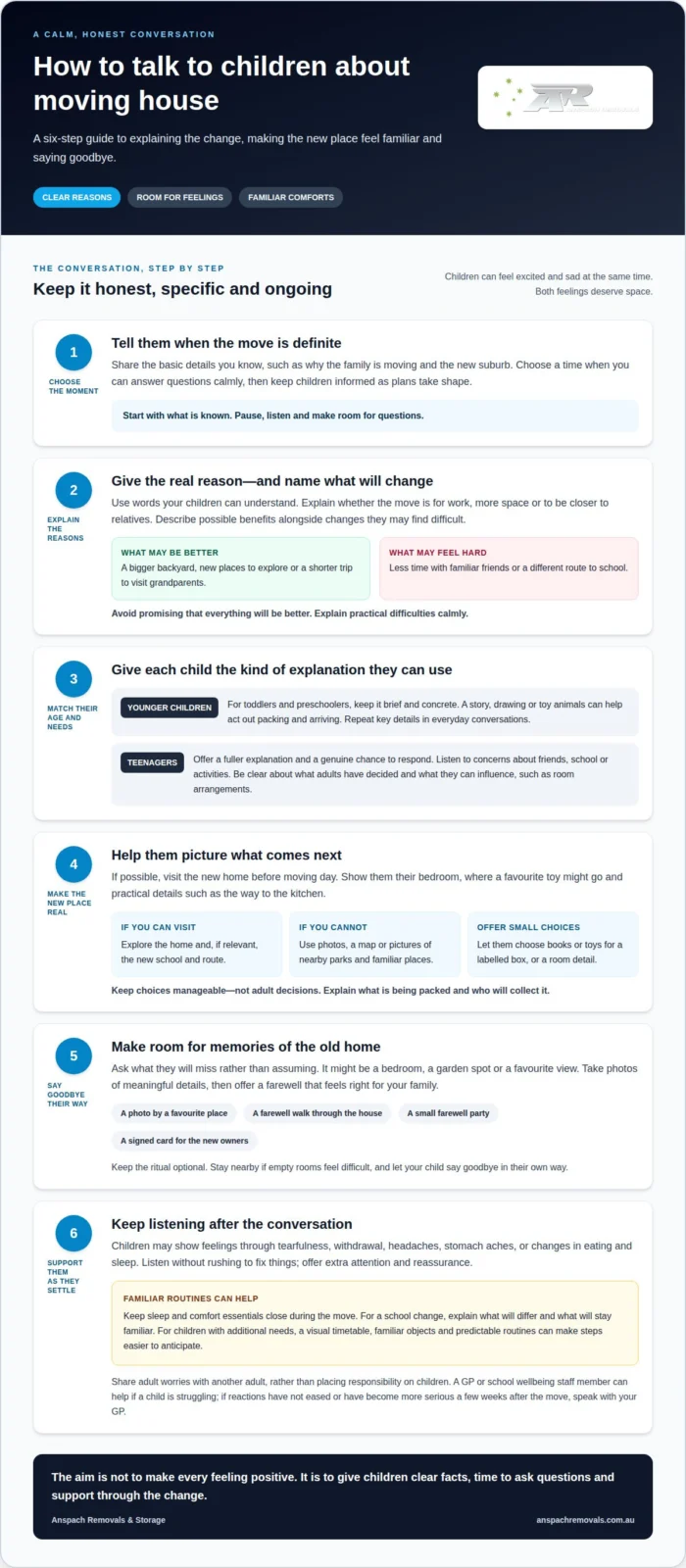
- Help children picture their new home and neighbourhood before moving day, using visits or simple visual cues.
- Explain why the move is happening honestly, balancing the benefits with the changes they may find difficult.
- Give children a meaningful way to farewell places and routines they’ll miss, while making room for new memories.
- Choose a time to share the news when you can answer questions calmly and keep children informed as plans take shape.
1. Visiting and familiarising children with the new home and area
A visit can make an unfamiliar address feel real. If possible, take the children inside their new home before moving day. Let them see their bedroom, choose where a favourite toy might go and notice practical details, such as the way to the kitchen. If you can’t visit, show them photos, a map or pictures of nearby parks and familiar places. Be specific, and give them more than one chance to ask questions.
Involve children in manageable choices, not the burden of adult decisions. They could choose which books or toys go in a labelled box, decide where their belongings will go, or pick a colour for a room detail. Explain what’s being packed and who will collect it. Sort out anything they won’t keep well before moving day, so treasured belongings aren’t removed without warning. Keep sleep and comfort essentials close during the move.
Children may express their feelings through tearfulness, withdrawal, headaches, stomach aches, or changes in eating and sleep. Listen without rushing to fix things, and offer extra attention and reassurance. Your own stress can shape how children experience the move, so share adult worries with another adult and aim for calm, honest conversations. You can acknowledge that you’ll miss the old home while also talking about what you’re looking forward to.
If your child will change schools in Australia, explain what will be different and what will stay familiar. If possible, visit the new school, show them the route and talk with school staff about the first day. Keeping a familiar morning routine can give the transition a reassuring start.
For children with additional needs, a visual timetable and familiar objects can make each step easier to anticipate. Keep routines predictable where possible, and involve the child’s existing support people in planning. A GP or school wellbeing staff member can help if a child is struggling. If reactions haven’t eased or have become more serious a few weeks after the move, speak with your GP.
2. Explaining the reasons and benefits of moving
Start with the real reason, using words your children can understand. Explain whether the family is moving for work, more space or to be closer to relatives. Avoid promising that everything will be better. Instead, describe what may improve and what will change, such as a shorter trip to visit grandparents but a different route to school.
Make room for both sides of the change. A move can mean a bigger backyard and new places to explore, but also less time with familiar friends. Naming each change helps children see that excitement and sadness can exist together. Explain things in small pieces, then pause for questions. Children may ask again when they’re ready to take in more.
For toddlers and preschoolers, keep explanations brief and concrete. Say, “We’re moving to a new house where you’ll have your own room,” then use a story, drawing or toy animals to act out packing and arriving. Repeat the key details in everyday conversations rather than expecting young children to understand one long discussion.
Teenagers usually need a fuller explanation and a genuine chance to respond. Share the reasons, likely changes and decisions that are still open to discussion, such as how their room will be arranged. Listen to concerns about friends, school or activities without treating them as objections to overcome. Where there’s room to choose, agree on what they can influence and be clear about what adults have decided.
Keep the conversation going as plans develop. If the move is for work, explain what that means for family routines. If it brings you closer to relatives, talk about how visits might work. Don’t hide practical difficulties, but explain them calmly. Parental stress can colour a child’s view, so share adult worries with another adult rather than placing responsibility on children. A steady, honest explanation gives them facts to return to as they adjust.
3. Saying goodbye to the old home
Start by asking what your child will miss about the current home. They might name a bedroom, a favourite spot in the garden or the place where the family eats together. Don’t assume you already know what matters most. Listen, then help them choose a simple way to remember those places. A child who treasures the backyard tree might want a photo beside it before leaving.
Take photos before moving day, while the rooms and garden still feel familiar. Invite your child to photograph meaningful details, such as a height mark on a doorframe or a favourite view from the window. Keep the pictures together so they can look back after the move. This gives their memories a place without suggesting they should stop talking about the old home.
Make time for a farewell walk through the house. Let your child choose where to pause, and share a memory if they’re interested. You could remember reading stories in the bedroom or playing a board game at the dining table. Empty rooms may be difficult for a child, so explain what’s happening and stay nearby rather than hurrying them out.
Choose a goodbye ritual that suits your family. Some families have a small farewell party; others leave a signed card for the new owners. You could also invite your child to say a few words about a favourite room before closing the door. Keep the ritual optional. A child who doesn’t want to join in can still say goodbye in their own way.
Be honest if you’ll miss the house too, while making clear that your family can create new memories elsewhere. If your child brings up the old home later, listen and invite them to share a detail they remember. There’s no need to steer the conversation towards excitement. Acknowledging what made the home special helps children carry those memories with them as life changes.
4. When should you tell children you’re moving house?
Tell children once the move is definite and you can explain the basic details. Share what you know, such as the new suburb, why the family is moving and what happens next. Avoid presenting the move as certain while important decisions remain open. If you’re still considering it, talk about the possibility in an age-appropriate way without making it sound settled.
There’s no single countdown that suits every family. Some parents share the news about a month beforehand, while others prefer to tell young children closer to moving day. Treat these as examples, not a rule. Consider how much time your child needs to process change, how certain the arrangements are and whether early notice might create weeks of worry.
Once you’ve shared the news, update children as plans become clearer. Explain the next practical step, such as visiting the new home or deciding what to pack. A simple calendar can show important events, including the last day in the old home and moving day. For younger children, pictures or a familiar weekly routine can make the sequence easier to follow.
Keep the conversation open instead of treating it as a one-time announcement. A child might seem calm at first, then ask about friends or their bedroom days later. Make space for questions in everyday moments, such as the drive home from school. If details change, explain what’s different and what remains the same without promising more than you know.
Before speaking, choose a calm moment when you can stay with your children and listen. Avoid sharing the news during an argument or just before school, bedtime, or another major event. When dates are settled, organise your moving arrangements alongside the family’s plans. That leaves room for follow-up conversations, practical preparation, and a more considered transition.
Anspach Removals & Storage: Moving Boxes
Anspach Removals & Storage supplies Moving Boxes to help families organise their belongings before a move. Children can help pack familiar books or toys while keeping the items they need close by. A clearly labelled box also gives them a small, practical role in the change.
For the move itself, Anspach Removals & Storage handles Local Moves, Country Moves and Interstate Moves, including moves to and from Adelaide. The right support depends on where your family is going and what needs to be moved. Keeping the moving arrangements organised can leave more time for family conversations and helping children settle into their new surroundings.
If you’re planning a move and need boxes or moving support, contact Anspach Removals & Storage.
Make the next chapter feel like yours
Knowing how to tell kids you’re moving house is only the start of helping them through a major change. Once you arrive, invite your child to help create a small family tradition for the new home, such as choosing a spot for weekend breakfast or picking a book for the first evening. A shared ritual gives everyone something positive to look forward to without asking children to forget what they’ve left behind.
Keep checking in as your family settles. Your child’s questions may change once the boxes are unpacked and the new surroundings feel real. Listen, respond honestly and let them set the pace for conversations about their old and new homes.
For help with the practical side, Anspach Removals & Storage offers Local Moves, Country Moves and Interstate Moves. Contact Anspach Removals & Storage to discuss your move, then focus on making the next chapter feel welcoming for the whole family.
Frequently Asked Questions
How do you tell school-age children you’re moving house?
Tell school-age children once the move is definite, using clear details they can picture. Explain what the change means for daily life, such as who’ll collect them or how they’ll get to activities. Invite them to name their biggest concern, then work through it together. For example, you could help them plan how to stay in touch with a teammate or classmate.
What should you say if children are upset or angry about moving?
Acknowledge the feeling before trying to solve anything. You might say, “I can see you’re angry about leaving your friends,” then give your child time to respond. Don’t insist they feel excited or try to argue them out of sadness. If they don’t want to talk, offer another chance later, such as during a quiet car trip, and keep everyday expectations steady.
How do you help children settle into a new home and neighbourhood?
Help children feel at home through small, repeatable outings. Walk together to a nearby park, library or local shop, then let them choose where to explore next. At home, keep one part of the day predictable, such as reading the same bedtime story. If they miss a friend, help arrange a call or message so that connection continues alongside new friendships.