
What protects a timber floor when heavy furniture has to cross it? Protecting timber floors during a move starts with planning the route and covering high-traffic areas with secure floor runners. Professional movers can add cushioning or protective boards where the surface and load call for it, use sliders beneath suitable furniture, and lift rather than drag heavy items.
It’s natural to worry about scratches, dents or grit being carried through the home, especially where timber meets tiles, hybrid flooring, laminate or vinyl. The right protection depends on the floor, the item’s weight and shape, and the route through doorways, hallways and stairs.
This article explains how movers choose runners, cushioning, boards and furniture sliders for a heavy move. You’ll also learn why plastic sheeting, loose cardboard and poorly secured covers can cause problems, and what to consider when protecting different floor types.
Key Takeaways
- Plan the carrying route and protect busy areas with coverings secured to stay in place without risking floor finishes.
- Match runners, cushioning and boards to the surface, load and access route; boards protect the surface but don’t prove it can bear a load.
- Use floor runners on traffic paths and suitable sliders beneath heavy furniture, rather than dragging items across the floor.
- Choose floor protection with the material in mind, as timber, hybrid, laminate and vinyl can each need different care.
1. How Do Professional Movers Protect Floors and Walls During a Heavy Move?
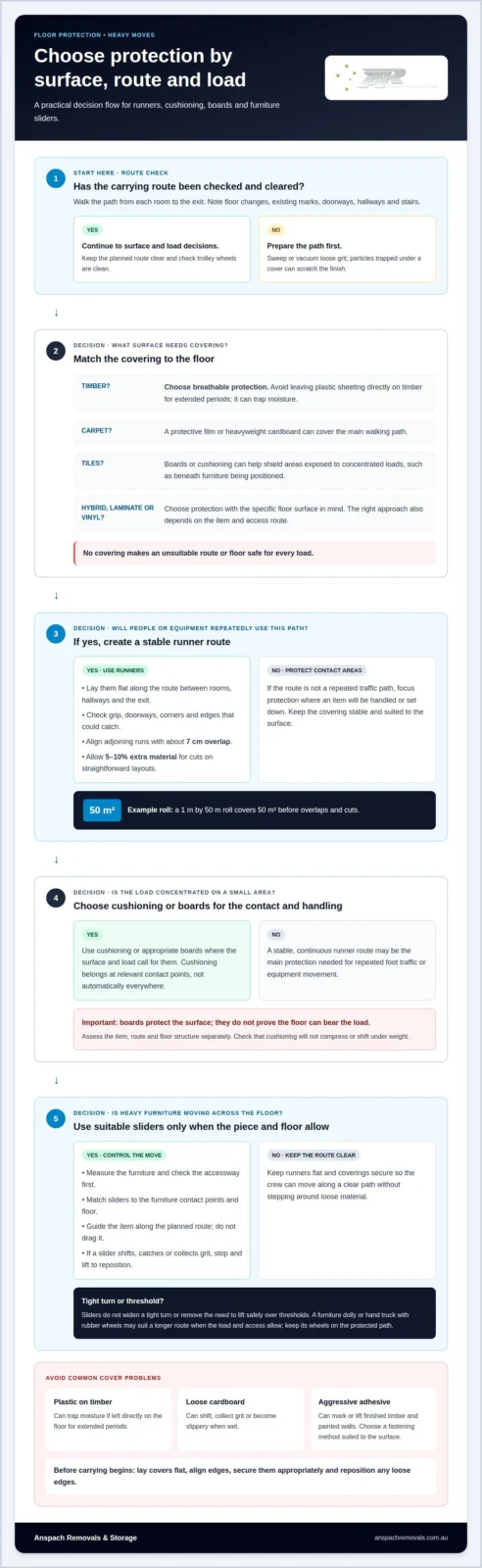
Before carrying furniture, movers walk the route from each room to the exit. They identify timber, tiles, stairs, narrow hallways and existing marks, then plan where floor protection is needed. They sweep or vacuum loose grit first, since particles trapped beneath a cover can scratch the finish. They also check and clean trolley wheels so dirt isn’t rolled across the protected route.
Coverings should suit both the surface and the work. Breathable protection can be suitable for polished timber, while runners or appropriate boards can shield busy access routes. Plastic sheeting shouldn’t sit directly on timber for extended periods because it can trap moisture. Cardboard may shift, collect grit or become slippery when wet, so movers assess the conditions rather than relying on it alone.
To prevent covers shifting underfoot, movers lay them flat, align adjoining edges and secure them without applying aggressive adhesive to finished timber. Adhesives can mark or lift timber finishes and painted walls, particularly when newly finished. Any fastening method should suit the surface, and loose edges should be repositioned before carrying begins. Entrances, hallways and stairs need particular attention because people and equipment pass through them repeatedly.
Strata and rental requirements vary by property. The moving plan should follow the building’s access, lift and common-area instructions, as well as relevant tenancy arrangements. On timber stairs, protection must stay secure without obstructing footing or equipment; movers assess the stair route and load before proceeding. At doorways, moving blankets can cover both sides of the frame, secured with masking tape rather than permanent adhesive.
If timber flooring is scratched or damaged, photograph the area and report it promptly to the removalist and property owner or manager. Keep a record of when the damage occurred, and avoid attempting a repair before the damage has been assessed. Careful protection of timber floors during a move depends on matching the covering, fastening method and route to the surface in front of the team.
2. How professional movers choose floor runners, cushioning and boards
Professional movers match each covering to the floor, load and route. On timber, breathable protection helps avoid trapping moisture during the move. Carpet needs a different approach: a protective film or heavyweight cardboard can cover the main walking path. For tiles, boards or cushioning can help shield areas exposed to concentrated loads, such as beneath furniture being positioned. No covering makes an unsuitable route or floor safe for every load.
Runners suit the paths used repeatedly between rooms, hallways and the exit. Movers consider the runner’s grip, how it lies across the surface and whether doorways or corners could catch its edges. Adjoining runs should overlap by about 7 cm, reducing gaps where grit or a trolley wheel could reach the floor. For straightforward layouts, allow 5–10% extra material for cuts. A 1 m by 50 m roll covers 50 m² before overlaps and cuts.
Cushioning is chosen for the contact points and handling involved, rather than added everywhere. A heavy item being set down, for example, needs protection beneath its contact area, while a trolley route needs a stable, continuous surface. Movers also consider whether cushioning will compress or shift under weight; in commercial and industrial transport, custom packaging specialists like Packaging For Industry (PFI) demonstrate how tailored protective foam and cushioning solutions can distribute weight and safeguard contact points. On stairs, protection must remain secure without affecting footing or equipment operation.
Boards can spread contact across a wider area and protect floors from knocks, but they don’t establish whether the floor can bear the load. Movers assess the item, route and floor structure separately before deciding whether boards are suitable. On damp entry paths, cardboard can become slippery; plastic laid directly on timber can trap moisture if left in place. The choice should balance coverage, grip and the surface’s need to breathe.
3. How professional movers use floor runners and furniture sliders
Movers use floor runners to create a protected route between rooms, the exit and the vehicle. They plan the line around corners and doorways, then position the runners where repeated foot traffic and equipment will pass. For example, a runner can connect a bedroom doorway to the hall, reducing direct contact between the floor and moving gear. A clear, continuous path also helps the crew carry furniture without stepping around loose coverings.
Before moving a bulky item, the team measures the furniture and checks the accessway. A cabinet that fits through a doorway may still catch at a turn or landing. Sliders can help move suitable heavy pieces across a floor, but they don’t widen a tight turn or remove the need to lift safely over thresholds. The crew chooses sliders to suit the furniture’s contact points and the floor, then positions them before moving the item.
Sliding should be controlled, not treated as dragging. Movers guide the piece along the planned route and pause if a slider shifts, catches or collects grit. They lift and reposition it rather than forcing it onward. Trapped debris can scratch timber, while a sudden snag may concentrate pressure on a small area. Furniture legs also need suitable protection during handling and placement. Felt pads beneath furniture that stays on timber can help reduce scratches after the move.
For longer routes, movers may use a furniture dolly or hand truck with rubber wheels when the load and access allow. They check that wheels roll freely and stay on the protected path, especially through hallways and turns. A dolly helps move items, but it doesn’t replace route planning or make every floor suitable for every load. Runners, suitable sliders and controlled lifting help limit dragging and move furniture deliberately from room to room.
4. How professional movers protect timber, hybrid, laminate and vinyl floors
Movers begin by identifying the floor material and finish along the planned route. Timber, hybrid, laminate and vinyl aren’t interchangeable surfaces. For timber, they use breathable protection when the finish needs to cure and avoid leaving plastic directly on the floor for extended periods. During furniture handling, they lift rather than drag, use suitable sliders and protect furniture legs to limit scratches.
On timber, the key concerns are grit, moisture and unsuitable adhesives that can affect the finish. A runner needs to sit securely, and its fastening method must not mark or lift the surface. Felt protector pads beneath furniture that will stay on timber can help reduce scratches after placement. Newly finished floors need particular care because adhesive can affect the finish.
For hybrid and laminate floors, movers select a stable cover for the traffic route and keep its edges from shifting beneath feet or equipment. A loose sheet can bunch when a trolley crosses it, so the team considers corners, thresholds and turning points. Vinyl also needs a covering suited to the surface and load. The right choice depends on the floor’s condition, route and handling method, not just the material name.
Area rugs, cardboard or floor runners can protect wood, laminate and tile during a move, but cardboard can shift, trap grit or become slippery when wet. Movers account for these limits when choosing materials and securing the route. They also avoid placing concentrated loads carelessly: a furniture leg dropped onto tiles can cause cracking. Match each cover to the surface, then control how furniture meets it.
For a heavy move, tell the moving team which rooms have timber, hybrid, laminate or vinyl, and point out any newly finished areas. This helps them plan surface-specific protection before carrying begins.
Anspach Removals & Storage
Anspach Removals & Storage helps households and businesses plan moves with care for their belongings and property. Whether you’re moving locally in Adelaide, across South Australia or interstate, sharing details about timber, hybrid, laminate or vinyl floors helps shape the moving plan. For office and commercial relocations, it’s also useful to identify high-traffic routes and sensitive finishes.
Floor protection works best when planned alongside access, furniture size and the route through each space. Sharing these details as part of your move helps the team understand where coverings and careful handling matter most, whether you’re moving a home or workplace.
Contact Anspach Removals & Storage to discuss your move and flooring concerns.
Make floor care part of your moving plan
Before moving day, make floor protection part of the conversation about your move. Tell the moving team which areas matter most and what needs careful handling, so floor care can be planned alongside access and furniture placement. This simple step keeps your priorities clear throughout a busy transition.
Whether you’re arranging a Local Move, Country Move or Interstate Move, Anspach Removals & Storage can help with your relocation. Protecting timber floors during a move is one part of a larger plan to transport your belongings safely from one home to the next.
For a considered next step, contact Anspach Removals & Storage to discuss your upcoming move and floor-care priorities. A clear conversation can help you feel more prepared for the change ahead.
Frequently Asked Questions
How Do Professional Movers Protect Floors and Walls During a Heavy Move?
Movers protect floors and walls by planning how to handle items around the property’s surfaces and access points. For example, they can keep a protected route clear for carrying furniture instead of letting people cut across uncovered rooms. They can also note existing marks before work starts, helping distinguish pre-existing damage from anything noticed after the move. Tell the team about fragile finishes or recent renovations.
Are cardboard, blankets or plastic sheets enough to protect floors during a professional move?
Not in every situation. Cardboard can cover a short, dry route, but may shift or become slippery when wet. Plastic sheeting can trap moisture against timber if left in place, while a moving blanket may not provide a stable surface for wheeled equipment. Movers choose materials according to the floor, weather, load and route, then check that the covering remains suitable as work progresses.
How do professional movers protect timber floors from scratches?
To reduce scratches, movers keep grit from getting beneath protective materials and avoid dragging furniture across timber. They can also protect furniture contact points, including legs and narrow bases, before items are carried or placed. After delivery, felt pads beneath furniture that will stay on the floor can help limit marks during everyday use. These steps help protect timber floors during a move.
Can moving blankets, cardboard or plastic damage timber floors during a move?
Yes, the wrong material or placement can cause problems. Grit caught beneath cardboard or a blanket can abrade the finish, and damp cardboard may become slippery. Plastic left directly on timber can hold moisture against the surface. Adhesive may mark or lift a finish, particularly on newly finished floors. Movers account for these risks by matching the covering and fastening method to the floor’s condition.
How do professional movers protect timber floors from scratches when moving heavy furniture?
Movers protect timber by lifting furniture where possible and using suitable sliders or wheeled equipment for controlled movement. Before repositioning a heavy item, they consider its contact points and the route, including thresholds where it could catch. If a slider snags or shifts, the crew can stop and adjust rather than force the furniture onward. This helps reduce dragging and concentrated pressure on the finish.
How should you prepare timber floors before professional movers arrive?
Clear small objects, mats and loose rugs from the planned route so the crew can see the timber surface. Point out existing scratches, newly finished areas and rooms with different flooring. If the floor is part of a recent renovation, ask the builder or flooring supplier when it can take coverings and moving traffic. Share access changes, such as a blocked doorway, before loading begins.