
A delayed key handover can disrupt an interstate move differently from a local move: a longer journey leaves less room to absorb schedule changes. A moving day contingency plan separates access to your new property from the transport timetable and sets out practical responses, such as a revised arrival time or secure storage.
It’s easy to focus on getting the keys and the truck together on moving day. But if the keys are late or traffic changes the route, keeping everyone informed and agreeing on a waiting or overnight plan can stop one hold-up from disrupting the whole move.
This guide explains how to respond to key delays, what changes between local and interstate moves, and how route and transport contingencies can reduce pressure. You’ll also learn what essentials to keep accessible and when professional moving and storage support can help.
Key Takeaways
- Ask how a removals company handles late keys, schedule changes and vehicle waiting arrangements before moving day.
- Allow for interstate delays differently from local ones, as longer travel can make a changed arrival time harder to absorb.
- Keep medication, important documents and overnight essentials accessible in case you can’t move straight into your new home.
- Plan for route changes, traffic and weather, with a suitable place for the vehicle to wait if access is delayed.
1. What Does the Removals Company Do If Keys Are Delayed?
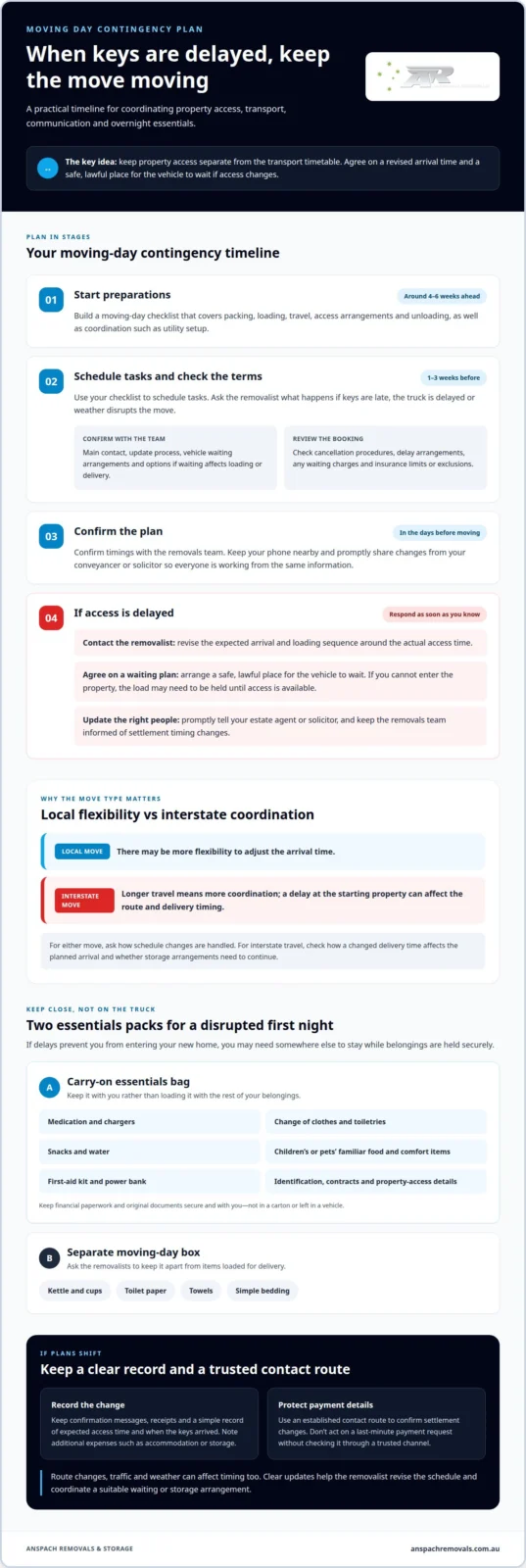
If the keys are delayed, contact your removalist as soon as you know access has changed. The team can revise the expected arrival and loading sequence, then agree on a safe, lawful place for the vehicle to wait. Keep your phone nearby and promptly update your estate agent or solicitor so everyone has the same information. A moving day contingency plan keeps property access separate from the transport schedule.
Before booking, ask what happens if the keys arrive late, the truck is delayed or weather disrupts the move. Find out how the team shares updates, who your main contact is and what options apply if waiting affects loading or delivery. Read the booking terms for cancellation procedures, delay arrangements and any waiting charges. Review the insurance wording, including what belongings are covered and any limits or exclusions.
How much does a backup removalist or last-minute mover cost in Australia? The cost depends on the move, timing, distance, crew and work involved, and is provided in a quote. If your removalist cancels or arrives late, the company should explain the situation, provide an updated arrival estimate and discuss next steps under the booking terms.
A professional moving-day timeline and checklist covers packing, loading, travel, access arrangements and unloading, plus coordination such as utility setup. Start preparations around 4-6 weeks ahead; use a checklist to schedule tasks for 1-3 weeks before moving day. Confirm timings with the removals team in the days before the move, and share changes promptly.
If keys, settlement or property access are delayed, the removalist can coordinate a revised schedule and a suitable waiting arrangement. Professional removalists also handle heavy furniture, so you don’t need to lift or carry bulky items while dealing with a stressful delay. Clear communication helps keep the move as smooth as circumstances allow—a standard emphasised by professional relocation teams such as Tru Nationwide LLC when coordinating residential and commercial moves.
2. Can a delay affect an interstate move differently to a local one?
Yes. A local move may allow more flexibility to adjust the arrival time, while an interstate journey involves more travel to coordinate. A delay at the starting property can affect the rest of the route and delivery timing, especially if the truck cannot leave as planned. The removalist can revise the schedule around the actual access time and explain how the delay affects the move. That distinction matters when preparing a moving day contingency plan.
Settlement and transport are separate events. In Australia, ownership transfers after the legal and financial process is complete, and the keys are then released. If completion is delayed, the removalist may need to hold the load until access is available, rather than unloading at a property you cannot enter. Tell the team when your conveyancer or solicitor updates the expected settlement timing. This helps them plan for the change.
A delay late in the day can leave your household needing somewhere to stay and your belongings needing secure storage. For an interstate move, ask how a changed delivery time affects the planned arrival and whether storage arrangements need to continue. Keep confirmation messages, receipts and a simple record of times, including when access was expected and when the keys arrived. This helps you track related expenses, such as extra accommodation or storage.
Protect your financial details when plans change. Keep your solicitor’s contact information and relevant payment details accessible, and use the established contact route if settlement timing shifts. Don’t act on a last-minute payment request without confirming it through a trusted channel. Separately, note any additional expenses and keep receipts so you have a clear record of costs caused by the delay.
Ask the removals team how it coordinates local and interstate schedule changes, and what the booking terms say about waiting, cancellations and insurance. For a move across state lines, interstate moving support can help align transport timing with the revised access plan. Clear updates from your conveyancer and removalists give everyone a practical next step, even when the original timing shifts.
3. Overnight essentials and temporary accommodation
If unexpected access or transport delays prevent you from entering your new home, your household may need somewhere else to stay overnight. The removalist can coordinate a revised delivery plan. If belongings need to be held securely until access is available, Anspach Removals recommends Hendon’s Self Storage. Discuss this possibility when booking, especially if settlement timing or a long-distance journey leaves little flexibility.
Keep an essentials bag with you rather than loading it with the rest of your belongings. Include medication, chargers, a change of clothes, toiletries, snacks and water. Add basic items for children or pets, such as familiar food or comfort items. A first-aid kit and power bank can also help if plans change after the truck has left.
Set aside a separate moving-day box with a kettle, cups, toilet paper, towels and simple bedding. These items make the first night easier if the rest of your household goods are in storage. Tell the removalists which box you need to access, so it can be kept apart from items loaded for delivery. Professional packing support can help organise the move while keeping clearly identified essentials accessible.
Keep identification, moving contracts, financial paperwork and property-access details in a secure bag that you carry yourself. Don’t pack original documents in a carton or leave them in a vehicle. If settlement is delayed, having your solicitor’s details and relevant paperwork close at hand makes it easier to respond to time-sensitive decisions.
Make separate arrangements for the old property and your destination. For example, you may need to hand over your former home while waiting for access to the new one. The removalist can coordinate where packed belongings are held and when delivery can resume. Tell the team about essential items before packing begins, and keep your phone charged to receive schedule updates.
4. Moving transport and route contingencies
A removalist plans the route around the truck, access points and the belongings being moved. Before loading, the team can note the pickup and destination addresses, building access, large furniture and known road constraints. The plan should also include an alternative if traffic, road closures or severe weather disrupt the journey. In Australia, bushfires and floods can affect travel, so monitoring local forecasts and traffic reports helps the team respond to changing conditions.
Plan parking before the truck arrives. In Adelaide, the removalist can assess the loading location, vehicle access and available stopping space, then plan a suitable place for loading or waiting. If a council or building process applies, the team can coordinate arrangements in advance with you and the relevant site contact. Confirm the plan with the estate agent or building manager so everyone knows where the truck can safely stop.
A key contingency is deciding where the vehicle can wait lawfully before loading. If property access is delayed, the driver needs a practical alternative that won’t block traffic or create an unsafe loading situation. The removalist can use the agreed contact route to update you and adjust the timing when access changes. Keep the estate agent informed too, especially if keys or entry instructions are affected.
If the route or access plan changes, the team can coordinate revised loading and delivery timings. When belongings can’t go straight into the destination, storage may provide a way to keep the move organised until access is ready. The appropriate option depends on the delay, the load and the revised delivery plan.
Give the removals team accurate addresses, access details and any known parking constraints before moving day. To discuss the transport and storage arrangements for your move, get help planning your move.
Check whether a council or building process applies and coordinate any required arrangements in advance with the customer and relevant site contact. Agree on a suitable, lawful place for the truck to stop or wait that does not block traffic or create an unsafe loading situation, and confirm the plan with the estate agent or building manager.
Anspach Removals & Storage: Moving Boxes
Anspach Removals & Storage can help make your moving-day arrangements more manageable with Moving Boxes and support for Local Moves, Country Moves and Interstate Moves. If a key or route delay changes the delivery schedule, Storage Services can also help keep your belongings secure until access is ready.
Moving Boxes help you prepare household items for transport. If your handover timing is uncertain, keep essential documents, medication and overnight items separate from the boxes travelling with the main load. Share your access and timing details when arranging your move so the plan reflects your circumstances.
If you’re planning a local, country or interstate move and want support with boxes, transport or storage, contact Anspach Removals & Storage.
Make your next move with a clear plan
A useful moving day contingency plan isn’t about predicting every disruption. It’s about agreeing what happens next if a key handover, road change or access issue alters the schedule. That gives you and the removalist a shared plan to follow, instead of leaving important decisions until the day feels rushed.
As you prepare, focus on the details that shape the move: access arrangements, the route and what matters most if delivery has to change. Anspach Removals & Storage can help with Local Moves, Country Moves and Interstate Moves, with arrangements suited to your relocation.
Start a conversation about your move and the support you need. Contact Anspach Removals & Storage to discuss your next step and move forward with a plan that feels more manageable.
Frequently Asked Questions
Can a delay affect an interstate move differently to a local one?
Yes. An interstate delay can affect a longer transport schedule, while a local move may allow more flexibility to adjust the sequence of jobs. For example, a late handover could shift a regional delivery and affect where the load is held. Tell the removalist promptly if settlement timing changes so the team can assess the effect on travel and delivery arrangements.
Does my insurance still cover my belongings during a delay?
Cover depends on the policy wording and where your belongings are during the delay. Anspach Removals’ insurance protects against damage and loss during transit, but that description alone doesn’t establish cover while goods are stationary or held overnight. Read the relevant terms before moving day, focusing on what applies during waiting, storage and a changed delivery schedule.
What Does the Removals Company Do If Keys Are Delayed?
The removalist can coordinate a revised arrival or delivery time with you and work around the property’s access arrangements. Share updates from your estate agent or solicitor as soon as you receive them, including whether the keys are expected later that day. This helps the team decide whether to adjust the sequence, wait at an agreed location or change the delivery plan.
What Happens If You Still Don’t Have Keys By Late Afternoon?
If access is still unavailable, first agree on where your household and belongings will go next. Discuss overnight accommodation for people and a secure arrangement for the load with the removalist. For storage, Anspach Removals recommends Hendon’s Self Storage. Keep your phone, medication and essential documents with you rather than relying on items in the vehicle, and update your estate agent or solicitor about the revised plan.
What happens if bad weather delays my move?
Bad weather can affect road conditions, property access and the timing of loading or delivery. In Adelaide and elsewhere in Australia, bushfires and floods can also disrupt routes. The removalist can review conditions and discuss changes to the schedule or route. Keep communication open and share any access restrictions or local updates affecting either property.
What happens if completion does not happen on the same day?
If settlement is delayed, the new property may not be ready to receive your belongings that day. Coordinate a revised handover and delivery schedule with your conveyancer or solicitor and the removalist. You may need temporary accommodation and a separate, secure arrangement for the load. Keep records of changed timings and related expenses, such as extra accommodation or storage.