
A rough guess at your belongings can leave important details out of a moving plan. Use a pre-move survey checklist and insist on a survey when you’re unsure how much you’re moving, have a large home or office, need packing or storage, or face tricky access at either property. A survey helps assess the volume of your belongings, the space they may take in the truck, and the handling and access requirements.
A quick estimate over the phone may seem convenient, but furniture, packed boxes and items tucked away in garages or cupboards can change the picture. Seeing what’s actually moving helps build a more considered plan.
This guide explains when to arrange an in-person, video or combined survey, what to prepare, and what the survey can reveal about your belongings. You’ll also learn what happens next, including how the findings inform the moving estimate and plan, and why it’s useful to flag changes before collection.
Key Takeaways
- Keep an inventory with clear descriptions and photos so you can track belongings as the move progresses.
- Ask for a survey when the amount to move is unclear, the property is large, or access and service needs could affect the estimate.
- Include garages, cupboards and other storage areas in an in-person walkthrough to avoid overlooking items.
- Accurate details about furniture and household goods help shape the plan for truck space, labour and handling.
What happens after the survey?
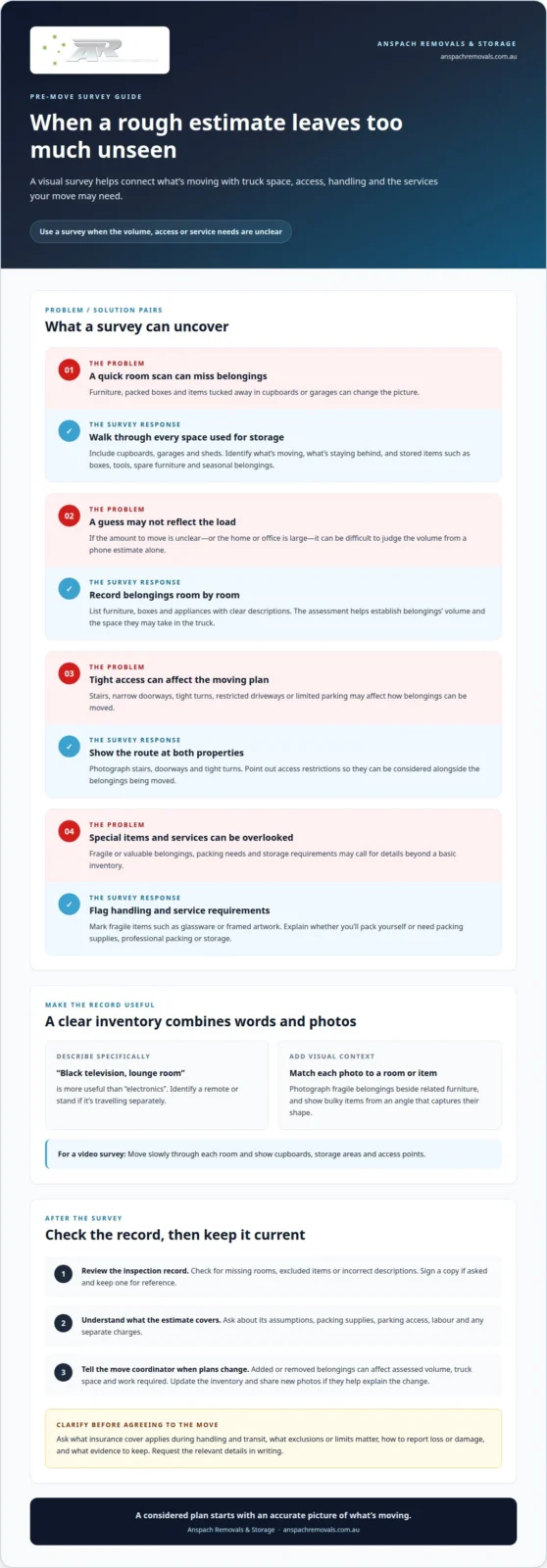
Include a room-by-room inventory, clear photos of access points, and notes about fragile or valuable items. A useful pre-move survey checklist also identifies items staying behind, storage areas and special handling needs, such as a large cabinet that must pass through a narrow doorway.
- List furniture, boxes and appliances by room, with specific descriptions for electronics and valuables.
- Mark fragile belongings and items needing careful handling, such as glassware or framed artwork.
- Note items excluded from the relocation, plus anything stored in cupboards, garages or sheds.
- Photograph access points, including stairs, doorways and tight turns at both properties.
Specific descriptions make an inventory useful for tracking belongings from collection to delivery. Write “black television, lounge room” rather than “electronics”; identify a remote or stand if it’s travelling separately. For valuable items, record distinguishing details and keep the inventory with your moving documents. This gives you a clearer reference when checking what has been loaded and delivered.
Take clear photos during the survey and match them to the relevant room or inventory entry. For example, photograph a fragile lamp beside its table, and capture bulky furniture from an angle that shows its shape. For a video survey, move slowly through each room and show cupboards, storage areas and access points. Images add context to written descriptions and help clarify what the survey covered.
After the survey, its findings help shape the moving estimate and proposed plan. Review the inventory and inspection record for missing rooms, excluded items or incorrect descriptions, then sign a copy if asked. Keep a copy for reference. If the inventory includes office equipment or furniture, make sure those items are clearly included in the scope for an office relocation.
What can cause a removalist quote to change after the survey? Added or removed belongings can affect the assessed volume, truck space and work required, so tell your move coordinator promptly when plans change. An extra bookcase, several packed boxes or a decision to leave furniture behind can all change the original inventory and estimate. Update the list and share new photos if they help explain the change, so the moving plan reflects what will actually be collected.
When to Insist on a Pre-Move Survey?
A pre-move survey is a visual assessment of your belongings, access and moving requirements. Request one when a phone estimate can’t capture the volume, packing needs or property constraints that shape your move.
Survey Timing and Moving Estimates
A visual assessment connects your inventory and access conditions to a more considered moving estimate. Arrange the survey once you know your likely moving date and what you plan to take, while there’s still time to discuss changes and services.
During the visit or video call, ask what the estimate covers, which assumptions affect it, and how additional items or services would change the plan. To compare quotes, give each removalist the same inventory and ask about packing supplies, parking access, labour and any separate charges. A garage full of boxes or a restricted loading area can affect the assessment.
How far in advance should I book a pre-move survey in Australia? Arrange it as soon as your move date and likely belongings are clear, especially if you need time to organise packing or storage. That gives you room to discuss requirements before collection plans are settled.
Insurance and Liability Discussions
Insurance and liability discussions clarify what protection applies to your belongings and what steps to take if something is damaged. Before agreeing to a move, ask what cover is included, what exclusions or limits apply, and how to report a loss or damage.
Ask whether packing affects the cover, how fragile items are treated, and what records you should keep. In Australia, the answers help you understand the written terms and decide whether your own contents policy needs attention. Request the relevant details in writing.
What insurance and liability questions should I ask before moving in Australia? Ask what cover applies during handling and transit, which exclusions or limits matter, and how to make a claim. Clarify who is responsible for damage and what evidence is needed.
Use the survey to explain whether you’ll pack yourself or need packing supplies, professional packing or storage. For example, a home office with computers and fragile screens may need different preparation from boxed kitchenware. Tell the removalist about access restrictions, such as a narrow driveway or limited parking, so those details can inform the plan.
A survey also gives you time to explain priorities, such as keeping essential office equipment accessible or storing selected furniture between properties. Ask the removalist to record the services discussed and the assumptions behind the estimate. For packing or storage planning, explore packing and storage options as part of the conversation.
In-person home surveys to identify overlooked items and spaces
An in-person walkthrough lets the surveyor assess belongings and spaces that a quick room scan can miss. Include every area used for storage, even if it isn’t part of your usual daily routine.
Checking Less-Visited Spaces
Checking lofts, basements and garages ensures stored belongings are included in the overall moving assessment. These spaces often contain items that aren’t visible during a tour of the main rooms.
Walk through each area with the surveyor and point out boxes, tools, spare furniture and seasonal items. Open cupboards and sheds, then identify what’s moving. For example, a spare mattress in the garage still takes up truck space. If access is restricted, show the doorway or stairs so the surveyor can assess the route.
Items to Move or Leave Behind
Clearly separating items to move from those staying behind helps the survey record reflect your preferred plan. Tell the surveyor about anything excluded rather than assuming its location makes that clear.
For example, mark a dining table as staying if the new owner will keep it, and include the chairs if they’re travelling with you. If belongings will be collected from another address, identify that location during the survey. Changes to the items being moved can affect the estimate and plan, so update the inventory before collection if your choices change. A clear “move”, “leave” or “exclude” note beside each item can reduce confusion.
Assessing Special Items
Identify special items during the survey so their size, shape and handling requirements can be considered. Point out large, fragile or unusually shaped belongings, such as a grandfather clock, piano or framed artwork.
Explain whether an item can be dismantled, show where it is, and describe any access concerns. A bulky cabinet on an upper floor may need a different route from a small boxed item. Ask the surveyor to record these details and any handling requirements in the moving plan. If you have preferred arrangements for an item, explain them during the visit so they can be considered alongside practical access needs.
Assessing furniture and household-item volume
A volume assessment estimates how much space your belongings will occupy in the moving truck. It looks beyond item counts: a compact bookcase and a deep modular sofa need different space, handling and loading plans. Accurate measurements help match the load to vehicle capacity and identify equipment or labour needs before moving day.
During the survey, identify furniture that will be dismantled, items that stack, and pieces that are difficult to turn. A dining table with removable legs may pack differently from a fixed wardrobe. Tell the surveyor which boxes are already packed and which cupboards still need their contents assessed. These details help distinguish the visible load from belongings still to be prepared.
- Point out bulky furniture, including sofas, wardrobes, beds and dining tables.
- Show appliances and items with unusual shapes, such as exercise equipment.
- Explain which furniture can be dismantled and which pieces must stay assembled.
- Include packed boxes and belongings still stored in cupboards or utility areas.
Volume is only one part of the assessment. Weight, fragility, access and handling requirements also shape the moving plan. For example, a heavy appliance may take up less truck space than a lightweight but oversized lounge. A narrow hallway or tight staircase can affect how a large piece is moved, even when its dimensions fit the truck.
Before accepting an accurate quote, check that the assessed load reflects what you intend to move. Compare the listed furniture and household items with the rooms and storage areas covered during the survey. If you add a mattress or several boxes later, tell the removalist promptly. Changes can affect truck space and the allocation of movers or equipment, creating avoidable surprises on moving day.
Make space planning easier by measuring bulky items and noting furniture that needs dismantling. If you’re using moving boxes, include them in the volume assessment, not just the loose furniture. Ask the removalist how the assessed volume informs the vehicle and handling plan, then make sure the written estimate reflects the belongings you’re actually moving.
Anspach Removals & Storage: Local Moves
Anspach Removals & Storage can help turn your survey findings into a practical moving plan. For a move within Adelaide, a Local Move can account for the belongings, access details and handling needs identified during the survey.
For a move beyond the city, Country Moves and Interstate Moves suit different relocation distances. Businesses planning an office move can also discuss Office & Commercial Relocations, where furniture, equipment and access arrangements need careful coordination. If your survey shows that you need somewhere to keep belongings between moving dates, Anspach can recommend Hendon’s Self Storage.
Bring your inventory and any changes since the survey into the conversation. Clear details about what’s moving, where it’s going and any access constraints help shape the next steps. Contact Anspach Removals & Storage to discuss your move and the survey findings.
Turn your survey notes into a clear next step
Use your survey notes to guide your next decisions. Keep the pre-move survey checklist accessible as plans take shape, and update it whenever your arrangements change. A current record gives you a practical reference for conversations and helps you stay organised as moving day approaches.
Before settling on a plan, consider what matters most to your household: a smooth handover, careful handling of treasured belongings, or keeping work equipment accessible during an office relocation. Setting priorities helps you make choices that fit your move, rather than trying to solve every detail at once.
Anspach Removals & Storage can help you plan a relocation that suits your circumstances. Contact Anspach Removals & Storage to discuss your next move and take the next step with a clearer plan.
Frequently Asked Questions
How should you prepare?
Before the survey, gather your likely moving date, both property addresses and any questions about the proposed service. Note bulky items that may need measuring, such as a large bookcase or outdoor table. If access is restricted, have details ready about loading zones, stairs or lift bookings. This helps keep the discussion focused on the practical requirements of your Adelaide move.
Am I obligated to hire the company that did my survey?
A survey visit alone doesn’t mean you’ve agreed to book a move. Read the written quote and its terms before accepting, and look for any wording about confirmation, cancellation or changes. If you haven’t accepted an offer, you can consider the proposal alongside your needs and other information. Keep a copy of any correspondence so you can refer to what was agreed.
Can I get a shifting quote without a survey?
Yes, you can request an initial quote using details you provide, such as addresses, moving dates and an item list. Its accuracy depends on how clearly those details describe the load and access. A phone estimate may need revision if the actual belongings differ from your description. A visual assessment gives the removalist a clearer basis for estimating the work involved.
Can the survey be done remotely?
Yes. A survey can take place in person, by video call or through a combination of methods. For a remote walkthrough, start outside each property, then move steadily through every room and storage area. Pause to show bulky items and tight access points. A combined survey can use video first, followed by photos, measurements or an in-person review of particular items.
Do I need to pack my belongings before the survey?
No, you don’t need to pack first. Visible belongings help the surveyor understand what may need moving and how much preparation it could require. Leave cupboards and storage areas accessible, and point out items that are already boxed. For example, show the contents of a bookcase before packing, so its size and the number of books are easier to assess.
What does the surveyor look at?
The surveyor assesses the belongings to be moved, their approximate volume, and the access at pickup and delivery. They may also discuss packing, timing, storage needs and special handling. For example, a heavy appliance on an upper floor raises different access questions from a small box near the front door. These observations help inform the moving plan and estimate.