
Moving anxiety doesn’t mean you’re making the wrong choice. It can be a normal response to change, disruption and leaving familiar routines behind. Feeling anxious about moving to a new suburb is understandable. If possible, start preparing six to eight weeks ahead so you can sort, organise and pack in stages rather than tackling everything at once.
When a move feels like one enormous job, it’s easy to lose track of what to do first. This guide explains why moving can feel unsettling, when to begin preparing and how to break practical tasks into manageable steps. A steady plan makes room for breaks and helps you focus on what’s within your control, so you can prepare at a pace that works for you.
Key Takeaways
- Recognise how uncertainty and leaving familiar places can affect your feelings, then give yourself room to adjust.
- Start preparing six to eight weeks ahead and build regular breaks and small self-care moments into your plan.
- Keep meaningful belongings and nurture supportive connections to help your new home feel more familiar.
- Turn the move into manageable tasks, starting with less-used items and planning essential updates in stages.
1. Why Do I Have Relocation Anxiety About Moving?
Moving can disrupt more than your address. Your familiar route to the supermarket, nearby park and regular coffee stop may all change at once. That uncertainty can bring anxiety, even when the move is exciting or entirely your choice. If you’re feeling anxious about moving to a new suburb, some of the strain may come from missing the everyday comfort of your old surroundings.
Leaving the family home can add another layer of emotion. A bedroom, kitchen table or familiar routine may represent years of independence, family life or personal milestones. Before you move, choose a few belongings that carry those memories with you, such as a favourite chair, framed family photo or treasured recipe book. Keeping meaningful items close can make your new place feel less unfamiliar.
You may also feel a real sense of loss when leaving a neighbourhood where friends and family live nearby. Don’t expect yourself to feel settled immediately. Instead, plan one small connection at a time: arrange a catch-up with a friend, keep a familiar weekly routine or unpack a sentimental object first. These steps can help preserve a sense of continuity while you adjust.
If you regret moving, try not to treat the first difficult days as proof that the decision was wrong. Write down what feels hardest, such as missing a friend or not knowing the local shops, then choose one practical response. Call someone you trust, explore a nearby street or recreate a familiar evening routine. Give yourself time to learn the area before judging the move.
Getting familiar with a suburb takes time and participation. Walk to a local park, find the nearest grocery shop or introduce yourself to a neighbour when it feels comfortable. Small experiences can gradually turn an unfamiliar street into part of your daily map.
Pay attention if your distress keeps worsening or lasts longer than a few weeks or months. If low mood persists or begins to interfere with everyday life, speak with your GP or a mental health professional about support.
2. How Far In Advance Should I Start Preparing For A Move To Reduce Stress?
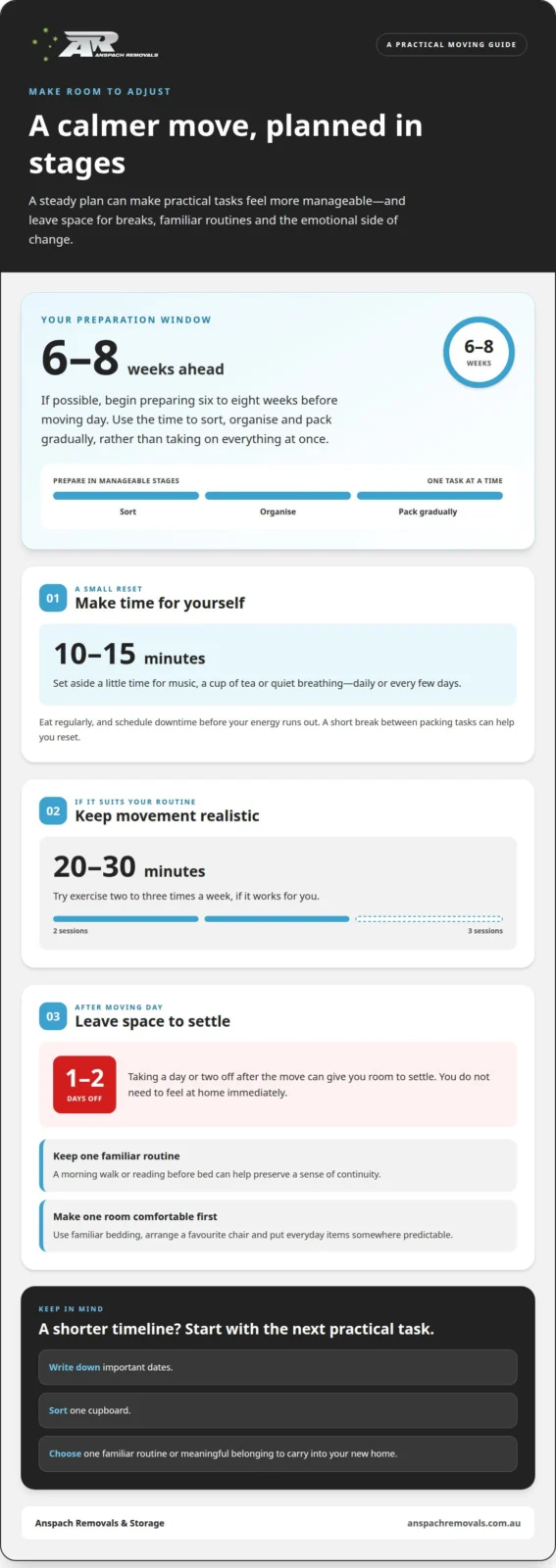
If you can, start preparing six to eight weeks before moving day. This gives you time to declutter, handle administration and pack gradually instead of facing everything at once. If your timeline is shorter, begin with the next practical task, such as listing important dates or sorting one cupboard.
Prepare emotionally as well as practically. Write down what you hope to gain from the move, then note your main worries and one response to each. If you’re concerned about losing touch with friends, for example, plan a regular call. If unfamiliar streets worry you, choose a local place you’d like to explore.
The circumstances behind a move can shape how the adjustment feels. Choosing to move for a fresh start may bring excitement as well as uncertainty, while an unexpected change can leave less time to process the decision. For instance, if you are relocating alongside a vocational shift—such as pursuing commercial driver training with Lone Star Truck Driving Academy—sorting out practical timelines and financing ahead of time helps keep things manageable. In either case, focus on what you can influence, such as the order you pack your belongings or which familiar routines you’ll keep.
Protect your mental health with small, realistic self-care steps. Set aside 10-15 minutes for music, a cup of tea or quiet breathing, either daily or every few days. If it suits your routine, try 20-30 minutes of exercise, two to three times a week. Eat regularly, too, rather than letting a busy packing day push meals aside.
Schedule downtime before your energy runs out. A short break between packing tasks can help you reset, and taking a day or two off after the move can give you space to settle. Keep one enjoyable part of your old routine, such as a morning walk or reading before bed. Physical care is equally vital when you are on your feet all day, with specialists like Ankle & Foot Centers noting the value of pacing yourself and addressing joint strain early.
Think of starting again as a series of small discoveries, not a demand to feel at home immediately. A simple plan can leave more attention for the emotional side of change. If organising the practical move feels like another load to carry, explore moving support as part of your preparation.
3. Why Is Moving to a New Home So Unsettling for Highly Sensitive People?
A home holds more than furniture. Familiar sounds, daily routines and memories can make leaving feel like a real loss. If you’re sensitive to change, you may also miss easy contact with a trusted neighbour or nearby family member. Keep your support network close by scheduling a call or visit, and take a familiar item, such as a favourite lamp, into your new home.
For a senior, moving can disrupt routines that support independence, such as knowing where the kettle is or recognising the walk to a local shop. Involve them in decisions about which belongings to take and where familiar items should go. Label key boxes clearly, set up the bed and kettle early, and keep a phone and important contacts within reach. These practical steps can make the first days easier to manage.
A new home can feel unfamiliar because its sensory details are different: the hallway light, street noise, room temperature or even the smell of fresh paint. Make one room comfortable first. Arrange a familiar chair, use the usual bedding and put everyday items in predictable places. Unpack meaningful possessions early so the surroundings begin to feel recognisable rather than temporary.
There’s no need to decorate everything at once. Psychologist Dr Diane Sanford took over a year to decorate her new house, showing that settling in can happen gradually. Start with the room you use most, then add familiar photos or a treasured blanket. A short walk around your new street can also help you learn its landmarks, such as a nearby park or bus stop.
Feeling unsettled during a move is normal, but persistent distress deserves support. In Australia, speak with your GP about moving anxiety. A family doctor can offer reassurance and discuss possible help, including mental health support. You can also ask a trusted friend or family member to join the appointment, take notes and help you follow through on next steps.
4. Breaking moving tasks into manageable steps
Packing, paperwork and decisions can compete for attention and make a move feel overwhelming. Break the job into separate tasks, then choose the next action instead of trying to solve everything at once. For example, “prepare the kitchen” can become “sort the pantry”, “pack rarely used cookware” and “leave out the kettle”. Smaller steps make progress visible and help you focus.
Start with belongings you don’t use every day, such as spare linen, books or seasonal items. As you sort, make separate keep, donate and bin piles so those decisions don’t follow you into the new home. Pack items that belong together and label each box with its room and a short description. Keep daily essentials, including medication, chargers and toiletries, easy to reach.
Next, handle practical tasks tied to the moving date. Arrange utilities at your new home before moving day so power and water are ready when you arrive. Forward your mail and update your bank with your new address. Put each job on a checklist with a clear next step, such as “submit address update”, rather than a broad reminder like “sort admin”.
Deciding what to do with furniture can also feel difficult, especially when the layout will change. Measure rooms and doorways, then decide where key pieces will go before moving day. Keep a simple floor plan or labelled sketch with your notes. If a task feels too large, ask a friend or family member to help with one specific decision, such as sorting a shelf or planning the lounge layout.
Leave room in the plan for breaks and unexpected jobs. A checklist is a guide, not a test, and adjusting it is a normal part of moving. Treat each completed task as an opportunity to clear mental space for the next one. If packing is taking over your week, get help with your move and keep your attention on the decisions that need you.
Anspach Removals & Storage: Moving Boxes
Anspach Removals & Storage supplies moving boxes to help you organise belongings and pack at a manageable pace. Start with items you use less often, such as books or spare linen, and label each box with its contents and destination room. Keeping everyday essentials separate makes them easier to find when you arrive.
For a local move, country move or interstate relocation, having boxes ready can make it easier to sort and group household items. If packing feels like too much alongside work, family routines and other moving tasks, Anspach Removals & Storage also provides packing services. Choose the support that suits your circumstances and leaves you more room to focus on settling in.
For a practical next step, contact Anspach Removals & Storage to discuss moving boxes and your relocation.
Take your next step one decision at a time
If you’re feeling anxious about moving to a new suburb, make your first goal smaller than “feel at home”. Choose one thing that would make the next ordinary day easier: knowing where to get your morning coffee, deciding what to unpack first or planning how to keep in touch with someone you’ll miss. Put that choice somewhere visible as a simple reminder when the day gets busy. You don’t need every part of your new life mapped out before you begin.
You can also decide what practical support would lighten your load. Anspach Removals & Storage provides Local Moves, Country Moves and Interstate Moves, so you can discuss support that fits your relocation plans.
Contact Anspach Removals & Storage to talk through your move. Start with one clear decision, then give yourself time to take the next.
Frequently Asked Questions
Why moving feels so stressful?
Moving can feel stressful because several decisions and changes often arrive together. Alongside organising belongings, you may need to manage work, family plans and unfamiliar responsibilities, such as learning a new school route. Choose one decision that affects the next few days and settle it first. For example, confirm who has the keys before planning where every piece of furniture will go.
How far in advance should I start preparing for a move to reduce stress?
Starting six to eight weeks ahead gives you more room to prepare in stages. Put fixed commitments, such as the handover date and planned time off work, in your calendar first. Then assign a small task to each available day. With less notice, prioritise time-sensitive arrangements and daily essentials instead of trying to finish every optional job before moving day.
What is relocation depression?
Relocation depression describes persistent low mood or difficulty adjusting after a move, rather than a diagnosis caused by the move itself. You might withdraw from usual activities or find everyday responsibilities harder to manage. If these feelings worsen or continue for weeks or months, speak with your GP or a mental health professional. Explain what has changed in your mood and routine since relocating.
Why do I have relocation anxiety about moving?
Relocation anxiety can arise when practical uncertainty combines with changes to everyday life. You might be unsure how a longer commute will affect childcare or whether your usual evening routine will still work. Write down the specific concern, then identify the next decision that could clarify it. Separating a solvable question from a broad fear makes it easier to decide what needs attention.
Why is moving to a new home so unsettling for highly sensitive people?
If you’re sensitive to change, you may notice details others overlook, such as traffic noise, bright streetlights or an echo in an empty room. These differences can make a new home feel tiring before it feels familiar. Try changing one manageable feature at a time: close a curtain, position a rug or use a familiar bedside lamp. A trusted person can help identify what feels most disruptive.
Why do people feel anxious about moving to a new suburb?
Feeling anxious about moving to a new suburb can come from not knowing how daily life will work there. You may wonder where to buy groceries, how long the commute will take or whether you’ll meet people nearby. Choose one useful first outing, such as finding the closest supermarket, and one social connection to maintain. Familiarity grows through ordinary experiences, not an instant sense of belonging.