
A damaged table, a scratched floor or a broken keepsake can turn moving day into a stressful dispute. If you’re wondering what to do if a removalist damages your property, act promptly, but don’t rush to repair or throw anything away before you’ve recorded what happened.
It’s understandable to worry that the damage will be denied, or that a contract clause means you have no options. The details matter: under Australian Consumer Law, removalist services must be provided with due care and skill, and contract terms can’t exclude those consumer guarantees. Whether you’re entitled to a remedy depends on the circumstances and the evidence.
This guide sets out a practical order of steps: make the area safe, inspect and photograph the damage, keep relevant paperwork, then make a written complaint to the removalist. You’ll also learn what to check in insurance documents, how to approach contract terms, and where to look for further guidance if direct discussions don’t resolve the issue. A calm, well-documented approach can help you understand your next steps and put your complaint on a firmer footing.
Key Takeaways
- If a removalist damages your property, make the area safe, photograph the damage, keep the item and notify the company in writing.
- Build a clear evidence file with your booking details, a description of the item and damage, when you found it, and copies of relevant messages.
- Consider the removalist’s response, any applicable insurance and your consumer rights as separate parts of the issue.
- If discussions stall, follow up in writing, ask for a response by a reasonable date and explore relevant South Australian complaint guidance.
- For a future move, record valuable items’ condition, flag fragile belongings and organise packing and access details clearly.
Removalist damaged your property? Take these first steps
Finding damage after a move is upsetting, but a calm, methodical response can help protect your safety and keep the facts clear. If you’re working out what to do if a removalist damages your property, deal with any immediate hazard first. Then document what you can before anything is repaired, cleaned up or moved.
Is anyone at risk, or could the damage get worse?
Keep people and pets away from broken glass, unstable furniture or exposed wiring. If there’s water damage, take reasonable steps to limit further harm, such as turning off a nearby water source if it’s safe to do so. Don’t put yourself at risk to protect belongings. Keep broken pieces and damaged items where possible, and note any urgent safety action, when you took it, and any related receipts or repair notes.
What should you record before contacting the removalist?
Before changing the scene, capture the damage clearly. Take wide shots showing where it happened and close-ups that show the details. A removalist is a type of moving company, but your evidence should focus on the specific job and damage, not general assumptions about the industry. Note the item, its location, when you discovered the damage and any records showing its condition before the move.
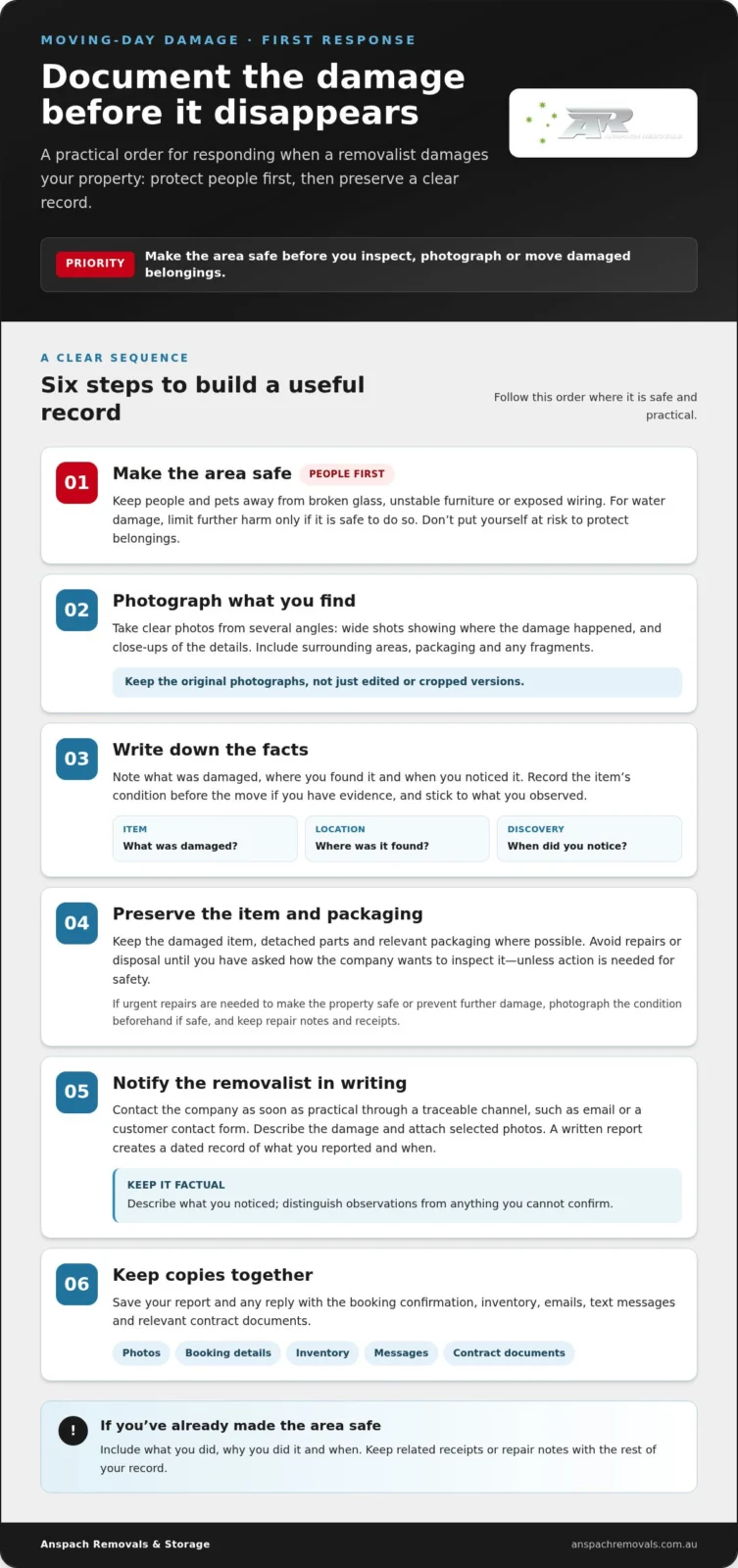
Follow this sequence where it’s safe and practical:
- Photograph: Take clear images from several angles, including surrounding areas, packaging and any fragments.
- Record: Write down what was damaged, where you found it and when you noticed it. Stick to what you observed.
- Preserve: Keep the damaged item, parts and relevant packaging. Avoid repairs or disposal until you’ve asked how the company wants to inspect it, unless action is needed for safety.
- Notify: Contact the removalist in writing as soon as practical. Describe the damage and attach selected photos. Prompt written notification creates a dated record of what you reported and when.
- Keep copies: Save your message and any reply with the booking confirmation, inventory, emails, text messages and relevant contract documents.
If you’ve already taken steps to make the area safe, include what you did and why. Keep the original photographs and documents, not just edited or cropped versions. This gives you an organised record to refer to as you discuss what happens next.
How to report removalist damage and build a clear evidence file
Once you’ve recorded the damage, send the removalist a concise written report through a traceable channel, such as email or a customer contact form. Keep a copy of what you send and any acknowledgement. A written report gives both sides a clear reference point, while a simple evidence log helps you track what was reported and what happens next.
What should a written damage report include?
Make it easy to identify the move and understand the issue. Include the booking reference or move date, the affected item and any inventory number, if available. Describe the visible damage and when you noticed it. Attach labelled photographs, then clearly state what you’d like the removalist to do next, such as confirm receipt, arrange an inspection or explain its proposed response.
Keep the wording factual. For example, write, “I noticed a crack in the cabinet door after delivery,” rather than presenting an unverified account of how it happened as fact. You can explain what you observed during the move, but distinguish that from what you can’t confirm. This keeps your report measured and focused on information the company can assess.
A short structure can help:
- Booking: Your name, move date and booking reference.
- Item: A clear description and inventory reference, if there is one.
- Damage: What is visibly damaged and where.
- Discovery: When and where you first noticed it.
- Evidence: A list of attached photos or documents.
- Request: The response or next step you’re seeking.
How do you preserve evidence while repairs are pending?
Keep the damaged item, packaging and detached parts together where practical, and store them safely while the matter is assessed. Add each update to an evidence log: date and time, who you spoke with, the key points discussed, any inspection notes and the next step agreed. After a phone call, a brief email summarising your understanding can help keep the record accurate.
If urgent repairs are needed to make the property safe or prevent further damage, photograph the condition beforehand if it’s safe to do so. Record why the work was necessary and keep invoices, repair notes and any replaced parts. Don’t assume there’s one universal claim form or reporting deadline. Check the relevant contract and any applicable insurance terms.
If direct contact doesn’t resolve the matter and the removalist is an AFRA member, you can review the AFRA complaints process as a possible next step. For a future move, clear planning and communication can help keep arrangements organised. Anspach Removals & Storage’s moving services include local moves in Adelaide, country moves across South Australia and interstate moves.
Who is responsible when a removalist damages your belongings?
Responsibility isn’t settled by one conversation, an insurance decision or a line in the booking paperwork. Consider three things separately: what happened during the move, what the removalist says in response, and whether an insurance policy or Australian Consumer Law (ACL) may apply. If you’re weighing up what to do if a removalist damages your property, keep the evidence and documents together while you work through each part.
Under the ACL, services must be provided with due care and skill. Depending on the circumstances, this consumer guarantee may be relevant if damage occurred because the service wasn’t carried out with due care and skill. The outcome depends on the facts, the service provided and the documents involved. This is general information, not a decision about your particular claim.
How the different processes fit together
| Issue | What it concerns |
|---|---|
| Removalist response | The company’s account of the incident and any proposed next steps. |
| Insurance | Whether a specific policy responds, subject to its terms and claim conditions. |
| Consumer rights | Whether ACL guarantees or other rights apply to the service and circumstances. |
These are separate considerations, and none alone guarantees a particular outcome. The relevant facts and documents matter.
Do contract terms or disclaimers settle the complaint?
Read the booking terms, inventory, any declared-value information and exclusions carefully. They can help clarify what was agreed and what process the company says applies. But a disclaimer doesn’t, by itself, establish the full legal position. ACL consumer guarantees can’t be excluded by a contract term, although how they apply to a particular damage complaint depends on the circumstances. Avoid assuming a clause settles the matter either way.
How are insurance and consumer guarantees different?
Insurance is a policy-based process: the wording, excess, exclusions and claim conditions determine whether a particular loss may be covered. Vehicle insurance, for example, isn’t the same as cover for your belongings. Consumer guarantees are legal rights relating to the service itself, including the requirement for due care and skill. An insurance decision doesn’t automatically answer whether a consumer guarantee applies, and a consumer guarantee doesn’t promise that an insurer will pay.
Keep the removalist’s response, policy documents and contract terms together, and note any differences between them. If the position remains unclear or the amount at stake is significant, consider getting independent consumer or legal advice before deciding what to do next.
What to do if the removalist does not resolve your complaint
If the first response doesn’t settle the issue, keep the next steps calm and documented. A proportionate path is to follow up in writing, make a formal complaint to the business, seek current South Australian consumer guidance, then consider independent advice if the dispute continues.
How can you make a formal complaint easier to assess?
Send a concise summary that brings the key details together: the move date and booking reference, what was damaged, when you noticed it, the evidence you have, and the steps you’ve already taken to contact the company. State the outcome you’re seeking and ask for a written response by a reasonable date. Attach copies of supporting documents, not originals, and keep the message and any reply.
Stay factual and specific. If the business proposes an inspection, repair or settlement, record the agreed next steps in writing, including who will do what and any timing discussed. If you don’t receive a response by your requested date, follow up once and retain that correspondence too.
When should you seek independent consumer or legal guidance?
For South Australian guidance, Consumer and Business Services (CBS) can be a starting point for consumer information and assistance. Check its current website or contact channels for the process that applies to your situation, as complaint options can depend on the type of dispute. Keep your evidence file ready so you can explain the matter clearly.
SACAT or another tribunal may be relevant only for certain disputes. Don’t assume a tribunal can hear your claim. Check its current jurisdiction, eligibility requirements and procedures before applying. If the loss is substantial or the dispute remains unresolved, independent legal advice can help you understand the options available for your circumstances.
The ACCC provides Australian Consumer Law information and accepts reports about possible issues, but it doesn’t resolve individual claims or decide compensation for you. That distinction matters: use the ACCC for general guidance, and seek a pathway suited to resolving your particular dispute.
Keep the focus on clear records, reasonable requests and the appropriate next step. If you’re planning a future move in Adelaide or elsewhere in South Australia, you can explore local, country and interstate moving services and prepare key details early to support clear communication.
How to reduce damage risk on your next move
Good preparation won’t remove every risk, but it can make handling priorities clearer and help you spot changes to belongings. A simple plan also gives you a useful record if you later need to work out what to do if a removalist damages your property.
What can you do before moving day?
Start with a room-by-room inventory, noting valuable, fragile or unusually shaped items. Take clear photos of their condition before packing, including close-ups of existing marks. These records help distinguish pre-existing wear from damage noticed after the move.
- Set aside essentials: Keep important documents, medication, keys and items you’ll need straight away with you. Personally transport belongings that shouldn’t go on the moving vehicle.
- Label boxes clearly: Mark fragile contents and identify the room each box belongs in. Use labels that are easy to see, and make any special handling needs clear.
- Share practical details: Explain access constraints, stairs, narrow hallways, parking arrangements and any delicate or awkward items before moving day.
Clear information helps everyone prepare for the route from the property to the vehicle and into the new home. If circumstances change, such as access becoming restricted, pass on the update as soon as you can.
How can a structured move support clearer communication?
A written plan brings the details together: what needs packing, which items need particular care, where boxes should go and what access arrangements apply at each end. Agreeing on priorities ahead of time can reduce confusion during a busy move. Keep a copy of your inventory and note any changes to the plan.
For local, country or interstate moves, Anspach Removals can help organise the move around your requirements. You can also read our guides to Furniture Removalists Adelaide and Local Removalists Adelaide for further planning guidance.
Careful preparation and clear communication are practical steps, not a promise that damage can never happen. If you’re ready to organise your next move, plan your next move with Anspach Removals.
Take your next step with confidence
If you’re working out what to do if a removalist damages your property, follow a clear sequence: make the area safe, record and preserve evidence, then raise the issue in writing. Keep the booking documents and correspondence together, and review the removalist’s response, any relevant insurance terms and your consumer rights as separate considerations.
For a future move, an inventory, condition photos and clear instructions about fragile items and access can help everyone stay organised. Anspach Removals is a South Australian-owned and operated family business that has been moving households since 2002, with local moves in Adelaide, country moves across South Australia and interstate moving services.
When you’re ready to plan your next move, plan your next move with Anspach Removals. A thoughtful plan and clear communication can help you approach moving day with greater confidence.
Frequently Asked Questions
What should I do first if a removalist damages my furniture?
Make any immediate safety issue safe, then photograph the damage before moving or repairing the furniture. Note when and where you discovered it, and keep the item and any detached parts. Notify the removalist in writing with your booking details, a factual description and labelled photos. Save your message and all replies. These first steps help create a clear record while you consider what to do if a removalist damages your property.
How soon should I tell a removalist about damage?
Report damage as soon as reasonably possible, using a written channel such as email so you have a dated record. Check your booking terms for any notification procedure, but don’t assume the same deadline applies to every move. If some time has passed, report it now. Explain when you discovered the damage, why you’re notifying the company now and what evidence you still have.
Can a removalist refuse a damage claim because of its terms and conditions?
Contract terms may be relevant, but a clause alone doesn’t necessarily decide every legal issue or complaint outcome. Read the booking documents, including any exclusions or declared-value terms, and keep a copy. Australian Consumer Law guarantees may also apply to services, including the requirement that they be provided with due care and skill. How the law and contract apply depends on the facts and wording, so seek independent guidance if disputed.
Does removalist insurance cover damaged belongings?
It depends on the policy, what it covers, its exclusions, excess and claim conditions. Ask for the relevant policy information and read the terms rather than assuming damage is automatically covered. Keep your evidence and notify the removalist promptly as well. Insurance and consumer rights are separate questions: an insurer’s decision under a policy doesn’t necessarily settle every issue between you and the removalist.
What evidence do I need to report damage caused during a move?
Gather clear photos from different angles, a description of the item and visible damage, and the date you noticed it. Add any pre-move photos or inventory entries, booking documents, messages, inspection notes and repair records. Keep originals where possible and organise copies in one place. Separate what you personally observed from what you suspect happened. A factual, well-organised file helps the removalist or an adviser understand your complaint.
Who can help with a removalist dispute in South Australia?
Start with a written complaint to the removalist and keep its response. For consumer information or assistance in Adelaide and elsewhere in South Australia, check current guidance from Consumer and Business Services SA. The ACCC provides national consumer information, but it generally doesn’t resolve individual claims. A tribunal or legal pathway depends on your circumstances, so check the relevant body’s current jurisdiction and process before taking that step.