
If a removalist didn’t protect your furniture properly and it was damaged or lost, you may be entitled to a remedy under Australian Consumer Law if the service failed to meet the consumer guarantee of due care and skill. Your rights depend on what happened and the available evidence. Insurance is a separate matter, governed by the policy’s terms.
It’s understandable to expect furniture to arrive in the condition it left your home. This article explains what to do after damage, how to document it, and how protective materials and careful loading can help reduce risk. You’ll also learn what goods-in-transit insurance may cover and what to include in a written complaint, so you can consider your next steps.
Key Takeaways
- If furniture is damaged or lost, Australian Consumer Law may give you a right to a remedy when the removalist service hasn’t been delivered with due care and skill.
- Insurance cover depends on the policy. Look closely at exclusions for customer-packed items and whether valuable belongings need to be declared separately.
- Photographs taken before and after the move can help show the furniture’s condition and support a clear written complaint.
- Blankets, suitable wrapping and secure truck loading each help reduce damage risks, but delicate finishes and glass need particular care.
1. Insurance for goods damaged or lost during a move
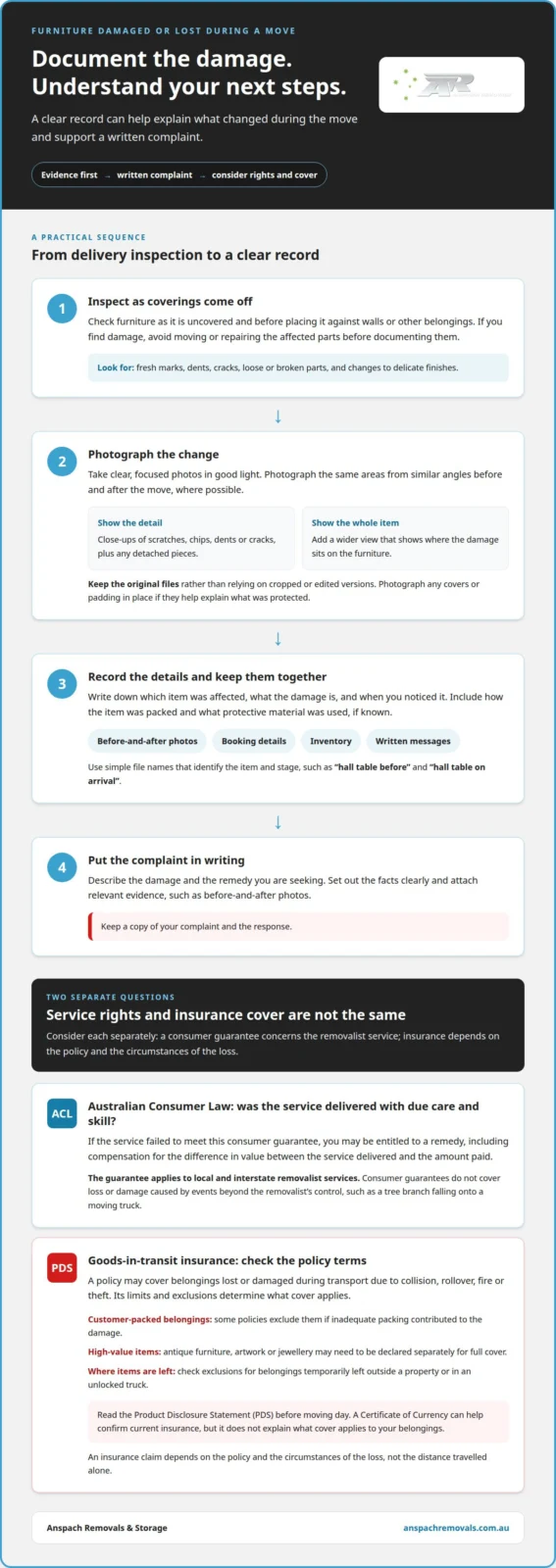
If a removalist didn’t protect furniture properly, insurance and your legal rights are separate issues. Under Australian Consumer Law, removalist services must be delivered with due care and skill to avoid damage or loss. If the service fails to meet a consumer guarantee, you may be entitled to a remedy, including compensation for the difference in value between the service delivered and the amount paid.
Goods-in-transit insurance may cover belongings lost or damaged during transport due to a collision, rollover, fire or theft. The policy sets out its limits and exclusions. For example, some policies exclude customer-packed belongings if inadequate packing contributed to the damage. High-value items, such as antique furniture, artwork or jewellery, may need to be declared separately for full cover.
Read the policy’s Product Disclosure Statement (PDS) before moving day. Check how it treats packed belongings, valuables and furniture temporarily left outside a property or in an unlocked truck. Some policies exclude items left in these situations. A Certificate of Currency can help confirm that a removalist holds current insurance, but it won’t explain what cover applies to your belongings.
For local and interstate moves, Australian Consumer Law’s due-care-and-skill guarantee applies to the removalist service. An insurance claim depends on the policy and the circumstances of the loss, not the distance travelled alone. Keep your booking details, inventory, photos and written communications together. If damage occurs, record which item was affected, how it was packed and when you noticed the damage.
Consumer guarantees don’t cover loss or damage caused by events beyond the removalist’s control, such as a tree branch falling onto a moving truck. Otherwise, send a written complaint describing the damage and the remedy you’re seeking. Set out the facts clearly, attach relevant evidence, and keep a copy of your complaint and the response.
2. Moving blankets, stretch wrap and bubble wrap
Choose protection to suit the furniture’s surface and shape, not just its size. Moving blankets cushion timber cabinets and upholstered chairs against knocks and rubbing. Plastic covers can help shield furniture from dust and moisture, especially in wet weather. A mattress cover can also reduce the chance of marks, dust or moisture reaching the fabric.
Stretch wrap can hold a blanket in place, but avoid leaving it directly against delicate finishes for too long. Heat can build up beneath the wrap, and direct contact may leave marks, particularly in warm weather. Place a blanket or suitable layer between the wrap and polished timber, painted furniture or upholstery. Keep the wrap snug enough to secure the covering without stretching it tightly over exposed surfaces.
Keep adhesive tape away from polished timber, painted surfaces and upholstery. Tape may pull at a finish or leave marks when removed. Secure blankets around a chair or cabinet without sticking tape to the furniture. Put loose hardware or small removable parts in a labelled bag with the matching item, rather than taping them to a visible surface.
Bubble wrap can cushion small, delicate pieces, such as removable ornaments or fittings, when packed separately. It isn’t a substitute for a furniture blanket around a large cabinet, and wrapping alone doesn’t prevent an item shifting during transport. Keep protected parts together in a box, with padding to limit movement. Use moving boxes to keep smaller components contained and easier to identify at the destination.
Before the move, check each covering for gaps, loose edges and exposed corners. If a removalist didn’t protect furniture properly, record which material was used, where it was placed and what damage appeared. These details can help distinguish a surface scuff from damage caused by pressure, moisture or rubbing.
3. Photographing belongings before and after a move
Take clear photos of valuable or delicate furniture before moving day. Start with a wide shot of the whole item, then take close-ups of existing scratches, chips, loose joints or worn upholstery. For a timber cabinet, photograph the doors, corners and top separately. These images provide a visual record of the furniture’s condition before it is handled.
Use good lighting and keep each image in focus. After delivery, photograph the same areas from similar angles so changes are easier to spot. If a new dent appears on a table leg, take a close-up and another photo showing its position on the whole table. Keep the original files rather than relying on cropped or edited versions.
Include the room or location when it helps explain an item’s condition. A wide shot of a wardrobe beside a narrow doorway, or furniture near stairs, can add context to close-ups. Photograph the item before it is wrapped, and record any covers or padding already in place. This can show what was visible before loading.
At delivery, inspect furniture as coverings come off and before placing items against walls or other belongings. Photograph fresh damage promptly, including the surrounding surface and any loose or broken parts. For a cracked table, capture the crack, the whole tabletop and any detached pieces. Avoid moving or repairing damaged parts before documenting them.
Use simple file names that identify the item and stage, such as “hall table before” and “hall table on arrival”. Keep the photos with your booking details, inventory and written messages. In a complaint, describe the item, the damage and when you noticed it, then attach relevant before-and-after images. A clear record makes it easier to explain what changed during the move.
4. Securing furniture in the moving truck
Truck loading affects how furniture moves during transport. Heavier, sturdier pieces generally go in first to create a stable base for lighter items. A securely placed cabinet can support the load, while loose items stacked above it may shift or press against delicate surfaces. Balance the load and avoid large gaps where pieces could slide.
Position items with their shape and finish in mind. Group sturdy furniture together, using padding or cushions between pieces to reduce movement and rubbing. Leave space around fragile edges rather than wedging them tightly against other items. Avoid placing furniture near truck openings, where it may be more exposed during loading and unloading.
Glass needs more than a soft wrapping layer. Tabletops, cabinet doors and glass inserts need rigid protection and careful positioning to reduce the risk of impact or bending. Keep glass components separate from heavier furniture, and support them securely rather than leaning them against an unstable load. A blanket alone won’t stop glass shifting if surrounding items move.
Regional and longer-distance trips call for particular attention to spacing and stability. An item that seems secure at pickup can rub against another piece during the journey. Padding should separate contact points, and the load should be arranged to limit movement. If furniture arrives with a fresh scrape, dent or cracked component, note its position and any nearby items before unloading changes the arrangement.
For a move involving several large pieces, careful loading is part of protecting them, not an afterthought. Clear access to the truck and an accurate inventory can help the crew plan how furniture fits together. If you’re organising a move, discuss your moving requirements so the furniture, route and transport needs can be considered together.
Anspach Removals & Storage
Anspach Removals & Storage can help when you’re planning a move and want furniture handling considered as part of the relocation. Its services include Local Moves, Country Moves, Interstate Moves and Office & Commercial Relocations, supporting household and workplace moves across different distances.
If a previous move has left you concerned about damage, use what you’ve learned to set clear priorities for your next one. Note which furniture needs particular care, any access challenges, and whether the move involves stairs or a longer journey. Sharing this context helps the relocation team plan your move with you.
For a local, country, interstate or commercial relocation, contact Anspach Removals & Storage to discuss your moving needs.
Set clear expectations for your next move
If a removalist didn’t protect your furniture properly, it can shake your confidence about handing your belongings over again. For your next move, turn your concerns into a practical plan: note any delicate finishes, unusual shapes, access constraints or pieces needing special attention. Share these priorities before moving day so handling requirements are part of the conversation from the start.
Keep your move details and furniture priorities together in one place. This gives you a clear reference when planning logistics and helps you explain what you need without having to recall every detail on the spot. A calm, specific conversation is a useful first step towards making the move more manageable.
For support planning your next relocation, contact Anspach Removals & Storage. Take the next step at your own pace, with a clearer plan for the belongings that matter to you.
Frequently Asked Questions
What are my rights if something goes wrong?
Australian Consumer Law requires removalist services to be carried out with due care and skill. The service must also be reasonably fit for a purpose you specified and provided within a reasonable time if no timeframe was agreed. If a consumer guarantee isn’t met, you may be entitled to a remedy. Loss or damage caused by events beyond the removalist’s control is treated differently.
What should I do if an Australian removalist damaged furniture due to inadequate protection?
Tell the removalist in writing as soon as practical, describing the furniture, the damage and how it was protected. Keep the item and any broken parts in their current condition until you’ve documented them. For example, if a chair leg has cracked, photograph the break and its position before arranging repairs. State the outcome you’re seeking and keep a copy of your message.
What evidence should I collect for a furniture damage claim against a removalist?
Gather evidence connecting the item’s condition to the move. Useful records include your booking confirmation, inventory, photos, messages about handling instructions and any written damage report. Note when you first saw the problem and which item was affected. If you obtain a repair assessment or replacement estimate, keep it with your other documents to explain the loss you’re claiming.
How do I make a complaint or compensation claim against an Australian removalist?
Write to the removalist with the move details, a clear description of the damage, supporting records and the remedy you want. Keep a dated copy and allow a reasonable time for a response. Seven days is one example of a response period. If the matter remains unresolved, contact the relevant state or territory fair trading or consumer protection agency for information about your next steps.
What are removalists’ responsibilities for protecting furniture under Australian consumer law?
Removalists must provide their service with due care and skill, including taking care to avoid damage to or loss of customers’ belongings. The service must also be reasonably fit for a purpose you specifically communicated. For example, explaining that a cabinet needs careful handling because of its delicate finish helps define the service you requested.
Does removalist insurance cover damage caused by poor packing or inadequate protection?
Cover depends on the policy and who packed the furniture. Goods-in-transit insurance may cover loss or damage from events such as collision, rollover, fire or theft. Some policies exclude customer-packed items if poor packing contributed to the damage. Read the Product Disclosure Statement for exclusions and claim requirements, and distinguish an insurance claim from a complaint about whether the removal service met its consumer guarantees.