
Stacking dinner plates flat inside a carton is the fastest way to turn your favourite dinner set into broken ceramic shards. If you are packing a kitchen for moving Australia, this single room is almost always the most demanding part of the entire relocation. Between fragile stemware, heavy cast-iron cookware, and unsealed pantry items, it quickly feels impossible to pack safely while still feeding your family each night.
You shouldn’t have to survive on takeaway for a fortnight just to make progress, nor should you spend moving day anxious about shattered heirloom glasses or leaking bottles of oil. With the right protective methods and a structured strategy, you can easily secure your high-value dinnerware and eliminate breakages without upending your daily routine.
Below, you will find our step-by-step guide to pacing your kitchen packing, safely cushioning delicate items, and keeping essentials running right up until the truck arrives.
Key Takeaways
- Starting your preparation at least two weeks early and sourcing heavy-duty cartons makes packing a kitchen for moving Australia significantly less stressful.
- Build a crumpled paper cushion at the base of every fragile box and pack plates vertically on their rims to absorb road shock.
- Defrost and dry refrigeration units at least 24 hours in advance, ensuring internal shelving and loose parts are completely secured.
- Protect your load from messy leaks and avoid border quarantine complications by properly sealing liquid bottles and checking interstate food rules.
- Weigh up the 15 to 25 hours required for DIY packing against dedicated professional packing services that give you complete peace of mind.
Pre-Packing Preparation & Essential Supplies for Australian Kitchens
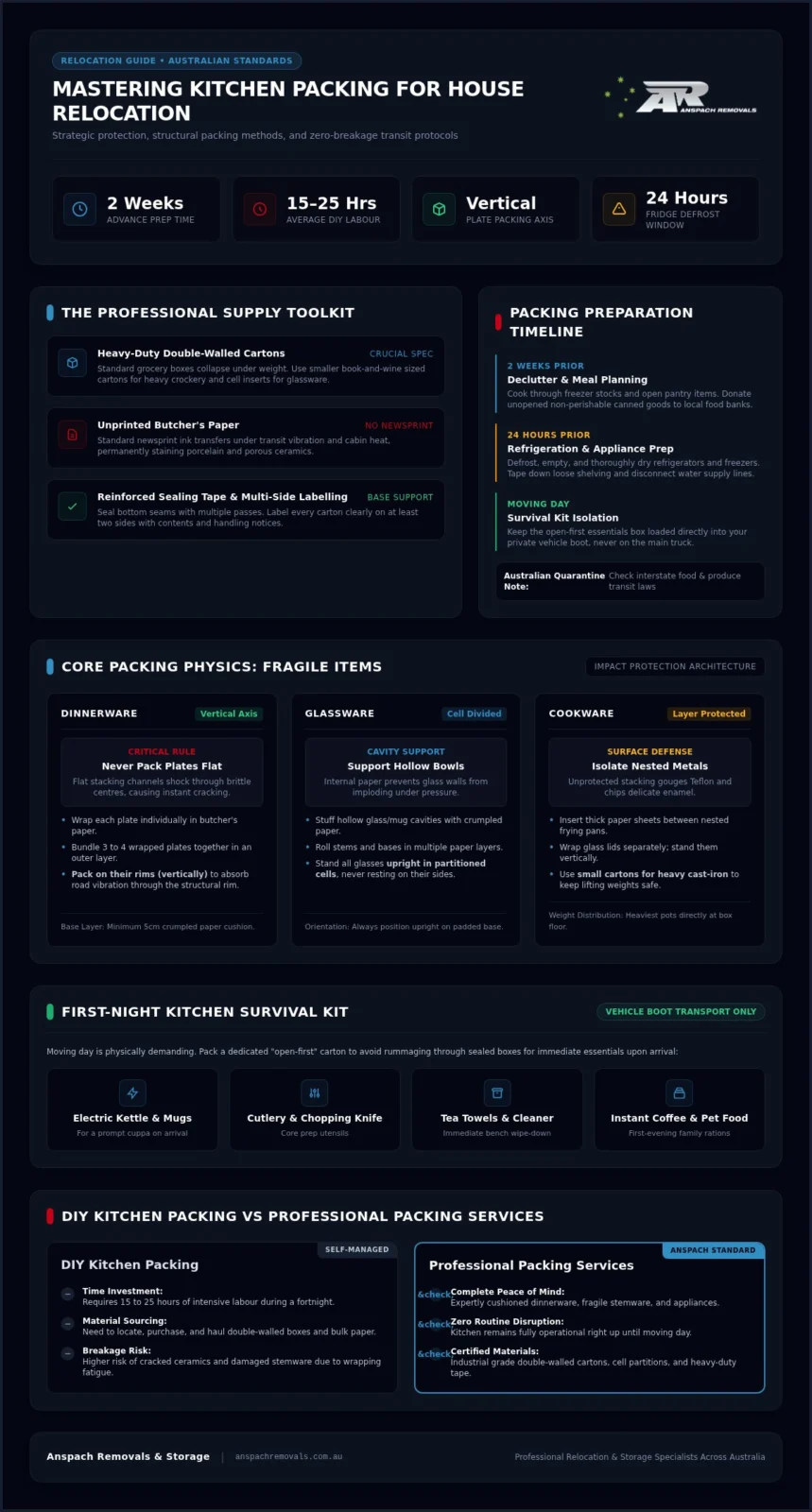
Getting an early start is the golden rule when packing a kitchen for moving Australia. Kitchens contain more dense, fragile, and oddly shaped items than almost any other room, making it vital to start your preparation at least two weeks before your moving date. Planning ahead gives you the breathing room to sort through crowded cupboards, source reliable protective materials, and make the overall process of moving house far less stressful for your household.
Decluttering Cupboards and Expired Pantry Goods
Take an honest look at your shelves before touching a single roll of tape. Pull out duplicate gadgets, chipped stoneware, and novelty utensils you haven’t touched all year. In the fortnight leading up to moving day, design family meals around open pantry staples and freezer stocks to cut down on volume. For unopened, non-perishable canned goods and dried pulses you won’t use, donate them to a local food pantry rather than lugging them across town.
The Essential Packing Supply Toolkit
Thin grocery boxes or crisp cartons will quickly collapse under the weight of stacked ceramics and cookware. Invest in heavy-duty, double-walled boxes engineered to hold dense kitchenware without buckling. Your essential toolkit should feature:
- Heavy-duty cartons and cell dividers: Use smaller book-and-wine sized cartons for heavy crockery and cell inserts to isolate fragile glassware.
- Unprinted butcher’s paper: Avoid standard newspaper, as transit vibration and cabin heat cause ink to transfer onto glazed porcelain and porous ceramics, leaving stubborn stains.
- Reinforced tape and markers: Seal every bottom seam with multiple passes of premium packing tape, and clearly mark boxes on at least two sides with room labels and handling notes.
Assembling Your First-Night Kitchen Survival Kit
Moving day is physically draining, and the last thing you want is to rummage through a dozen sealed boxes just to make a cuppa. Pack a clearly labelled “open-first” box containing an electric kettle, mugs, essential cutlery, a chopping knife, tea towels, instant coffee, and pet food. Transport this survival kit directly in your own vehicle boot rather than loading it onto the removal truck, guaranteeing easy access the moment you walk through the door of your new home.
How to Pack Fragile Kitchen Items: Plates, Glassware, and Cookware
Cushioning is the secret to getting fragile kitchenware through transit without a single scratch. When packing a kitchen for moving Australia, the most critical step happens before any dish enters a carton: building a shock-absorbing base. Crumple generous sheets of unprinted butcher’s paper into tight rolls to form a thick mattress across the box floor. Every single piece of crockery and glassware must then be wrapped individually to eliminate the ceramic-on-ceramic friction that causes chipping under transit vibrations.
Packing Dinner Plates and Bowls Vertically
Place a plate in the centre of your paper, fold each corner snugly over the rim, and wrap it completely. For extra rigidity, stack three or four individually wrapped plates together and wrap the entire bundle in another protective layer. Stand these bundles upright on their rims rather than lying them flat. Vertical plate packing reduces transit breakage risk significantly compared to flat stacking. Standing them on edge channels downward road shocks through the strongest structural rim instead of the brittle centre.
Wrapping Wine Glasses, Tumblers, and Delicate Mugs
Stemware requires delicate, methodical handling. Begin by stuffing crumpled paper into the hollow bowl of each wine glass to support its fragile walls from within. Next, roll the stem and base in several layers of butcher’s paper, tucking any excess neatly inside the rim. Stand all glassware upright inside partitioned cell dividers or on top of a cushioned paper layer, never flat on their sides. If you prefer to skip the stress of wrapping dozens of delicate glasses yourself, booking full packing services from Anspach Removals & Storage gives you total peace of mind.
Nesting Pots, Pans, and Heavy Cast Iron
Stacking cookware saves valuable room, but bare metal will quickly gouge teflon and enamel surfaces. Place thick sheets of paper or protective cushioning between nested frying pans to preserve their non-stick coatings. Wrap heavy glass saucepan lids separately, standing them vertically beside their matching pots. For dense cast-iron skillets and Dutch ovens, use smaller cartons to keep lifting weights safe. While clearing out preserving pots or pantry cookware, remember that any garden produce or fresh pantry preserves must comply with strict interstate quarantine rules before crossing state lines. Finally, fill every leftover interior void with crumpled paper until nothing shifts when shaken.
Preparing and Moving Kitchen Appliances Safely
Whitegoods and benchtop gadgets present a very different set of challenges when packing a kitchen for moving Australia. Unlike static crockery, appliances contain mechanical motors, electronic dials, and hidden water reservoirs that can cause serious water damage or component failure if moved improperly. Getting these items ready requires methodical advance preparation to guarantee they arrive at your new property dry, clean, and in full working order.
Defrosting and Sanitising Fridges and Freezers
Unplug your refrigerator at least 24 hours prior to loading day. Place old towels around the base to catch thawing runoff as the evaporator coils melt. Clean every internal surface with an antibacterial spray or baking soda solution to prevent sour odours and mildew spores from multiplying in transit. For detailed manufacturer recommendations on settling compressors and keeping cooling systems safe, review consumer guidelines on moving your fridge safely before moving day arrives.
Securing Dishwashers and Microwave Turntables
Hidden residual water can easily pool inside moving vehicles if lines aren’t drained beforehand. Take these simple precautions to secure your major wet and dry appliances:
- Drain all hoses: Disconnect the inlet and waste lines of your dishwasher, draining any stagnant water directly into a shallow bucket.
- Remove fragile rotating components: Lift out glass microwave trays and roller rings, wrapping them in butcher’s paper and packing them inside a separate small carton.
- Protect external finishes: Fasten appliance doors shut using painter’s tape or stretch film rather than standard packing tape, which leaves stubborn adhesive residue on stainless steel.
Boxing Small Benchtop Electrical Appliances
Small electrics like air fryers, blenders, and pod espresso machines need secure, dedicated packing. Empty water tanks on coffee machines completely, running a dry cycle to clear internal tubing. Wherever possible, pack these benchtop gadgets into their original manufacturer packaging with their contoured styrofoam supports. If the original boxes are gone, choose medium double-walled cartons lined with clean towels, bundle cords tightly with cable ties to prevent plugs scratching powder-coated exteriors, and cushion any digital dials. When shifting heavy refrigeration units and full-size dishwashers, turning to experienced furniture removalists Adelaide residents rely on keeps heavy lifting completely injury-free.
Pantry, Liquids, and Food Transport Rules Across Australia
Pantry items might look straightforward, but unsealed groceries and bottles create some of the messiest accidents in a removal truck. When packing a kitchen for moving Australia, a single loose cap on a bottle of olive oil can ruin an entire carton of cookware or soak into neighbouring furniture. Managing dry goods, pantry liquids, and perishables requires deliberate sealing techniques and a solid understanding of transport guidelines before anything is boxed.
Sealing Open Liquids, Oils, and Spices
Preventing greasy spills begins with double containment. Unscrew the caps on half-used cooking oils, vinegar bottles, and soy sauce, stretch a small piece of cling wrap across the bottle neck, and then screw the cap back on firmly. Place these bottles upright inside compact plastic storage tubs rather than cardboard cartons, ensuring that any accidental seepage stays completely contained. Transfer opened packets of flour, sugar, baking powder, and exotic spices into airtight zip-lock bags so powdery contents cannot burst open under shifting transit pressures.
Navigating Australian Agricultural Quarantine Restrictions
Moving food supplies across borders involves more than just keeping cartons clean; it involves strict biosecurity laws. Long-distance relocations require careful attention to local agricultural protections:
- Fruit fly prevention: South Australia maintains zero-tolerance border checks and random roadblocks into regions like the Riverland Pest Free Area to stop Queensland fruit fly outbreaks. Bringing restricted fresh fruit or fruiting vegetables across these lines can trigger heavy on-the-spot fines, so use public disposal amnesty bins before reaching checkpoints.
- Honey and hive products: States like Western Australia prohibit domestic, uncertified honey and honeycomb from entering to protect local hives against devastating bee pests.
- Interstate planning: Commercially packaged, shelf-stable items such as dried pasta, sealed tinned food, and manufactured sauces are generally safe to move, but fresh produce, backyard honey, and homegrown root vegetables should be consumed or given away before departure.
Safely Packing Wine and Specialty Glass Bottles
Wine collections demand sturdy support and temperature awareness. Invest in purpose-built wine cartons fitted with corrugated cardboard dividers or polystyrene cells to prevent glass-to-glass contact during road transit. Wrap every individual bottle in clean butcher’s paper to stop friction from scuffing collectable vintage labels. If you are coordinating a long-distance relocation or navigating regional agricultural borders, work directly with interstate removalists Adelaide families trust. To ensure your entire relocation proceeds without a hitch, contact Anspach Removals to discuss tailored transit and container options for your household.
DIY Kitchen Packing vs. Professional Packing Services
Deciding whether to tackle everything yourself or bring in seasoned help comes down to balancing your available free time against the sheer volume of fragile kitchenware. Packing a kitchen for moving Australia represents one of the most time-consuming domestic tasks you will face during a relocation. Understanding the real trade-offs between self-packing and specialist assistance helps you choose the path that preserves your sanity, protects your belongings, and keeps your moving schedule on track. For instance, if you are planning an overseas relocation or simply want to see how comprehensive packing packages operate in major hubs abroad, you can explore House Removals as an example of what professional residential services include.
Evaluating the True Time Cost of Self-Packing
A standard family kitchen typically requires between 15 to 25 hours of self-packing. That time vanishes quickly across busy evenings and weekends as you source cartons, wrap delicate crockery piece by piece, and secure boxes. Beyond the clock, living among half-packed cartons while juggling daily family dinners takes a heavy mental toll. When packing fatigue sets in late at night, hasty shortcuts often lead to damaged heirlooms and cracked dinnerware on the road.
When to Engage Professional Kitchen Packers
Handing over the job to an experienced team makes immense sense when moving fragile dinner sets, fine crystal, or sprawling pantries. Professional packers use specialised techniques to optimise carton density, preventing interior shifting and eliminating breakages. Enlisting dedicated local removalists Adelaide households trust also unlocks peace of mind regarding transit insurance, as many policies require removalist pre-packing to cover accidental breakages during transit.
Unpacking Priorities for a Seamless First Night
A structured packing system pays immediate dividends when settling into your new kitchen. Once cartons arrive, adopt a simple room-by-room sequence to regain comfort fast:
- Sanitise first: Wipe down new cupboard interiors and pantry shelving before unboxing any groceries or cookware.
- Access the essentials: Open your first-night survival box to set up the kettle, everyday mugs, and pet food bowls so your household stays nourished.
- Work outward systematically: Unpack everyday cutlery, core pots, and daily dinnerware before tackling novelty gadgets or entertaining sets.
For dependable, family-backed relocation support across South Australia, the Anspach team provides heavy-duty moving boxes, expert packing assistance, and careful handling to ensure your kitchen arrives intact.
Take the Stress Out of Moving Your Kitchen
Successfully packing a kitchen for moving Australia comes down to methodical structure, patient cushioning, and using the right heavy-duty cartons. When you pack fragile plates vertically on their rims, drain appliances thoroughly, and keep a handy survival kit in your car boot, moving day becomes remarkably straightforward. You don’t have to face broken heirloom dinnerware or messy pantry spills when you take things step by step.
If you would rather hand over the delicate wrapping and heavy lifting to seasoned specialists, our team is ready to step in. Proudly South Australian family-owned and operated since 2002, Anspach Removals brings over two decades of dependable furniture transport, dedicated packing services, and secure storage across Adelaide and regional South Australia. Request a free moving quote from Anspach Removals today, and look forward to stepping into your new home with complete confidence.
Frequently Asked Questions
How many boxes do I need to pack an average kitchen for moving?
A standard three to four-bedroom home typically requires between 15 and 25 specialised moving boxes. You will generally need a split between heavy-duty 52-litre book-and-wine cartons for crockery, canned goods, and cutlery, alongside larger 104-litre tea chest cartons for lighter cookware, mixing bowls, and small appliances. Having plenty of butcher’s paper on hand ensures every box is packed securely without empty internal pockets.
Can I use newspaper instead of butcher’s paper to wrap kitchen crockery?
You should avoid using printed newspaper because ink rubs off easily onto delicate glazes and porous earthenware. Vehicle vibration and cabin heat during transport press newsprint directly into fine china, bone porcelain, and textured handles. Removing those ink marks often requires harsh chemicals that can ruin your dinnerware. Plain, unprinted butcher’s paper costs very little, provides cleaner cushioning, and ensures your dishes arrive ready for your new cupboards.
What should I do with food in the fridge and freezer when moving?
The safest approach is eating down your chilled and frozen inventory during the fortnight leading up to moving day. Removalist trucks cannot safely keep refrigerated items chilled over long distances or warm Adelaide days. Defrost and clean your unit 24 hours prior to transport to prevent leakage. For short local trips across Adelaide, pack remaining daily essentials into insulated cooler bags, transporting them in your air-conditioned car.
Why do removalists recommend packing plates vertically on their edges?
Packing plates vertically distributes weight across the strongest structural rim of the ceramic rather than its fragile flat surface. Flat stacks crack easily under road vibrations because downward pressure concentrates directly onto the unsupported centre of bottom plates. Standing them upright like vinyl records inside reinforced cartons allows each wrapped plate to absorb shocks evenly. This simple method is a core principle when packing a kitchen for moving Australia, protecting delicate heirloom pieces throughout transit.
Are there any food items I cannot legally move interstate across Australia?
Yes, fresh fruit, fruiting vegetables, backyard honey, and uncertified plants are strictly restricted across several state borders. South Australia enforces strict quarantine checkpoints and roadblocks to prevent Queensland fruit fly incursions, while Western Australia bans raw interstate honey to protect apiary biosecurity. Commercially sealed, shelf-stable canned goods and dried staples are generally permitted. Always dispose of restricted produce in border amnesty bins before checkpoints to avoid hefty fines.
How long before moving day should I start packing up my kitchen?
You should begin packing non-essential kitchen items at least two to three weeks before your scheduled moving date. Kitchens take far longer to pack than standard bedrooms due to intricate wrapping requirements. Starting early lets you pack rarely used entertaining platters, seasonal gadgets, and formal glassware without rushing. Keep only a minimal set of daily cookware and utensils active during the final week, leaving just your survival kit for moving morning.