
You’re standing in the middle of your living room, surrounded by half-taped cartons and a mountain of stuff that somehow looked much smaller when it was tucked away in the cupboards. This is the messy reality of moving 101 for most South Australians, where the initial excitement of a new home in Adelaide or the regions is quickly eclipsed by the sheer weight of logistics. It’s easy to feel like you’re drowning in bubble wrap while worrying about hidden costs or whether your removalists will actually handle your valuables with care.
We understand that a move is an emotional life change, not just a transport job. It’s completely normal to feel anxious about the logistics of a country or interstate relocation, but those nerves shouldn’t steal your peace of mind. We promise that with the right professional strategy, you can regain control and turn this chaotic transition into a managed, successful journey.
This guide provides a clear, actionable timeline and professional packing secrets to build your confidence. You’ll learn how to organise every detail for a seamless transition to your new South Australian home, ensuring you arrive ready to settle in without the usual headaches.
Key Takeaways
- Start your preparation eight weeks out with a “Purge and Plan” audit to eliminate clutter before the first box is even taped.
- Master the fundamentals of moving 101 by using professional-grade packing materials and the “heavy bottom, light top” rule to keep your valuables safe.
- Identify the red flags when hiring removalists and learn why regional South Australian experience is vital for a damage-free relocation.
- Create a “First 48 Hours” strategy that prioritises sleep and essential utilities like SA Power Networks to help your family settle in instantly.
Moving 101: The 8-Week Master Timeline
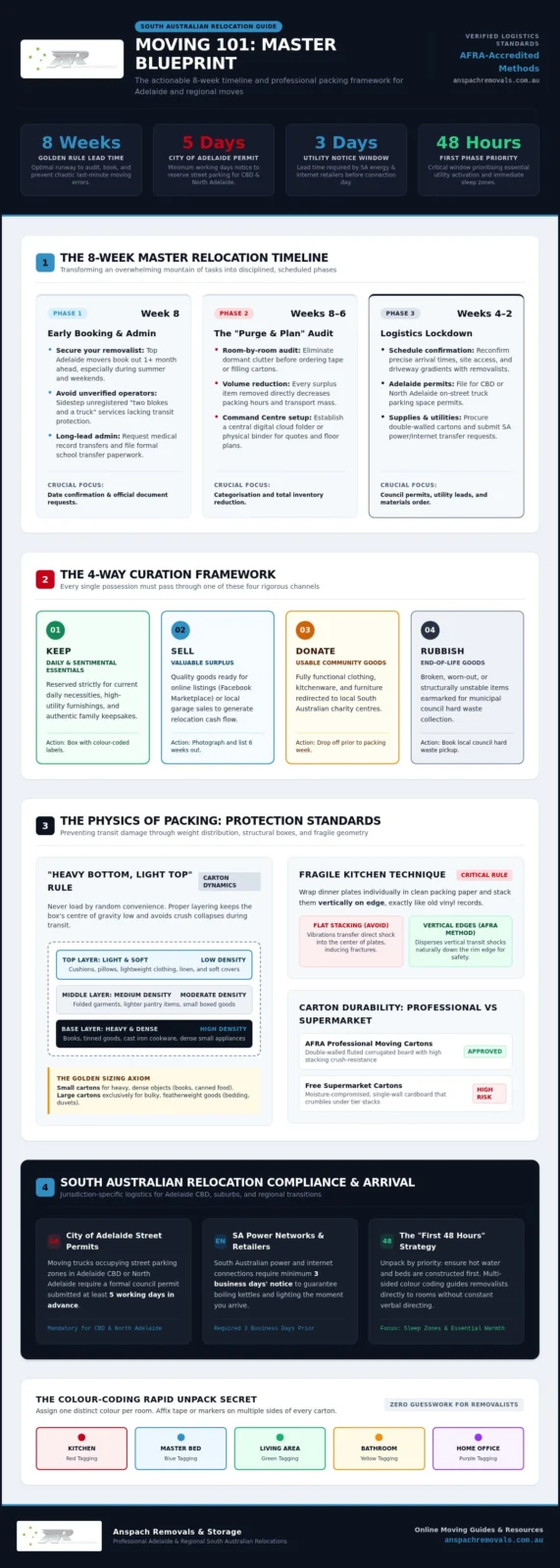
The secret to a successful move isn’t found in the strength of your back, but in the precision of your calendar. In the world of moving 101, an eight-week lead time is considered the golden rule. This window allows you to manage the complex personal relocation process without the frantic last-minute rush that leads to broken items and frayed tempers. By starting early, you transform an overwhelming mountain of tasks into a series of manageable steps.
Your first priority is booking your removals team. The most reliable Adelaide movers often book out a month or more in advance, especially during the busy summer months or on weekends. Securing your date early ensures you aren’t left scrambling for “two blokes and a truck” who might lack the proper equipment or insurance. Once the date is set, you can focus on administrative essentials like school transfers and requesting medical records, which often require several weeks of processing time.
Weeks 8-6: The Ruthless Curation
Before you buy a single roll of packing tape, you must audit your home. We call this the “Purge and Plan” phase. Mastering moving 101 means acknowledging that your home is likely filled with items you haven’t touched in years. Every item you get rid of now is one less thing you’ll pay to move later. Sort every room into four distinct categories:
- Keep: Daily essentials and sentimental items.
- Sell: Quality goods for Facebook Marketplace or a garage sale.
- Donate: Usable items for local South Australian charities.
- Rubbish: Broken or worn-out items for hard waste collection.
During this time, establish a “Moving Command Centre.” This can be a simple physical folder or a digital cloud drive where you store quotes, contracts, and floor plans for your new home.
Weeks 4-2: The Logistics Lockdown
As the date approaches, it’s time to finalise the details. Reach out to your local removalists Adelaide to confirm the arrival time and any specific access requirements. If you’re moving within the CBD or North Adelaide, remember that reserving street parking for a moving truck requires a permit from the City of Adelaide, which must be submitted at least five working days in advance.
This is also the window for ordering professional-grade moving boxes. Avoid the temptation to use flimsy supermarket cartons; they rarely survive the stacking process in a truck. Finally, notify your utility providers. In South Australia, energy and internet retailers generally require at least three business days’ notice for a connection. Setting these dates now ensures the lights are on and the kettle can boil the moment you step through the door of your new property.
The Art of Packing: Professional Techniques for Every Room
Packing isn’t just about fitting your life into cardboard squares; it’s about physics and foresight. A core principle of moving 101 is the “Heavy Bottom, Light Top” rule. You should always place your densest items, such as books, tinned goods, or small appliances, at the base of the carton. Layer lighter items, like cushions or clothing, on top to prevent the box from becoming unstable. Remember that small boxes are for heavy things, while large boxes are reserved for bulky, light items. If a box is too heavy for you to lift comfortably, it’s too heavy for the structural integrity of the cardboard.
Quality materials are non-negotiable for a damage-free journey. While it’s tempting to raid the local supermarket for free cartons, furniture removalists Adelaide experts avoid them for a reason. Supermarket boxes are often compromised by moisture or previous use. They lack the double-walled strength required to be stacked safely in a high-capacity truck. Using AFRA-accredited removalists ensures you have access to professional-grade supplies that are designed to withstand the rigours of transit. Colour-coding is another secret to a fast unpack. Assign a specific colour to each room and mark every box on multiple sides so your team knows exactly where to place them without asking.
Kitchen and Fragile Item Strategies
The kitchen is often the most time-consuming room to clear. Mastering the basics of moving 101 involves more than just speed; it requires specific techniques for fragile goods. When packing plates, wrap them individually in clean packing paper but stack them vertically, like old vinyl records. This orientation allows the plates to absorb vibrations better than if they were stacked flat. Avoid using old newspapers, as the ink can permanently stain fine china. Finally, pack a “First-Night Box” containing a kettle, tea, coffee, chargers, and basic toiletries. You’ll thank yourself when you can enjoy a cuppa without hunting through twenty different boxes.
Managing Bulky Furniture and Electronics
Electronics require a bit of digital preparation. Take a quick photo of the cable configuration at the back of your TV or home theatre system before you unplug anything. It makes the setup at the other end completely effortless. For furniture disassembly, place all screws, bolts, and Allen keys in small, sealable bags and tape them securely to the underside of the corresponding furniture piece. If the thought of wrapping your entire life feels daunting, consider that professional packing services can often secure your entire home in a fraction of the time, often providing better protection for your high-value items. This small investment can save hours of labour and significant emotional stress during your transition.
Choosing Your Partners: What to Look for in Adelaide Removalists
Selecting a removalist is the most critical decision in your moving 101 journey. While a cheap “two blokes and a truck” ad on a community noticeboard might look attractive, the hidden costs of damaged furniture or a lack of insurance can be devastating. A professional removals company brings more than just muscle; they bring specialised equipment, transit insurance, and a systematic approach to logistics. For those undertaking country moves South Australia, this expertise is even more vital. Navigating regional routes or the winding roads of the Adelaide Hills requires a driver who understands local conditions, not just a GPS.
Understanding quote structures is equally important. Local metro moves usually operate on an hourly rate, but for regional or long-distance relocations, a fixed-price contract provides much-needed budget certainty. Always ask about “depot-to-depot” fees and whether the team has the right trolleys and ramps for your specific property. This is particularly important for the narrow bluestone villa driveways often found in suburbs like Norwood, Prospect, or Unley, where access can be a significant bottleneck.
Red Flags and Trust Signals
Be wary of “cowboy” operators who refuse to provide a written quote or don’t have a physical business address. Trust signals include transparent reviews from local South Australian customers and the ability to provide auxiliary services like secure storage Adelaide for those tricky gap days between settlements. Don’t forget that as part of your move, you should use the official South Australian change of address service to update your details across state agencies within 14 days of your relocation.
Preparing for the Removalist Crew
Success on moving day depends on clear communication and physical preparation. Ensure there is clear parking access for the truck at both ends. A 50-metre walk from the kerb to your front door can significantly add to your labour costs and the duration of the job. Once the team arrives, conduct a thorough walkthrough. Point out fragile items, high-value electronics, or any cartons that should stay behind. A little hospitality goes a long way. Providing cold water or a quick coffee helps build a positive rapport with the team handling your life’s possessions, ensuring everyone stays focused and efficient throughout the hustle.
Moving Day Logistics: Managing the Transition
Moving day is the culmination of weeks of preparation, but it’s also the moment when logistics and emotions collide. Even with a perfect plan, the physical reality of seeing your home emptied can be overwhelming. A fundamental part of moving 101 is acknowledging that this day requires a different kind of focus: one that balances strict checklists with the flexibility to handle minor delays. Your goal isn’t just to get the truck loaded; it’s to close one chapter of your life with precision so you can start the next without lingering worries.
One of the most common hurdles in South Australia is the “Gap Day” problem. Property settlements don’t always align perfectly, especially if you’re involved in a chain of sales. You might find yourself in a situation where you must vacate your current property on a Friday but won’t receive the keys to your new Adelaide home until Monday. This is where professional storage becomes a lifesaver. Instead of living out of a car or begging for garage space from friends, using a secure facility allows your belongings to stay packed and protected until the moment your new front door opens. If you’re facing a complex settlement timeline, speak with us about our integrated storage solutions to keep your transition seamless.
Managing the “people” aspect is just as vital as moving the furniture. If you have young children or pets, the hustle of a moving crew can be stressful and potentially unsafe. Arrange for them to spend the day with a trusted friend or at a local daycare centre. If they must be on-site, designate a “safe zone” in a cleared room with snacks, chargers, and toys to keep them occupied and out of the high-traffic paths of the removalists.
The Final Walkthrough
Before you hand over the keys, perform a meticulous sweep of the property. Open every cupboard, check the loft space, and look under the stairs; these are the most common places for essential items to be forgotten. Don’t forget to check the mailbox for any last-minute letters. For renters, this is your final chance to ensure the property meets the standards required to get your full bond back. Take clear photos of the water and electricity meters. In South Australia, tenants cannot open an SA Water account in their own name, so recording that final reading is your only protection against being billed for the next occupant’s consumption.
Settlement and Storage Solutions
Keep a “Day Zero” bag with you at all times. This should contain your settlement paperwork, house keys, phone chargers, and basic toiletries. Having these essentials within arm’s reach prevents the panic of searching through a hundred boxes for a toothbrush at 10:00 PM. Remember that even with the best moving 101 strategy, minor delays at the bank or the real estate office can happen. Maintaining a positive mindset and staying in close contact with your removalist team will help you navigate these small bumps without losing your peace of mind.
Settling In: Your First 48 Hours in a South Australian Home
The moment the removalist truck pulls away, the real work of turning a house into a home begins. But don’t let the sea of boxes in the hallway overwhelm you. A vital part of moving 101 is managing your energy levels once the adrenaline of moving day fades. Focus on the “survival zones” first. Unpack the beds and the bathroom essentials immediately. There’s nothing worse than hunting for a towel or a pillowcase at midnight when you’re physically exhausted. Once the beds are made and the shower is ready, your new property starts feeling like a sanctuary rather than a storage unit.
Check your utilities right away to ensure everything is functioning as expected. Verify that SA Power Networks has successfully connected your electricity. In South Australia, water stays connected between occupants, but remember that the account remains in the owner’s name. If you’re renting, check that the meter reading on your first day matches what you recorded on your Property Condition Report to avoid paying for the previous tenant’s usage. Next, look up your local council’s website, whether you’re in the City of Marion or Charles Sturt, to find your bin collection schedule. Knowing which day the yellow recycling bin goes out is a small detail that prevents a massive backlog of flattened cardboard in your garage.
Regional SA Specifics
If you’ve relocated to regional hubs like Mount Gambier or Port Lincoln, your moving 101 checklist includes a few extra steps. Many country properties rely on rainwater tanks and septic systems; check your water levels and pump condition immediately. Integration is also about administration. You must update your residential address with Service SA for your driver’s licence and vehicle registration within 14 days of moving. Physical address stickers have been phased out, so this update is now handled digitally. Beyond the paperwork, take a walk to the local bakery or park. In regional South Australia, community connections are the quickest way to feel truly settled.
The Post-Move Audit
Before you get too deep into the unpacking marathon, conduct a quick audit of your belongings. Check high-value items and electronics for any transit damage and report it to your removalist immediately for insurance purposes. As you empty boxes, flatten them and set them aside. Many professional movers offer a collection service for their high-quality cartons, or you can take excess cardboard to a regional recycling depot if your yellow bin is full. Finally, don’t forget to celebrate. Once you’ve settled in, you might explore Car Detailing Packages from Nanak Car Wash to refresh your vehicle after the move. Whether it’s a bottle of local Adelaide Hills wine or a simple takeaway on the living room floor, the first meal in your new home is a vital tradition that marks the successful end of your journey.
Mastering moving 101 isn’t about physical strength; it’s about the precision of your preparation. By committing to an eight-week timeline and using professional packing techniques, you’ve already cleared the biggest hurdles to a successful relocation. This journey is a significant life change, and you don’t have to navigate the logistics alone. Choosing a partner with deep local roots ensures that whether you’re moving across Adelaide or into the heart of regional South Australia, your transition will be handled with care and authority.
As an SA owned and operated company since 2002, we pride ourselves on our expert regional and interstate knowledge. Our fully insured professional removalists treat your belongings as if they were our own, providing the stability you need during a busy time. We’re ready to take the burden off your shoulders so you can focus on settling in and celebrating. Get a free, no-obligation quote for your stress-free move today and let us help you start this new chapter with confidence. Your new home is waiting, and we’re here to make sure you arrive there with a smile.
Frequently Asked Questions
How far in advance should I book an Adelaide removalist?
You should aim to book your Adelaide removalist at least four to six weeks in advance, particularly if you’re planning to move during the summer peak or on a weekend. As discussed in our moving 101 timeline, the best local operators often fill their calendars months ahead. Booking early secures your preferred date and gives you ample time to organise packing supplies and administrative tasks without the stress of a last-minute scramble.
What is the most efficient way to pack a kitchen for moving?
The most efficient strategy involves packing plates vertically like records and using clean packing paper rather than newspaper to prevent ink stains. Heavy items like tinned goods or small appliances should always go at the bottom of the box. Don’t forget to pack a separate box for your kettle, tea, and basic snacks. This ensures you can function in your new home immediately without digging through every carton for a teaspoon.
Do removalists in South Australia provide insurance for my belongings?
Professional removalists in South Australia, like our team, are fully insured to protect your belongings during transit. It’s important to distinguish between standard public liability and specific transit insurance that covers accidental damage or loss. When hiring a company, always ask for a summary of their coverage. AFRA-accredited movers are uniquely authorised to offer comprehensive insurance products directly to customers, providing extra peace of mind for high-value items or long-distance relocations.
How do I change my address with the government and Service SA?
You must update your residential address with Service SA for your driver’s licence and vehicle registration within 14 days of moving. This can be completed online via the mySA GOV portal or in person at a customer service centre. Additionally, you’re legally required to update your details on the electoral roll within 21 days of living at your new residence for at least one month to ensure your voting eligibility remains current.
What should I pack in my “First-Night Essentials” box?
Your essentials box should contain everything you need to survive the first 24 hours without unpacking a single other carton. Include toiletries, phone chargers, a basic toolkit, and a kettle with tea or coffee. It’s also wise to pack fresh bed linen and towels for every family member. Keeping these items in a clearly marked, easily accessible box prevents the frustration of searching for a toothbrush or a charger late at night.
Is it cheaper to move on a weekday or a weekend in Adelaide?
Moving on a weekday is typically more cost-effective and less stressful than a weekend relocation. Most professional Adelaide removalists have higher demand for Saturdays, which can lead to tighter scheduling and less flexibility. By choosing a Tuesday or Wednesday, you might find it easier to secure your preferred time slot. Additionally, moving during the week allows you to visit banks or utility offices if any last-minute settlement or connection issues arise during business hours.
How do I manage a move if there is a gap between my settlement dates?
Using secure storage is the most reliable way to manage a gap between settlement dates. If you must vacate your old home before the new one is ready, we can transport your belongings directly into a protected facility. This removes the need for multiple moves or relying on friends’ garages. Once your new keys are ready, the team simply delivers everything from storage to your new front door, making the transition seamless and secure.
What items are removalists not allowed to transport for safety reasons?
Removalists are legally prohibited from transporting dangerous goods, including gas cylinders, flammable liquids, pool chemicals, and ammunition. For those moving 101 within South Australia, you must also be mindful of PIRSA biosecurity regulations. Host fruit, vegetables, and untreated soil cannot be moved across certain state lines or into the Riverland Pest Free Area. Always check the current quarantine rules to avoid on-the-spot fines and ensure a safe, compliant relocation for everyone involved.