
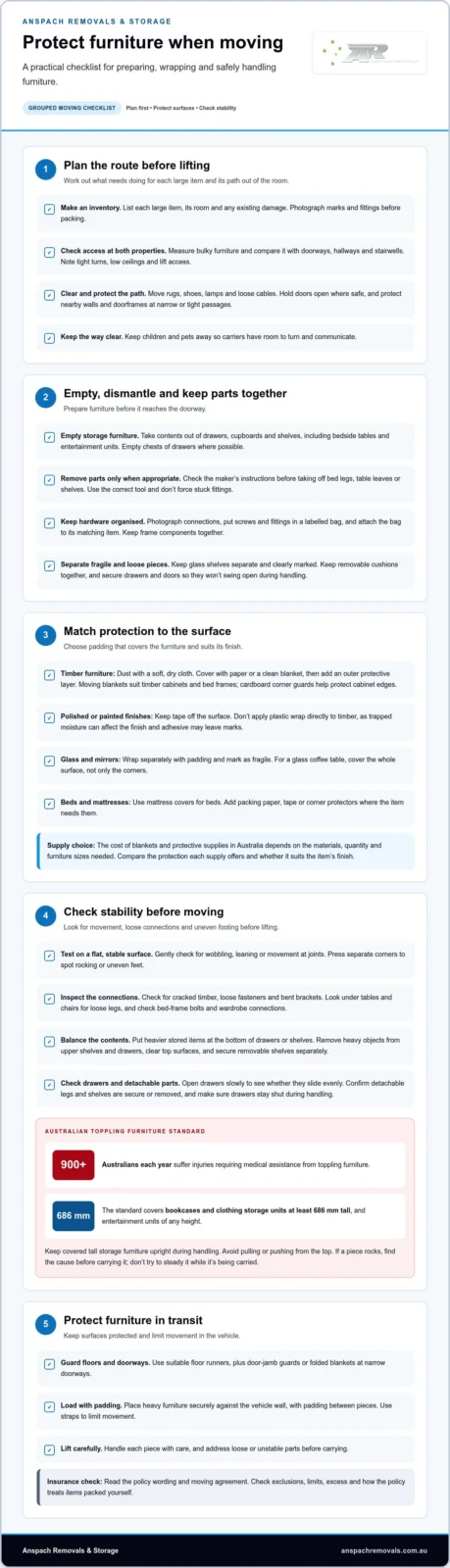
Protect furniture when moving by emptying drawers and shelves, wrapping surfaces and corners, securing loose parts, and lifting each piece carefully. Keep tall storage furniture stable during the move and anchor it once it’s in its new position. In Australia, clothing storage units and bookcases at least 686 mm tall are covered by the mandatory toppling furniture standard.
It’s natural to worry about scratches, loose fittings or an unstable piece making a difficult move even harder. A little preparation helps protect your living room and bedroom furniture, while a stability check can help you spot problems before lifting.
This guide explains how to protect sofas, beds, drawers, wardrobes and other furniture when moving, including how to check each piece and handle it safely through doorways and into a moving vehicle. Plan each step carefully to reduce the risk of damage and make settling in easier.
Key Takeaways
- Plan how larger furniture will move through rooms and doorways before shifting it, and identify pieces that may need to be separated for easier handling.
- Check each item for wobbling, loose fittings and uneven footing; placing heavier contents lower can help keep storage furniture steady.
- Choose protective materials to suit each surface, and use padding between furniture and anything that could rub against it in transit.
- Match your preparation to the move’s distance and scale, so your living room and bedroom furniture is ready for a local, country or interstate relocation.
Living room and bedroom furniture
Prepare sofas, beds, drawers and mirrors according to their materials and removable parts. Protect both the furniture and the path from each room to the moving truck.
Furniture protection supplies and costs
Use moving blankets for timber cabinets and bed frames, cardboard for exposed edges, and mattress covers for beds. Add corner protectors, packing paper and tape where each item needs them. In Australia, the cost of blankets and protective supplies depends on the materials, quantity and furniture sizes you need to cover. Compare how much protection each supply offers and whether it suits the item’s finish.
For a glass coffee table, choose padding that covers the whole surface, not just the corners. Keep tape off polished or painted finishes.
Wrapping wood and protecting fragile surfaces
Dust wooden furniture with a soft, dry cloth, then cover it with paper or a clean blanket before adding an outer protective layer. Don’t apply plastic wrap directly to timber: trapped moisture can affect the finish, and adhesive may mark some surfaces. Place cardboard corner guards over cabinet edges, and wrap glass or mirrors separately with padding. Mark them as fragile.
Protect floors with suitable runners, and use door-jamb guards or folded blankets at narrow doorways. Load heavy furniture securely against the vehicle wall, with padding between pieces, then use straps to limit movement.
Furniture disassembly and hardware organisation
Check the maker’s instructions before removing bed legs, table leaves or shelves. Photograph each connection, use the correct tool, and place screws and fittings in a labelled bag attached to the relevant item. Keep glass shelves separate and clearly marked. Don’t force stuck fittings, as this can damage the joint or finish.
For removalist insurance, read the policy wording and moving agreement to understand whether furniture damage is covered. Check exclusions, limits and excess, and how the policy treats items you pack yourself before moving day.
Larger anchor furniture pieces establish a room’s layout, while smaller pieces can add flexibility. Use the larger items as the starting point when considering where furniture belongs, then keep the role of smaller pieces adaptable. This lets the arrangement reflect both the room’s overall structure and the options offered by its more flexible furnishings.
Checking furniture stability
A stable piece is easier to handle and less likely to shift during lifting. Check entertainment units, tall bookcases, wardrobes, tables and bed frames before moving them. More than 900 Australians each year suffer injuries requiring medical assistance from toppling furniture. A careful inspection helps identify loose joints, damaged feet and heavy contents that could affect balance.
Start on a flat, stable surface. Gently test each item for wobbling, leaning or movement at its joints. Look underneath tables and chairs for loose legs, then check bed-frame bolts and wardrobe connections. Open drawers slowly and see whether they slide evenly. If a cabinet rocks, don’t try to steady it while carrying it; find the cause first.
The ACCC advises placing furniture on a flat, stable surface and putting the heaviest items at the bottom of drawers or shelves. Before lifting, remove heavy objects from upper shelves and drawers. Take loose contents out of entertainment units, and secure removable shelves separately. Empty chests of drawers where possible, then check that drawers stay shut during handling.
- Check for cracked timber, loose fasteners and bent brackets.
- Press gently on separate corners to spot rocking or uneven feet.
- Confirm detachable legs and shelves are secure or removed.
- Keep heavier stored items low, and clear the top surface.
Australia’s toppling furniture standard covers entertainment units of any height. It also covers bookcases and clothing storage units at least 686 mm tall. Treat those pieces with extra care: keep them upright during handling and avoid pulling or pushing from the top, which can affect their balance.
Make a note of any existing wobble before the move, and don’t carry unstable furniture without addressing the loose part. If you’re planning a local move with several heavy pieces, professional moving support can help with the handling plan.
How to prepare furniture before moving in Australia?
Prepare each piece before moving day rather than leaving decisions until it reaches the doorway. A room-by-room plan helps you identify what needs emptying, dismantling or special handling, and keep track of parts at your new home.
Start with an inventory. List each large item, its room and any existing damage, such as a chipped bedside table or loose wardrobe handle. Take clear photos of marks and fittings before packing. Measure bulky items and compare their dimensions with doorways, hallways and stairwells at both properties. Note tight turns, low ceilings and lift access, then plan the route before carrying anything.
- Empty drawers, cupboards and shelves, including bedside tables and entertainment units.
- Remove detachable parts, such as bed legs, table leaves and wardrobe shelves, if the maker’s instructions allow it.
- Put small fittings in labelled bags and keep each bag with its matching furniture item.
- Group pieces by destination room, then label each item clearly for unloading.
Next, clear the route from each room to the exit. Move rugs, shoes, lamps and loose cables, and hold doors open where safe. Protect nearby walls and doorframes before manoeuvring a broad sofa or mattress. Keep children and pets away so carriers have room to turn and communicate.
Before transport, check that drawers and doors won’t swing open. Use a suitable fastening that won’t mark the finish, and keep removable cushions together. For a bed, keep the frame components together and make sure the mattress is dry before covering it. If rain is forecast in Australia, plan a covered transfer between the home and vehicle, and avoid leaving unwrapped timber or upholstery exposed.
Finish with a final room check. Compare the inventory with the furniture still inside, collect loose fittings, and keep assembly instructions with the relevant item. This preparation makes each piece easier to identify, carry and set up after arrival.
What supplies are best for protecting furniture when moving?
Choose protection by surface and shape, not just size. A timber bedside table needs a clean barrier against rubbing, while a glass cabinet needs padding that covers its panels. Gather supplies before wrapping, so uncovered furniture isn’t left waiting in a busy hallway.
- Moving blankets cushion sofas, timber furniture and bed frames against bumps and scuffs.
- Cardboard shields exposed corners, table edges and other vulnerable points.
- Packing paper separates small, delicate pieces and helps prevent surface-to-surface scratches.
- Mattress covers keep bedding clean during handling and transport.
- Packing tape and labels secure outer coverings and identify fragile items or room destinations.
Match each material to the job. Wrap a timber coffee table in a clean blanket, then cover its corners with cardboard. Use padding around a mirror’s edges and across its face. Keep tape on the protective layer, not directly on polished timber, painted surfaces or upholstery, where it may leave marks.
Plastic film can hold a blanket in place, but don’t wrap it directly around wood or leather. Trapped moisture can affect finishes, while tight film may leave pressure marks on soft upholstery. Put paper or a breathable fabric layer between the furniture and outer plastic. Make sure each piece is dry before covering it.
For a large sofa, check that the blanket covers the arms and back, then secure it without pulling against delicate fabric. Protect removable glass shelves separately and mark their wrapping clearly. Put loose fittings in small, labelled bags, keeping them with the matching item rather than loose in a box.
Moving Boxes help keep smaller protective materials, labelled hardware and room-specific supplies organised during preparation. Choose box sizes that suit what you’re packing, then keep fragile parts separate from heavier items. Arrange Moving Boxes for the items you’re preparing to move.
Protection also includes preventing tip-overs: the ACCC says the best way to prevent furniture from tipping over is to secure it to a wall or floor with an anchoring device. Under the mandatory information standard, Australian furniture suppliers must attach permanent warning labels to furniture, including covered toppling furniture, provide warnings about toppling hazards in stores and online, and include safety information and anchoring advice in manuals and assembly instructions. Suppliers had a 12-month transition period to implement the new information and labelling requirements.
Anspach Removals & Storage: Local Moves
Anspach Removals & Storage can help plan a move when bulky furniture, tight access or several rooms make moving day more demanding. Its Local Moves service supports household relocations within Adelaide, while Country Moves and Interstate Moves suit longer journeys across South Australia or between states.
For a business moving desks, cabinets and meeting-room furniture, Anspach’s Office & Commercial Relocations service is designed for commercial moves. When furniture needs to be kept between stages of a relocation, Anspach recommends Hendon’s Self Storage. The right option depends on your destination and what needs transporting.
Before making arrangements, note the main furniture pieces, their destination rooms and any access concerns, such as stairs or narrow doorways. This gives you a practical starting point for discussing the move and planning how items will be handled.
For help planning a furniture move in Adelaide or beyond, contact Anspach Removals & Storage or visit anspachremovals.com.au.
Make your moving plan work for you
A calmer move starts with decisions made before moving day. Consider which pieces need extra care, what needs to be ready at each property, and how you’ll manage difficult access. A practical plan for how to protect furniture when moving should suit your home, belongings and journey, rather than rely on a last-minute rush.
For a local, country or interstate move, Anspach Removals & Storage can help you plan the next step. Share your destination, access details and the furniture you’re most concerned about to start planning how it will be handled.
Contact Anspach Removals & Storage to talk through your move. With a thoughtful plan in place, you can look ahead to settling into your new home with greater confidence.
Frequently Asked Questions
How to protect sofas and mattresses when moving?
Cover each item, then handle it by its strongest supported areas. For a sofa, remove loose cushions and pack them together so they don’t slip off while carrying; lift from the frame rather than pulling on the arms or legs. Keep the mattress supported along its length and separate from items that could press into or soil the fabric. Check stair turns before moving either piece.