
Table of Contents
- What You’ll Need Before You Start Preparing Furniture for Transport
- Best Packing Materials for Furniture: What Actually Works
- How to Disassemble Furniture for Moving: A Step-by-Step Approach
- Wrapping, Padding, and Protecting Furniture for Long Distance Transport
- Loading and Securing Furniture in the Moving Truck
- Benefits of Professional Pre-Packing Services for Furniture Transport
- Post-Move Inspection Checklist: What to Check When Furniture Arrives
- Frequently Asked Questions
Last Updated: September 1, 2026
Knowing how to prepare furniture for long distance transport is the difference between your belongings arriving intact and spending your first week in a new home dealing with damaged timber, torn upholstery, or missing hardware. At Anspach Removals, we’ve handled interstate and country relocations for over 23 years, and the same problems come up time and again: furniture that wasn’t wrapped properly, beds that were moved fully assembled, and hardware that ended up rattling loose in the bottom of a box. This guide covers every stage of the process, from gathering your packing materials to inspecting pieces on arrival, so you can avoid those mistakes entirely.
What You’ll Need Before You Start Preparing Furniture for Transport
Before you touch a single piece of furniture, gather the essential moving supplies: moving blankets or furniture pads (at least 6-10 for a standard home), stretch wrap or plastic wrap (2-3 rolls), bubble wrap for fragile items, corner guards, heavy-duty packing tape (4-5 rolls), small zip-lock bags for hardware, permanent marker and labels, an inventory list or spreadsheet, moving straps, and an appliance dolly or furniture trolley.
The inventory list is the piece most people skip and later regret. Photograph each furniture piece before it’s wrapped. If a claim needs to be made for transit damage, those photos are your evidence.
Best Packing Materials for Furniture: What Actually Works
Each packing material serves a specific purpose, and using the wrong one in the wrong place leaves your furniture exposed.
Moving Blankets and Furniture Pads
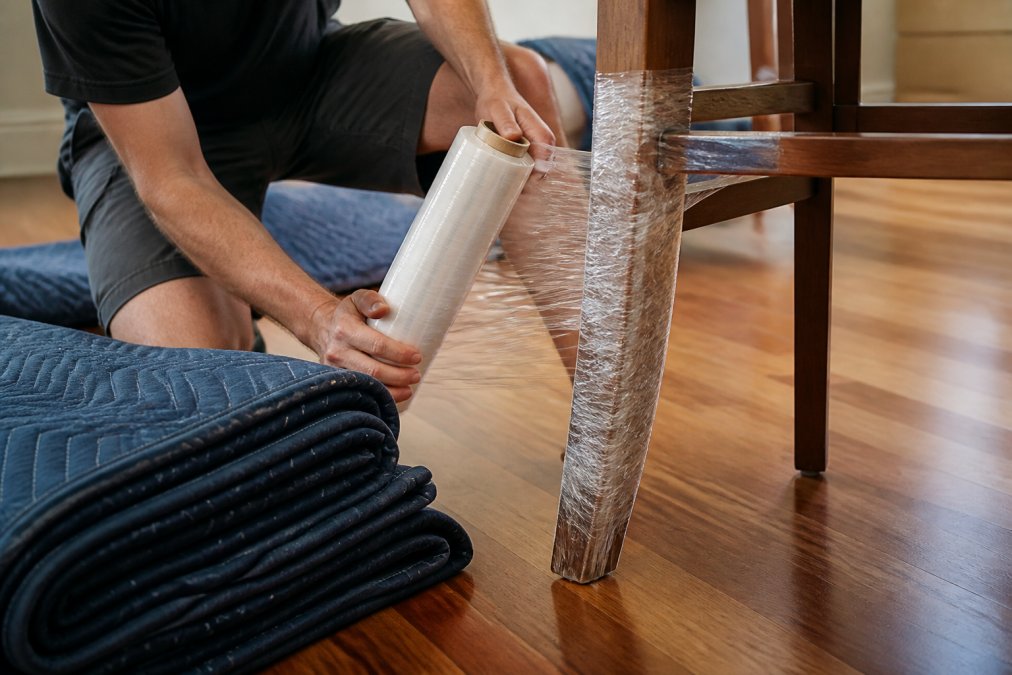
Moving blankets are the workhorses of furniture protection. Wrap every large piece of wooden furniture, upholstered seating, and cabinetry in at least one moving blanket before adding stretch wrap. The blanket provides cushioning against transit vibration; the stretch wrap holds the blanket in place and keeps dirt and moisture off the surface. Using stretch wrap directly against timber without a blanket underneath can trap moisture and cause warping or staining.
For a standard three-bedroom home, you’ll typically need between 10 and 20 furniture pads. Many removalists include them as part of the service; if you’re sourcing your own, hire rather than buy unless you move frequently.
Stretch Wrap, Bubble Wrap, and Corner Guards
Stretch wrap is the most versatile material in your toolkit. Use it to secure moving blankets around furniture, bundle chair legs together, keep drawers from sliding open, and protect upholstery from dust and scuffs. Bubble wrap serves a different role: it’s best for glass panels, mirror-backed furniture, decorative items, and fragile components like lamp bases or ceramic table tops. Wrap glass at least twice, then add a layer of cardboard over the top before placing it vertically in the truck.
Corner guards deserve more attention than they typically get. The corners of timber furniture are the first points of contact when pieces shift in transit, and a single unprotected corner can gouge a wall, scratch another piece, or splinter entirely. Foam corner guards are inexpensive and take seconds to fit. Use them on every table, cabinet, and bookcase.
Eco-Friendly Packing Alternatives
Standard plastic stretch wrap and bubble wrap are effective but generate significant waste. According to Planet Ark’s resource guide on sustainable packaging, reusable options like textile wrap and recycled paper padding are increasingly available through specialist moving suppliers. The most accessible eco-friendly alternatives include old blankets, duvets, and towels; cardboard from local retailers; paper padding (unprinted newsprint); and reusable moving crates available for hire from some moving suppliers. Eco-friendly materials generally require more wrapping layers to achieve the same protection level as purpose-made bubble wrap.
How to Disassemble Furniture for Moving: A Step-by-Step Approach
Knowing how to disassemble furniture for moving correctly prevents transit damage and makes loading significantly easier.
Step 1: Photograph the piece before disassembly from multiple angles, including close-ups of any existing scratches or marks.
Step 2: Clear the item by removing drawers, cushions, shelves, and any loose components. Pack these separately.
Step 3: Work systematically from the top down. For bed frames, remove the headboard and footboard first, then the side rails. For dining tables, remove the legs before wrapping the tabletop.
Step 4: Label everything using masking tape and a marker to label each component with the piece name and assembly position (e.g., “dining table, leg, front left”).
Step 5: Wrap each component individually in moving blankets and secure with stretch wrap.
Step 6: Stack flat pieces vertically where possible. Tabletops, headboards, and cabinet doors are best transported vertically to reduce pressure and prevent warping.
Storing Hardware Safely During Disassembly
As you remove each piece of hardware, place it immediately into a labelled zip-lock bag. Tape the bag directly to the furniture component it belongs to, or store all bags together in a single clearly labelled box marked “HARDWARE, OPEN FIRST.” Never mix hardware from different pieces in the same bag.
Wrapping, Padding, and Protecting Furniture for Long Distance Transport
Proper wrapping technique is the core skill in learning how to prepare furniture for long distance transport. The goal is to create a continuous layer of protection with no exposed surfaces, no loose edges that can catch and tear, and no hard points pressing against timber or upholstery.
The standard method: lay the moving blanket flat, centre the furniture component on top, fold the sides up and over, then secure with stretch wrap in overlapping spiral passes. For chairs, wrap the legs individually first, then wrap the entire chair as a unit.
Protecting Corners, Legs, and Upholstery
Corners and legs take the most punishment during a long distance move. Fit foam corner guards to every exposed corner before adding the moving blanket layer. For furniture legs, wrap each leg individually with bubble wrap or foam padding before wrapping the piece as a whole.
Upholstery requires a different approach. Wrap upholstered pieces in stretch wrap first (to create a moisture barrier), then add a moving blanket layer over the top. For leather furniture, avoid wrapping too tightly in plastic for extended periods, as leather needs some airflow to prevent surface degradation.
For fragile items like glass-topped tables or display cabinets, tape an X of masking tape across the glass before wrapping. This doesn’t prevent breakage but holds shattered glass in place if the worst happens.
Climate Control and Moisture Protection
Timber furniture expands and contracts with changes in temperature and humidity. A piece that travels from a humid coastal environment into a dry inland climate can crack, warp, or have joints loosen over the course of a long transit.
Practical steps to reduce climate risk: wrap timber furniture in moving blankets rather than plastic alone, as blankets provide some insulation against temperature extremes; avoid packing moisture-sensitive pieces adjacent to the truck walls, which absorb more heat; and consider climate-controlled transport for very valuable or antique timber pieces. If moving during summer, try to load and unload during cooler parts of the day.
According to the Australian Government’s guidance on timber care and moisture management, timber products are particularly sensitive to rapid humidity changes, which reinforces the case for blanket-wrapping over plastic-only methods for solid wood pieces.
Loading and Securing Furniture in the Moving Truck
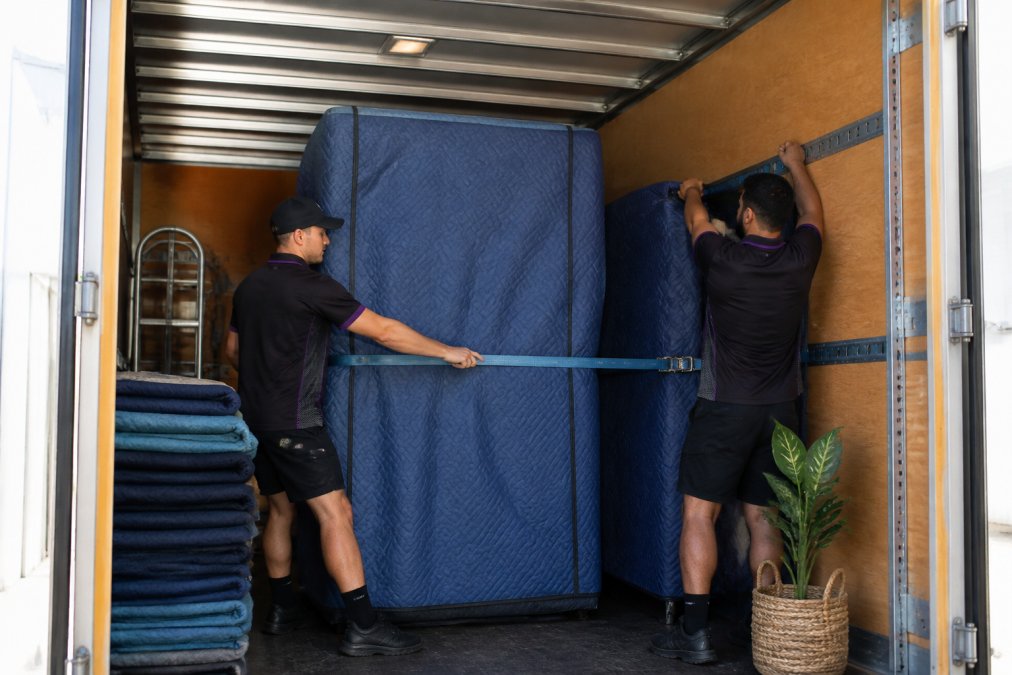
Loading is a skill that takes years to develop properly. Heavy items go in first, against the cab wall; lighter items stack on top or behind; everything gets secured with moving straps to prevent shifting during transit.
Weight Distribution and Vertical Loading
Load heavy items (sofas, bed frames, large wardrobes) low and centred. Avoid stacking heavy pieces on one side of the truck, which creates uneven load distribution and affects vehicle stability on corners and hills.
Vertical loading is standard practice for flat pieces: mattresses, tabletops, headboards, and cabinet doors should stand on their edge rather than lay flat. This reduces the footprint they occupy and prevents the weight of other items compressing and damaging them. Use moving blankets between any vertically loaded pieces that are in contact with each other.
Appliance dollies are essential for moving heavy items into the truck safely. Never attempt to lift a large piece of furniture without proper equipment and at least two people.
|
Item |
Loading Position |
Padding Required |
Vertical or Flat |
|---|---|---|---|
|
Sofas and armchairs |
Against cab wall |
Moving blanket + stretch wrap |
Vertical if space allows |
|
Mattresses |
Against wall or flat on base |
Mattress bag or blanket |
Vertical preferred |
|
Dining table (disassembled) |
Tabletop vertical, legs bundled |
Moving blanket on tabletop |
Tabletop vertical |
|
Wardrobes (disassembled) |
Panels vertical |
Moving blanket |
Vertical |
|
Boxes and smaller items |
On top of furniture |
Bubble wrap for fragile |
Flat |
|
Glass panels |
Vertical, secured |
Bubble wrap + cardboard |
Always vertical |
Insurance and Liability Coverage for Interstate Moves
Standard home and contents insurance policies often exclude items in transit, or apply strict conditions around professional packing requirements. Check your policy specifically for transit exclusions before your move date.
Professional removalists operating interstate are subject to Australian Consumer Law, which provides baseline protections, but the extent of a removalist’s liability for transit damage varies significantly between providers. As detailed in the Australian Competition and Consumer Commission’s guidance on consumer guarantees, services must be provided with due care and skill, but proving negligence in a damage claim requires documentation.
Practical steps to protect yourself: ask your removalist explicitly what their liability coverage includes and excludes; request a written quote that specifies the level of care and insurance arrangements; photograph all furniture before and after the move; keep your inventory list and compare it against items on arrival; and consider transit insurance as a separate product if your home contents policy has exclusions.
Benefits of Professional Pre-Packing Services for Furniture Transport
The honest case for professional pre-packing isn’t convenience, it’s risk reduction. A professional removalist who packs your furniture is also accountable for how it’s packed. That accountability changes the quality of the work.
Anspach Removals offers professional pre-packing as part of a single-point service, meaning the same team that packs your furniture also loads, transports, and off-loads it. That continuity matters. When one team handles the entire process, there’s no ambiguity about when damage occurred or who was responsible.
The benefits include access to commercial-grade moving blankets and furniture pads in sufficient quantities; experience with disassembly of complex pieces; proper equipment for heavy lifting; systematic labelling and inventory management; and accountability for the condition of items from pack to delivery. For families with fragile antique furniture or family heirlooms, the peace of mind that comes from a professionally packed load is difficult to put a price on.
Post-Move Inspection Checklist: What to Check When Furniture Arrives
The post-move inspection is the final stage of how to prepare furniture for long distance transport, and it’s the step that makes all the earlier preparation meaningful. Complete this checklist as each piece is off-loaded, before the removalists leave:
- Check the inventory list against every item delivered. Confirm nothing is missing.
- Inspect all surfaces for new scratches, dents, or gouges before unwrapping.
- Check corners and legs specifically, these are the highest-risk points.
- Inspect upholstery for tears, stains, or compression damage.
- Check glass panels and mirrors for cracks or chips.
- Open drawers and doors on cabinets to confirm alignment and function.
- Check timber joints on chairs and tables for looseness caused by transit vibration.
- Inspect the hardware bags: confirm all bags are present and contents are complete.
- Note any damage in writing on the delivery documentation before signing.
- Photograph any damage immediately, with the wrapping materials still present if possible.
According to Consumer Affairs Victoria’s guide on resolving disputes with removalists, noting damage on delivery documentation before signing is the single most important step in protecting your right to make a claim. A methodical 15-20 minutes per room, working through the checklist piece by piece, is far more effective than a quick visual scan. If you spot damage, stay calm, document thoroughly, and raise it with your removalist directly before the team leaves.
Frequently Asked Questions
Should I disassemble furniture before a long distance move?
Disassembling furniture before a long distance move reduces the risk of transit damage, makes loading easier, and protects both the furniture and the truck interior. Beds, flat-pack shelving, dining tables, and large wardrobes should always be broken down where possible. Keep all screws, bolts, and fittings in labelled zip-lock bags taped to the corresponding piece so reassembly is straightforward when you arrive.
What packing materials are essential for long distance furniture moving?
The most important materials for long distance furniture transport are moving blankets, furniture pads, stretch wrap, bubble wrap, corner guards, and heavy-duty packing tape. Moving blankets protect large surfaces from scratches and transit vibration, while stretch wrap holds padding in place and keeps drawers and doors closed. Corner guards are critical for wooden furniture and glass-fronted cabinets. For fragile or antique pieces, bubble cushioning adds an extra layer of protection against impacts.
How do you protect wooden furniture during interstate transport?
Wrap wooden furniture in furniture pads or moving blankets first, then secure the padding with stretch wrap. Apply corner guards to all exposed edges and legs. For antiques or high-value timber pieces, consider moisture protection such as plastic sheeting underneath the blankets, as temperature and humidity changes during interstate moves can cause warping. Keep wooden furniture away from the truck walls where condensation is more likely to form during long-haul transit.
Is it better to hire professionals for long distance furniture packing?
For an interstate move, professional pre-packing services are worth the cost for most households. Trained removalists know how to wrap, pad, and load furniture to minimise transit damage, and they carry the right protective materials in quantity. They also maintain an inventory list, which is essential if you need to make an insurance claim. DIY packing works for simple, robust items, but antiques, large sectional sofas, and heavy appliances are best left to experienced hands.