
A full drawer isn’t automatically a problem, but the furniture and its contents determine whether it should travel that way. Whether you can leave things in drawers for removalists depends on how sturdy the furniture is, how heavy the contents are and whether the drawers can be secured.
It’s understandable to hope you can leave clothes where they are and avoid extra packing. Light, soft items may stay in a solid, well-built dresser if it can remain upright and the drawers are secured. Heavy or fragile contents, unstable furniture and drawers that slide open call for a different plan.
This guide explains what to empty, when clothing may be left in drawers and how removalists assess filled furniture on moving day. You’ll also learn what to discuss before the move so the handling plan is clear and your belongings are better protected.
Key Takeaways
- Decide what to empty by weighing the furniture’s stability, the drawer contents and how it needs to be moved.
- Tell your removalists which drawers will still contain items so they can plan how to handle the furniture.
- Light clothing may be treated differently from heavy, fragile or valuable belongings, depending on the dresser.
- Learn what removalists assess before moving a full drawer unit and how they may secure or carry it.
1. Do I need to empty drawers for removalists?
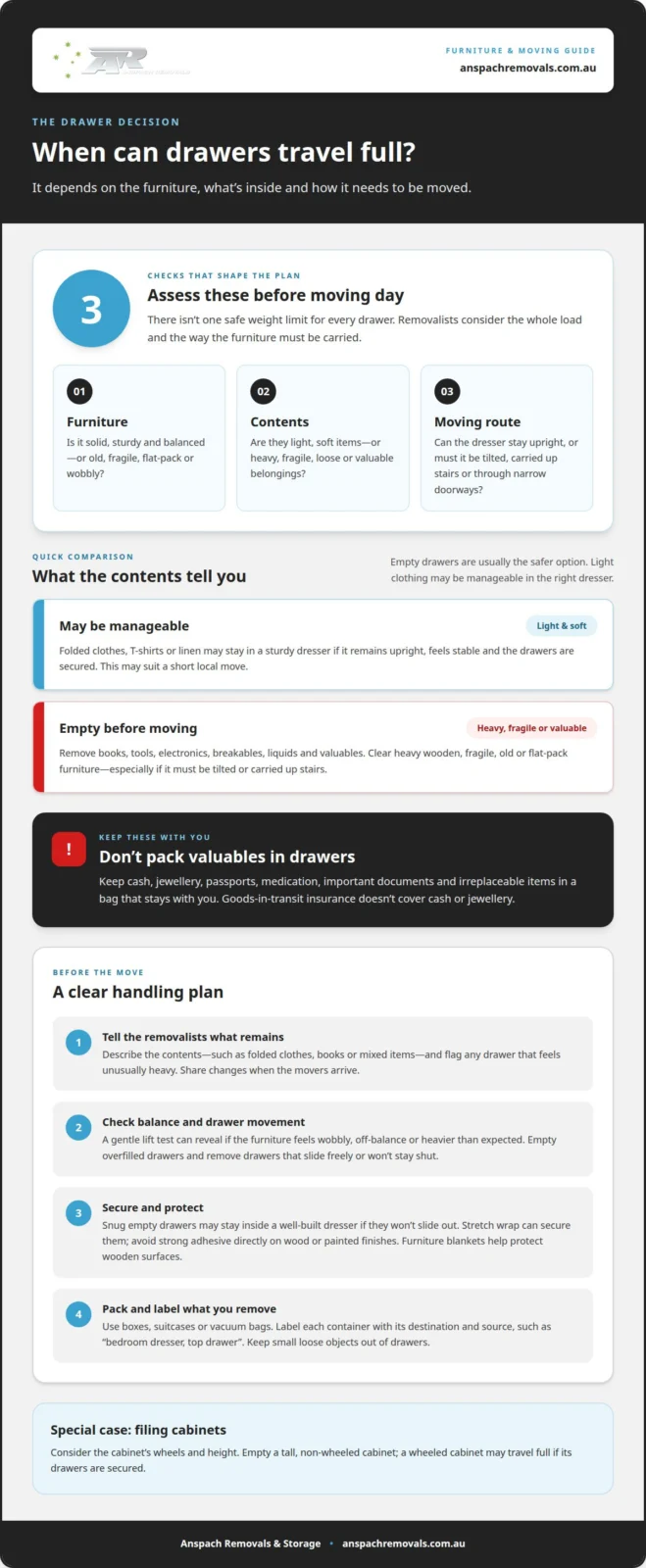
Empty drawers are usually safer to move, especially when furniture is heavy, fragile or awkward to carry. Filled dresser drawers add weight, can shift in transit and may slide open, letting clothing or other contents fall. A heavy chest is also harder to control through a hallway or doorway. Light, soft contents may be manageable in sturdy furniture, but don’t assume every drawer can travel full.
Remove cash and jewellery from dresser drawers and keep them with you. Goods-in-transit insurance doesn’t cover cash or jewellery, so don’t pack these valuables with household contents. Passports, medication, important documents and irreplaceable items are also better kept in a bag that stays with you. Pack fragile belongings separately rather than leaving them loose beside clothes.
To secure drawers for transport, first remove anything that makes the furniture unbalanced or too heavy to lift. Tell the removalists which drawers still contain items so they can assess the load and decide how to handle the piece. Empty drawers that slide freely or won’t stay shut. Don’t rely on packing tape to hold them closed, as it may fail or mark the finish.
Empty drawers can sometimes remain inside a well-built dresser if they fit snugly and won’t slide out. Secure them with stretch wrap around the furniture, rather than applying strong adhesive directly to wood or painted surfaces. For example, a snug empty drawer can stay in place while the dresser is wrapped for transit. If a drawer moves easily when the furniture is tilted, remove it and transport it separately.
Before moving a filing cabinet, consider its wheels and height. Empty a tall, non-wheeled cabinet, while a wheeled cabinet may travel full if its drawers are secured. On moving day, the safest choice depends on the furniture’s construction, the weight of its contents and how it must be carried. This helps reduce the chance of drawers opening and belongings falling out.
2. Communication with movers about drawer contents
There isn’t one safe weight limit for every drawer. Furniture strength, balance, contents and the route through the home all matter. Tell the movers what remains inside each piece before moving day. If you’re wondering, “Can I leave things in drawers for removalists?”, describe the contents too, such as folded clothes, books or mixed items. Mention any drawer that feels unusually heavy.
Lightweight, soft contents such as T-shirts or linen may stay in sturdy furniture during a short local move, provided the drawers are secured. The movers can assess whether the dresser can travel as-is or whether its drawers should be removed and carried separately. A full drawer of books is different: the weight can make lifting harder, and the contents may shift against the furniture in transit.
Loose items can slide, knock together or press against a drawer front, potentially marking the finish. Remove fragile objects, liquids and valuables rather than mixing them with clothes. To frame the decision, ask yourself, “Can I leave things in drawers for removalists if the furniture is lightweight and the contents are soft?” The answer depends on the load and how the dresser must be moved.
For packing, sort contents by room or drawer, then use boxes, suitcases or vacuum bags. Label each container with its destination and source, such as “bedroom dresser, top drawer”. That makes unpacking more straightforward and helps keep similar items together. Avoid leaving small loose objects in a drawer where they can move around.
Share the contents and furniture details early, then point out any changes when the movers arrive. If you’re packing several drawers, professional packing services can help organise household items for the move.
3. Can you leave clothes in dresser drawers when moving?
Australian removalists don’t all follow one rule for clothes in drawers. Light, soft clothing may stay in a sturdy dresser if it remains upright and the drawers are secured, but emptying them is the safer option. Remove books, tools, electronics, breakables, liquids and valuables before moving the furniture.
Start with the furniture type. Empty drawers in old, fragile or flat-pack pieces, as their construction may not handle the extra weight during lifting. Heavy wooden dressers and cabinets should also be cleared. If a chest must go up stairs or be tipped on its side, remove its contents first so they don’t shift and strain the drawers.
Try a gentle lift test before moving day: raise one side slightly. If the furniture feels wobbly, off-balance or heavier than expected, empty it. Clear overfilled drawers and those that slide open easily. Remove any drawer that moves freely or could come out while the furniture is being carried, and tell the movers if you’ve taken drawers out.
For a solid, lightweight dresser holding only clothes, leaving the contents may work for a short local move if the furniture can stay upright. A longer journey means more movement, so empty drawers in heavy, fragile or flat-pack furniture. Keep clothing separate if the dresser needs to be tilted or carried up stairs.
Protect the furniture as well as its contents. Wrap wooden surfaces with furniture blankets to help prevent scratches, and avoid putting strong adhesive directly on a painted or timber finish. If you remove clothes, place them in a labelled box or suitcase and clearly note the room or dresser. This keeps soft items together and makes them easier to find after the move.
4. How movers assess and handle full drawers
On moving day, movers assess the furniture, its contents and the route out. A sturdy dresser holding folded clothes presents a different load from a cabinet filled with books. They consider whether drawers stay shut, whether the furniture feels balanced, and whether it must pass through narrow doorways or go up stairs. These details guide how the piece can be moved.
They may move a dresser as-is when it is lightweight, stable and holds only soft, non-fragile items. If the contents make it awkward to lift, they can remove the drawers and carry them separately. This reduces the load on the frame and helps prevent drawers from sliding out. Tell the movers what remains inside before they handle the furniture.
Distance also matters. On a longer trip, contents have more opportunity to shift, so remove fragile, heavy or valuable items. The team can then secure the furniture and plan its position in the truck. For example, a drawer with clothes may be handled differently from one containing loose objects that could move around in transit.
Full drawers can affect how furniture is handled, but there isn’t one extra charge for every move. The price depends on the circumstances and is provided after you request a quote. Factors such as the furniture, access, contents and distance shape the job.
For a clear plan, describe each full drawer, the furniture type and any stairs or tight turns. On the day, point out changes, such as a drawer you’ve since emptied. This lets the movers reassess the load before lifting, rather than discovering unexpected weight midway through a carry. If you’re planning a move with full drawers, arrange your removal with these details in mind.
Anspach Removals & Storage
Anspach Removals & Storage can help you plan your move when deciding what to do with full drawers. Share which furniture contains clothes or other items, and describe any access concerns, such as stairs or narrow hallways. This gives the moving team useful context for planning how to handle the furniture.
Whether you’re arranging a Local Move, Country Move, Interstate Move or Office & Commercial Relocation, sharing these details helps clarify the moving plan. Pack fragile or valuable contents separately, and identify any drawers that will remain filled.
Contact Anspach Removals & Storage to discuss your move and drawer contents.
Make your drawer plan part of moving day
Give yourself breathing room by deciding what travels inside furniture before you finish packing. If you’re still unsure whether you can leave things in drawers for removalists, consider the furniture’s condition, the contents and how it must be carried. Keep valuables and fragile belongings with you, and make your plan clear to everyone helping with the move.
A settled plan can make the move feel more manageable. Set aside time to prepare the drawers, then focus on the other details that will help you feel at home in your new place. For a local, country or interstate move, Anspach Removals & Storage can help with the relocation.
Contact Anspach Removals & Storage to discuss your move and take the next step with confidence.
Frequently Asked Questions
Do I Need To Empty Drawers For Movers On Moving Day?
Empty drawers containing heavy, fragile or valuable items, and empty them if the furniture is unstable. Keep essentials such as medication, keys and identification with you, rather than buried in a drawer that may be difficult to access. Tell the movers what remains inside and point out any drawer that sticks or opens unexpectedly. This helps them plan the lift.
Can you leave clothes in dresser drawers when moving?
Light clothes can sometimes stay in a sturdy dresser, particularly on a short local move where it can remain upright. Keep the contents to soft items such as jumpers, socks or linen, rather than adding shoes or other heavy belongings. If the dresser feels awkward to lift or needs tilting, take the clothes out and pack them separately for easier handling.
What About Securing Drawers Shut?
Secure drawers so they cannot slide open, but don’t assume ordinary packing tape will hold during handling. Adhesive can also affect a painted or timber finish. Stretch wrap around the dresser can help keep drawers in place without sticking tape directly to the surface. Tell the movers which drawers contain belongings so they can account for them before lifting.
Do I Need to Remove the Drawers Too?
No, not in every case. An empty drawer that fits snugly may stay inside a well-built dresser, while a loose drawer is better removed if it slides out when the furniture moves. Keep removed drawers together and tell the movers where they belong. This makes it easier to match each drawer with its dresser after unloading.
Do you have to empty drawers for a local move?
Not always. For a short local move, light, soft items may remain in sturdy furniture if the drawers are secured and the dresser can be carried upright. A nearby destination doesn’t make heavy contents safe to leave behind. Empty the drawers if the piece is fragile, unbalanced or needs to be tilted through a doorway or up stairs.
How Do Professional Movers Handle Dresser Drawers?
Movers assess the dresser’s stability, its contents and how it must leave the room. They may move a sturdy, lightly filled piece with its drawers secured, or remove the drawers and carry them separately if the load feels awkward. Point out delicate surfaces, narrow doorways and any drawers that stick. These details help the team choose a practical way to handle the furniture.