
A box marked “fragile” can’t protect what’s inside on its own. The best way to pack fragile items for moving is to match the protection to each item’s shape and delicate surfaces, then secure it so it can’t shift in transit.
It’s understandable to worry about a favourite glass, a family keepsake or a valuable artwork getting damaged along the way. Choosing the right box and packing materials can feel just as uncertain, especially when glasses, plates and mirrors need different care. A thoughtful process helps you prepare with confidence, without relying on extra layers of wrapping to solve every problem.
This guide covers how to prepare belongings, choose sturdy boxes and protective materials, and pack different fragile items. You’ll also learn how to fill, seal and label boxes so they’re ready for careful handling. If you’re preparing for a move in Adelaide and packing delicate or valuable belongings feels like too much to manage, Anspach Removals & Storage professional packing services and specialised materials can help ease the workload.
Key Takeaways
- The best way to pack fragile items for moving is to match the protection to each item’s shape and delicate surfaces.
- Choose sturdy boxes and cushioning that prevent belongings shifting, and avoid packing a box so heavily that it’s difficult to handle.
- Use different techniques for glassware, crystal, framed pieces and electronics rather than wrapping every item the same way.
- Label boxes with their contents, destination room and handling orientation, then keep them upright and separate from heavier items.
- Professional packing services and specialised boxes can ease the workload when you have delicate or valuable belongings to prepare.
Why fragile items need a planned approach when moving
A little preparation can make fragile-item packing feel far more manageable. Rather than rushing to wrap everything on moving day, take stock of what needs extra care, set up a suitable workspace and match the protection to each item. The best way to pack fragile items for moving starts with recognising that “fragile” covers more than glass: ceramics, framed pieces, electronics and delicate keepsakes can all be vulnerable for different reasons.
Damage can happen when an item shifts inside its box, bears pressure from heavier boxes stacked above it, or has too little cushioning between it and the box walls. A snug fit matters, but the box shouldn’t be crammed or forced closed. Consider each item’s shape and weak points: a glass stem, ceramic handle, frame corner or electronic screen may need a different kind of protection.
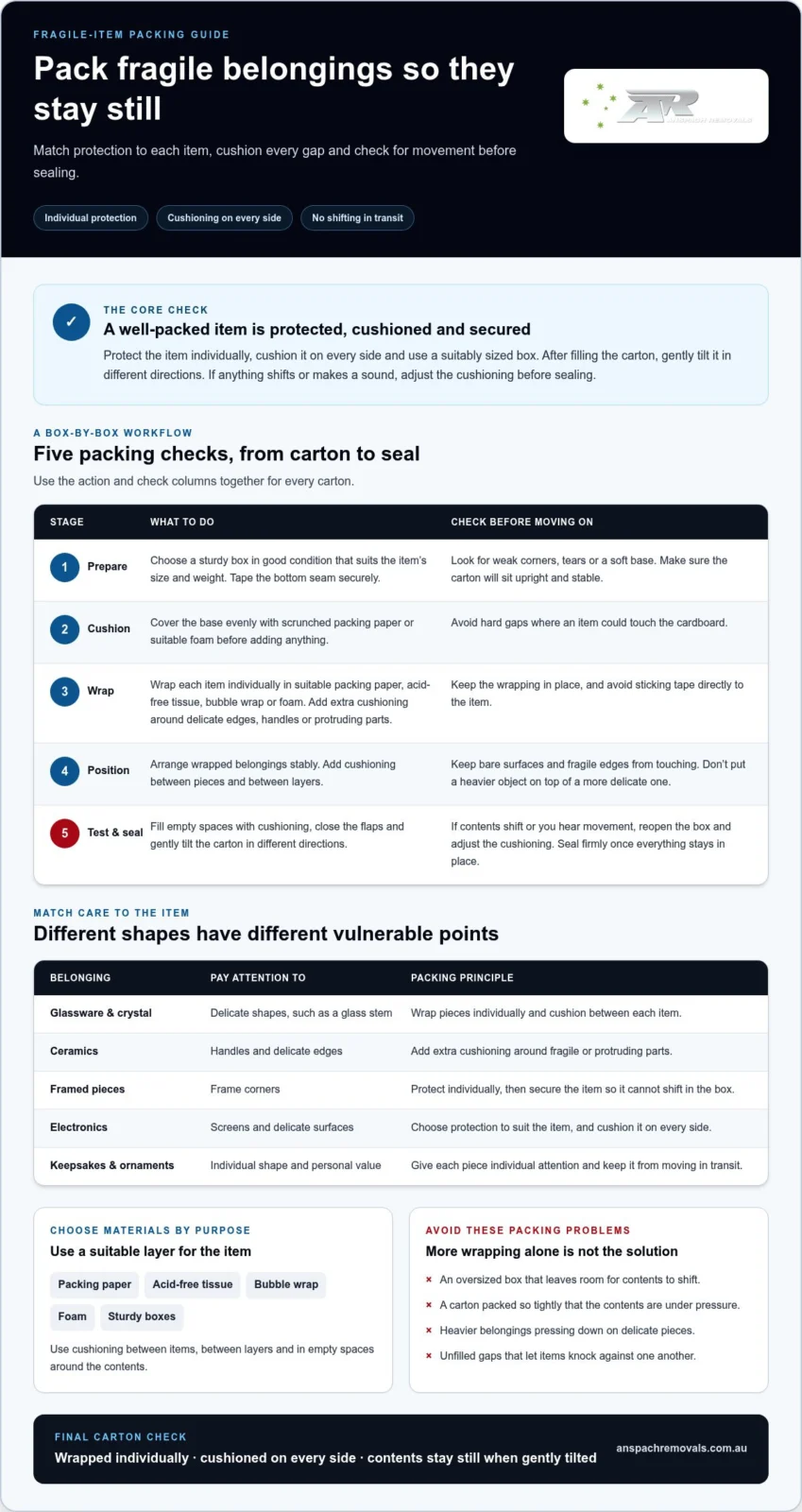
A well-packed fragile item is individually protected, cushioned on every side and secured so it can’t shift inside a suitably sized box. Use this as a final check before sealing a carton.
Which belongings need extra protection?
Walk through each room and note anything breakable, delicate, awkwardly shaped or personally valuable. Everyday tumblers may be replaceable, while a hand-me-down teacup or treasured ornament deserves individual attention, even if it’s small. Include framed photographs, decorative ceramics, lampshades and electronic equipment on your list, not just obvious glassware.
A written inventory helps you estimate how many boxes and protective materials to gather, and makes it easier to keep special items together. Mark sentimental or one-off belongings clearly so they don’t get lost among routine kitchen packing. You can also note which items need to stay upright or be placed in a particular room.
Plan the packing area and gather materials first
Choose a clear, stable work surface with enough room to wrap one item at a time and set finished parcels aside. Keep tape and materials within reach, with space to inspect each object before packing it. A range of Types of Packing Materials can serve different protective roles, so choose materials based on the item rather than using one for everything.
Gather packing paper, bubble wrap, foam, tape and sturdy boxes in appropriate sizes. Anspach Removals supplies packing materials and moving boxes, including specialised boxes for crystal, wine and TVs. Having materials ready before you begin helps you work methodically instead of leaving an unprotected item on the bench while you search for another box.
- Use a clean, stable surface where items can be wrapped without being crowded.
- Keep a variety of box sizes available so you can avoid cartons that are oversized or difficult to handle.
- Set aside enough cushioning to protect each item and fill the space around it.
How to pack fragile items safely, step by step
A careful sequence helps protect fragile belongings from knocks and pressure during a move. The aim isn’t simply to add more wrapping. Each item needs its own protective layer, and the packed box needs enough cushioning to keep everything in place without being overfilled. Follow the same checks for every carton, then adapt the wrapping and positioning to suit what’s inside.
Prepare the box and create a protective base
Start with a sturdy box that’s in good condition and suits the item’s size and weight. A box that’s too large leaves room for contents to shift; one that’s too small can press against the wrapping. Secure the base with packing tape, then add a cushioning layer before putting anything inside. Pack heavy belongings separately so they can’t press down on delicate pieces.
Wrap, position and fill each box carefully
Wrap every item individually in suitable packing paper, acid-free tissue, bubble wrap or foam. Place similar items together, with cushioning between each piece and between layers. Don’t let bare surfaces or fragile edges touch. Once the box is full, fill remaining gaps, close the flaps and check for movement before sealing it firmly.
Use this workflow for each box:
- Prepare the carton. Check for weak corners, tears or a soft base. Tape the bottom seam securely and make sure the box will sit upright and stable.
- Cushion the base. Add a layer of scrunched packing paper or suitable foam. It should cover the base evenly, without hard gaps where an item could make contact with the cardboard.
- Wrap items one by one. Protect each piece before placing it near another. Add extra cushioning around delicate edges, handles or protruding parts, and secure the wrapping so it stays in place. Avoid sticking tape directly to the item.
- Position and separate. Place wrapped belongings in a stable arrangement. Add cushioning between pieces and layers, and avoid putting a heavier object on top of a more delicate one.
- Fill, test and seal. Pack cushioning into empty spaces so the contents can’t slide. Close the flaps and gently tilt the box in different directions. If you feel or hear items shifting, reopen it and add or adjust cushioning before taping it shut.
Core rule: cushion every gap so the contents stay still when the box is gently tilted. Even well-wrapped items can knock against each other if they have room to move. Don’t force the flaps closed or pack the carton so tightly that the contents are under pressure. Anspach Removals offers packing services and supplies to help prepare fragile belongings, with details available from Anspach Removals.
How to pack glassware, crystal, framed items and electronics
Different belongings need different protection. A wine glass has a narrow stem and delicate rim; a framed print has a broad surface that can be scratched or put under pressure; an electronic device may have a screen and loose accessories. The best way to pack fragile items for moving is to let the item’s shape and vulnerable surfaces guide both its wrapping and its box choice.
Glassware, plates and crystal
Wrap each glass separately, adding extra cushioning around the rim and stem. Place glasses upright in the box, with padding between them so they can’t knock together. Don’t nest pieces unless each one is wrapped and separated. Pressure from one glass against another can cause chips or cracks.
Wrap plates individually, placing a protective layer between each one. Pack them vertically, like records, rather than stacking them flat, and cushion the sides so the stack stays steady. Keep the carton manageable rather than filling it until it’s too heavy to lift comfortably.
Crystal may need additional care around fine edges and decorative details. Anspach Removals’ Crystal box is listed at 403 mm × 301 mm × 330 mm. Choose a specialised box that suits the pieces you’re packing, and use cushioning to separate each item and prevent movement.
Framed pieces and small electronics
For framed photographs, mirrors or artwork, protect the face with acid-free tissue or paper before adding an outer cushioning layer. Pay particular attention to the corners, which can take knocks, and avoid placing pressure on the front of the frame. A picture carton can help keep a framed item separate from other belongings. Secure it so the frame can’t slide around inside.
Before packing small electronics, remove loose accessories such as cables and stands, then pack them separately in a clearly identified parcel or compartment. Switch the device off and protect it with suitable padding, especially around screens, buttons and protruding parts. Keep the item stable in its carton without placing other objects on top of it.
Check the fit before closing the box
For each item, check that its wrapping stays in place and that there’s cushioning between it and the carton, as well as between neighbouring pieces. Fill gaps without forcing extra items into the box. A good fit supports the contents while leaving no room for them to rattle or slide.
As a final check, gently move the box from side to side. If you hear or feel movement, reopen it and adjust the cushioning. Keep glassware, crystal, framed items and electronics separate from heavier belongings so they aren’t exposed to unnecessary pressure. These checks help you tailor the packing to the shape and surfaces of each item.
How to label, stack and handle fragile boxes on moving day
Good packing is only part of the job. Clear labels and a simple handover help make sure fragile cartons are recognised, kept upright and placed in the right room at your new home. The best way to pack fragile items for moving includes planning how each box will be handled after it’s sealed, not just protecting what’s inside.
Label boxes so their contents and destination are clear
Write “FRAGILE” in large, legible letters on more than one visible side, along with the destination room, such as “Kitchen” or “Lounge”. A brief contents description, for example “glassware” or “framed photos”, helps distinguish cartons and gives handlers useful context. Add an upright arrow or “THIS WAY UP” where orientation matters, and keep the writing clear of tape and seams.
Labels are instructions, not protection. Don’t rely on a fragile marking to make a poorly packed box safe. Before labelling, check that the box is sound, properly closed and stable when lifted. Use a permanent marker and place the label where it won’t be hidden by another carton or a hand during carrying.
Keep fragile boxes stable during loading and delivery
Tell the removalists which boxes hold delicate or high-value belongings before loading begins. Point out any cartons that must stay upright, and explain where they should go at the new home. This brief handover helps make sure important instructions are clear amid the activity of moving day.
Keep fragile boxes upright and separate from heavy items that could press down on them. They shouldn’t be left loose where they can slide, tip or knock against other cargo. A stable position is more useful than simply placing a carton on top of a load. For practical guidance on the wider handling process, see furniture removalists in Adelaide.
Where possible, have an authorised person present at both pickup and drop-off. They can identify priority cartons, answer questions about orientation and direct boxes to their intended rooms. That’s especially helpful if labels only say “fragile” or if several cartons contain delicate items that need different placement.
- Check that the contents and destination are readable on more than one side.
- Point out upright-orientation instructions and delicate or high-value boxes before loading.
- At delivery, direct cartons to the correct rooms and keep them clear of heavier items.
Anspach Removals provides moving support for Adelaide households and businesses. Learn more through Anspach Removals.
When professional fragile-item packing can make moving easier
Packing every breakable yourself can be a practical choice, but it takes time, materials and a steady process. If preparing delicate belongings is adding pressure to an already busy move, professional packing support can take some of the work off your hands. The best way to pack fragile items for moving depends partly on how much time you have and how confident you feel handling the items that matter most.
Decide which fragile belongings to pack yourself
Self-packing may suit you if you have time to work carefully, can gather suitable materials and have a manageable number of breakables. Everyday items are often easier to prepare than unusual shapes or pieces with delicate edges. Set aside sentimental, valuable or especially awkward belongings early, so you can decide whether you’re comfortable packing them or would prefer professional help.
A useful way to make the decision is to sort fragile belongings into three groups:
- Comfortable to pack: familiar items you have enough time and suitable materials to prepare carefully.
- Needs extra thought: objects with delicate details, unusual shapes or surfaces that are easy to scratch.
- Consider professional support: high-value or sentimental pieces you’d feel more confident having packed by professional packers.
Be realistic about your schedule, too. Packing a few keepsakes at a measured pace is different from preparing a full kitchen alongside the rest of the house. Decide early which items you’ll pack yourself and which you’d like help with. That gives you time to organise boxes and materials without leaving difficult decisions until moving day.
What professional packing support can help with
Anspach Removals provides professional packing services as part of its moving support, along with specialised moving boxes. The company has over 22 years of experience, and its packing materials include packing paper, bubble wrap, foam and acid-free tissue. These materials suit different belongings, so you don’t have to rely on one wrapping method for every object.
Professional packing can be useful when you have many delicate items to prepare, limited time or belongings that feel especially important to you. It can also help when you’re unsure how to organise unusual or fragile pieces for a move. You can pack the items you feel comfortable handling and leave selected belongings to the professional packers. This approach can make the workload more manageable while letting you focus on the items that need your attention.
There’s no single right choice for every household. Consider the number and type of items, the time available and how confident you feel preparing them. If professional packing would make your move feel more manageable, request a moving quote from Anspach Removals.
Make your next move feel more manageable
Fragile belongings often carry more than practical value. A familiar ornament or a treasured piece of glassware can make a new place feel like home, so it’s worth giving them the care and attention they deserve. The best way to pack fragile items for moving is to choose a plan that feels realistic for you, including deciding which pieces you’re happy to prepare and where a helping hand would ease the load.
If you’d like support with your Adelaide move, Anspach Removals provides packing and moving services. Customer feedback has praised the team’s punctuality, careful handling and communication, offering reassurance as you organise the belongings that matter to you.
Request a moving quote from Anspach Removals and take one more task off your moving checklist. Quotes are valid for 30 days, and work must commence within 90 days of quote acceptance. With a clear plan in place, you can look ahead to settling into your new home with greater confidence.
Frequently Asked Questions
Can I use newspaper to wrap fragile items?
Yes, but avoid putting newspaper directly against pale, porous or easily marked surfaces, as print may transfer. For a white ceramic vase or light-coloured ornament, use clean packing paper or acid-free tissue as the first layer, then newspaper as outer cushioning or gap filler. The best way to pack fragile items for moving is to choose materials that protect against knocks and unwanted marks.
Should glasses be packed upright or on their sides?
Pack glasses upright, with the base supported and the opening facing up. This is particularly helpful for stemmed glasses, where the narrow stem can be a vulnerable point. Keep each glass separated from its neighbours, and avoid placing anything inside a glass unless it’s padded so it can’t knock against the bowl. If the carton has dividers, check that each compartment holds a glass securely without squeezing it.
How full should a box of fragile items be?
Fill the box enough that its contents can’t slide, but leave room for cushioning at the top so the flaps close without pressing on the items. A box packed to the brim may place pressure on delicate pieces, while a half-empty carton can let them shift. If the box feels too heavy or awkward to lift, divide the contents between cartons rather than forcing everything into one.
Can I pack fragile items in a suitcase?
You can use a sturdy suitcase for some small, well-wrapped belongings, such as robust ornaments or non-valuable kitchen items, provided they’re cushioned and can’t move around. Avoid placing fragile pieces where the lid, zip or frame could press against them when closed. Suitcases with wheels or a curved shape may not sit securely among moving cartons, so don’t use one for delicate items that need to remain upright.
How do I protect a framed picture when moving?
Protect the picture’s surface first, then add padding around the frame, especially at its corners. Remove or secure loose hanging wire and hooks so they can’t scratch the frame or nearby items. If the picture has glass, keep it separate from heavy belongings and avoid placing pressure on its face. A picture carton can help keep it supported, but check that the frame can’t slide inside.
Should I unpack fragile boxes as soon as I arrive?
Unpack fragile boxes when you have a clear, stable surface and enough time to handle each item carefully. Start with cartons containing items you need straight away, such as everyday glasses or a kettle, and keep the rest upright in a safe spot while you organise the room. Don’t leave fragile boxes beneath other cartons or in a walkway, where they could be bumped or moved accidentally.