
The final bill is often due after the move, once your belongings have been unloaded, but payment terms vary. If you’re asking whether you pay removalists before or after the move, check the terms agreed with your removalist. Any booking deposit and its conditions should also be set out in writing.
It’s understandable to want payment timing clear before moving day, particularly when you’re using a quote to plan your budget. This guide explains when removalists may expect payment and what to clarify about the quote, additional charges and payment schedule. You’ll also learn what to check on the final bill so you can understand the charges and raise questions before paying.
Key Takeaways
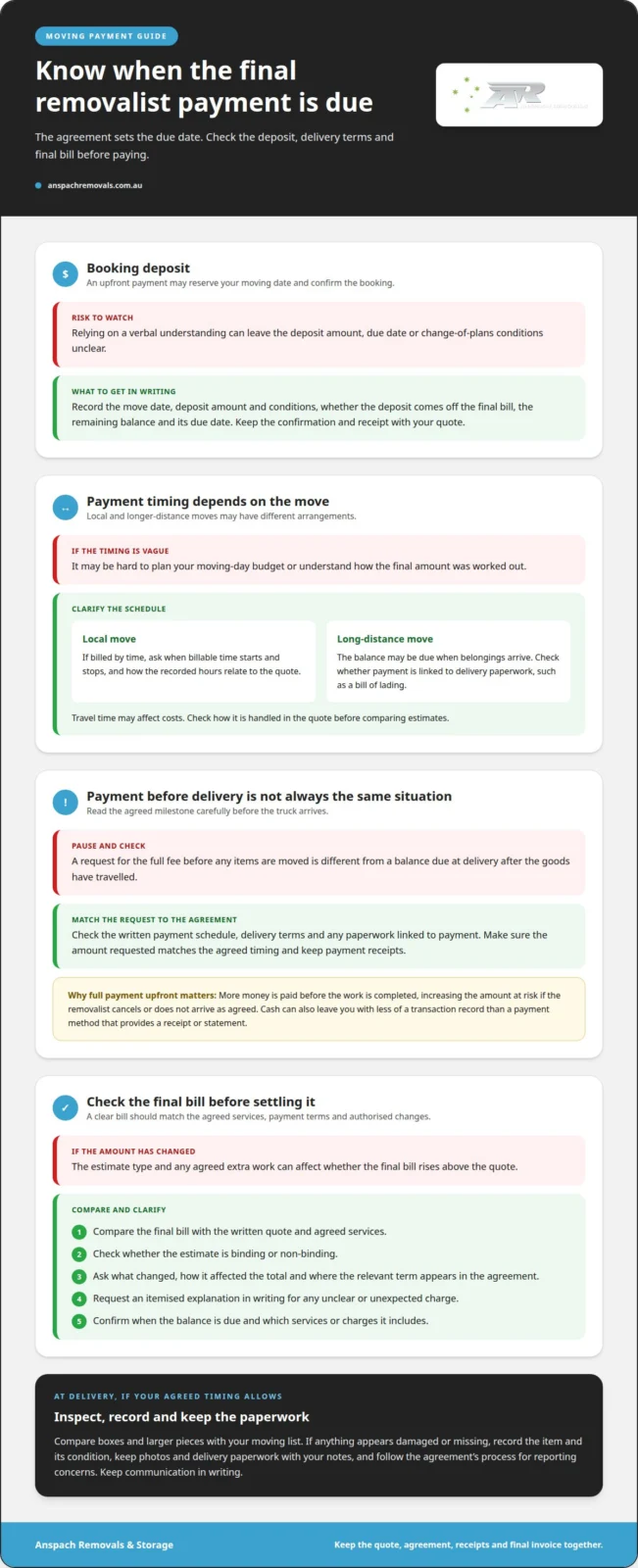
- Get the deposit amount, terms and payment dates recorded in writing before moving day.
- For local moves, clarify when hourly billing starts and stops; for longer moves, understand how delivery and paperwork relate to the final balance.
- Compare the final bill with the estimate and ask for an explanation of any charge you don’t understand.
- A request for full payment before any belongings are moved is a reason to pause and examine the agreement carefully.
When Is the Final Payment Due?
Removalists often expect the final payment after unloading, while a booking deposit may be due earlier. Check the amounts and due dates separately.
Deposits for Reserving a Move
A deposit is an upfront payment that may reserve your moving date and confirm your booking. Its amount and conditions should be recorded in writing, including whether it comes off the final bill and what happens if plans change. Keep the booking confirmation with the agreed deposit and payment dates.
A deposit may be part of the booking, but its amount and conditions depend on the agreement. Before paying, check that the written terms state the move date, deposit, remaining balance and due date. If your plans change, refer to those terms rather than relying on a verbal understanding. Keep the receipt with your quote and booking records.
Payment Timing in Quotes and Contracts
A removalist’s quote or contract should explain when payments are due and what the charges cover. Check the deposit terms, when the final balance is due and whether additional charges may apply. Clear written terms help you plan your payments and compare the final bill with the agreed services.
Ask how the final amount is calculated if the work changes, for example, if additional items need moving. Confirm the accepted payment methods and whether payment is due before or after unloading. For a local move billed by time, ask when billable time starts and stops. These details make the final amount easier to understand.
Cash can leave you with less of a transaction record than a payment method that provides a receipt or statement. Full payment upfront also means more money is paid before the work is completed, increasing the amount at risk if the removalist cancels or doesn’t arrive as agreed. Keep written proof of every payment, including any deposit, and retain the final invoice.
Do You Pay Movers Before or After the Move?
Removalists often collect the final payment after unloading, but the written agreement sets the due date. People commonly ask, “Do you pay removalists before or after the move?” Local and long-distance moves may have different payment arrangements.
Timing for Local and Long-Distance Moves
Payment timing tells you when the removalist expects the balance, so you can plan your moving-day budget. Local moves may be billed by the hour, with the final charge reflecting the time spent on the job. Ask how the recorded hours relate to the quote. For a long-distance move, the balance may be due when belongings arrive at the new address. The agreement may also link payment to delivery paperwork, such as a bill of lading.
Travel time may affect moving costs, so clarify how it is handled in the quote before comparing estimates. The answer to “do you pay removalists before or after the move?” comes from the agreed payment schedule, not just the distance. Keep the quote and payment terms together so you can check when payment is due.
Payment Before Belongings Are Delivered
Payment before delivery means paying some or all of the balance before your belongings are unloaded. Whether payment is due before unloading depends on the agreement with your removalist. Read the delivery terms, including any paperwork linked to payment, so you know what to expect before the truck arrives.
A request for the full fee before any items are moved is different from a balance due at delivery after the goods have travelled. Check the written terms and payment receipts, and make sure the amount requested matches the agreed schedule.
Checking Belongings Before Paying
Checking belongings at delivery means looking for missing items or visible damage. If the agreed payment timing allows, inspect the delivered goods before paying the final balance. Compare boxes and larger pieces with your moving list, and note any issues.
If something appears damaged or missing, record the item and its condition, then raise the issue promptly. Keep photos and delivery paperwork with your notes. Follow the agreement’s process for reporting concerns and keep your communication in writing.
For a local move billed by time, the final account should reflect the recorded work. For a longer route, keep delivery documents with the final account so you can compare the requested payment with the agreed milestone.
Planning a local or longer-distance move? Talk through your moving arrangements and payment timing before booking.
Questions to ask about the final bill
A clear final bill should match the agreed services, payment terms and any authorised changes. Check how the balance was calculated and when it is due.
If a move takes longer or costs more than the quote, the final amount may depend on whether the estimate is binding or non-binding and on any agreed extra work. Ask which term applies and what specific change accounts for the increase.
If an Australian removalist demands unexpected payment, compare the amount with your written quote and agreement. Ask for an itemised explanation in writing, keep the invoice and payment records, and clarify each charge before settling it.
Confirming When the Balance Is Due
Confirming the balance due means checking the payment deadline and which charges it covers. This helps you prepare the right amount and spot any mismatch between the invoice and agreement.
Ask, “When is the final balance due?” and “Which services or charges does it include?” Check whether payment is linked to completion, unloading or delivery paperwork. If the invoice gives a different due point, ask for the written term that explains the difference. Keep the answer with your quote and booking records.
Changes to the Quote and Final Bill
A changed final bill reflects differences between the original estimate and the completed move. The estimate type matters: binding and non-binding estimates affect whether the bill can rise above the quoted amount.
Ask what changed, how it affected the total and where the relevant term appears in your agreement. For example, if the invoice includes an extra service, check whether you agreed to it. Request a revised itemised bill if a charge is unclear, then compare each line with the original quote and written changes.
Use these questions to make the figures easier to follow:
- Which quoted services appear on this invoice?
- What does each additional charge cover?
- Was the change agreed, and where is it recorded?
- How was the final balance calculated?
Keep the quote, written changes, invoice and receipts together. These records help you discuss any disputed or unclear amount using specific details.
Can removalists require full payment before delivering belongings?
Payment before delivery depends on the agreement with your removalist. A balance due when belongings arrive is different from a demand for the full fee before any items are moved. Read the written payment schedule carefully, especially for interstate or other long-distance deliveries.
A request for 100% of the fee before moving any items is a reason for concern. It leaves you paying the entire amount before the removalist has started the agreed work. Ask for the payment terms in writing and make sure they explain what each payment covers, when it falls due, and what happens if arrangements change.
Before accepting a payment request, compare it with your quote, booking confirmation and contract. If the amount or deadline differs, ask for an itemised explanation and the written term supporting it. Keep copies of the response, invoice and any payment receipt. A paper trail helps clarify what was agreed.
- Does the agreement require a deposit, a final balance, or both?
- Is the balance due before unloading, at delivery, or after completion?
- Which services and charges does the requested amount cover?
- Does the invoice match the agreed payment schedule?
For a long-distance move, clarify whether payment is linked to delivery paperwork, such as a bill of lading. If full payment is requested at delivery, compare that timing with your agreement before the truck arrives. A request for payment before unloading is not necessarily improper; the agreed terms determine when it is due.
If the removalist asks for an unexpected payment, pause and compare the request with the written terms. Ask for the reason and supporting invoice details before paying. If you can’t pay at the agreed time, contact the removalist promptly to discuss the issue and record any revised arrangement in writing.
Plan your move with clear payment expectations from the outset. Discuss your move and payment arrangements before booking.
Anspach Removals & Storage
Anspach Removals & Storage helps households and businesses plan moves, with clear payment expectations forming part of a well-organised relocation. Whether you’re arranging a local move, travelling across South Australia, moving interstate or relocating a workplace, discuss the quote, payment schedule and any potential additional charges before booking.
Before moving day, make sure you know when the deposit is due, when the balance must be paid and what the agreed amount covers. Keep the written quote and payment terms together so you can refer to them if questions arise about the final bill. Discussing these details at the outset can help you prepare for each payment and focus on the move.
Contact Anspach Removals & Storage to discuss your upcoming move and payment arrangements.
Plan your move with clarity
Understanding whether you pay removalists before or after the move helps you plan your payment conversation. Include payment timing in the wider relocation plan, alongside access to both properties, delivery arrangements and the practical demands of moving day. A little preparation can leave you with more time to settle into your new place.
For a local, country or interstate relocation, Anspach Removals & Storage can help you plan the move and discuss the arrangements that matter to you. Share what you’re organising and what you’d like to understand before moving day, then decide on a clear next step together.
Contact Anspach Removals & Storage to talk through your move. With a clear plan in place, you can look ahead to the next chapter with confidence.
Frequently Asked Questions
Do You Pay Movers And Moving Companies Before Or After?
Removalists often collect the final balance after the move is complete and belongings are unloaded, but the booking terms set the exact timing. Any deposit is a separate earlier payment. For example, a local move may be billed after unloading based on recorded hours, while a long-distance balance may be due at delivery. Read the payment schedule before moving day.
Is It Normal to Pay Movers in Advance?
Paying a deposit in advance to reserve a moving date may be part of the booking; paying the entire fee before any items are moved is different. Before transferring money, check that the booking confirmation states what the deposit covers and how cancellations or date changes are handled. Keep the receipt and written terms together rather than relying on a phone conversation.
Do Australian removalists require a deposit or payment upfront?
Removalists may ask for a deposit or another upfront payment, but payment policies vary. The booking payment, its due date and its conditions should be clear in writing. Check whether it comes off the final balance and what happens if the move date changes. A deposit does not automatically mean the remaining bill is due immediately.
When is the balance due for a removalist in Australia?
In Australia, the final balance is commonly due after the move is complete and belongings have been unloaded. For a long-distance move, it’s typically due when items are delivered to the new address; paperwork may form part of the agreed payment process. Check whether the balance includes extra services or approved changes, so the amount due aligns with your written terms.
Do removalists charge before loading, after delivery, or after unloading?
Removalists often collect final payment after unloading, although the agreement may set another due point. For example, a long-distance balance may be due when belongings are delivered, while a local move may use an hourly total calculated at completion. Payment before unloading depends on the agreed terms. Check the booking for the due point, not just the truck’s arrival time.
How much deposit do removalists typically ask for in Australia?
A deposit may be used to reserve a moving date, but its amount varies between removalists and bookings. Check the written terms for the deposit amount, whether it reduces the final balance and what happens if your plans change. A percentage quoted for a move in another country may not apply to an Australian booking, so follow the terms for your own move.