
What if the most important part of a stair move happens before anyone lifts a box? When you’re moving from a house with stairs, a narrow landing, tight turn or bulky sofa can raise immediate questions: will it fit, and can it be moved without damaging the item or property? It’s understandable to worry about people getting hurt or walls and banisters being marked. A careful access check can make the day more manageable.
This guide explains how to check stair access and measure tricky turns, prepare furniture and pathways, and decide when heavy or awkward items are better left to professional removalists. Start by assessing the full route, then make a plan for each item. You’ll be better placed to decide what you can handle yourself and where experienced help could make the move easier to coordinate.
Key Takeaways
- When moving from a house with stairs, assess the full route, including doorways and landings, before deciding how to move bulky furniture.
- Use a clear preparation sequence: declutter, measure, ready belongings, protect pathways and agree who is responsible for each task.
- Choose between DIY, partial help and a professional move based on the item size, stair layout, available helpers and your confidence.
- Keep moving day organised with a chronological checklist and, where practical, one person coordinating access and questions.
- When discussing a stair-heavy move with removalists, share details about stairs, tight turns, access points and large or awkward items.
Moving From a House With Stairs: Start With an Access Check
Stairs add another planning step, but they don’t make a move impossible. Check the whole route before moving day rather than judging whether an item looks small enough. Stair width, ceiling clearance, landings, turns and doorways can all affect whether furniture will pass. An item may be light but awkward to turn, or fit one doorway and get stuck at the landing.
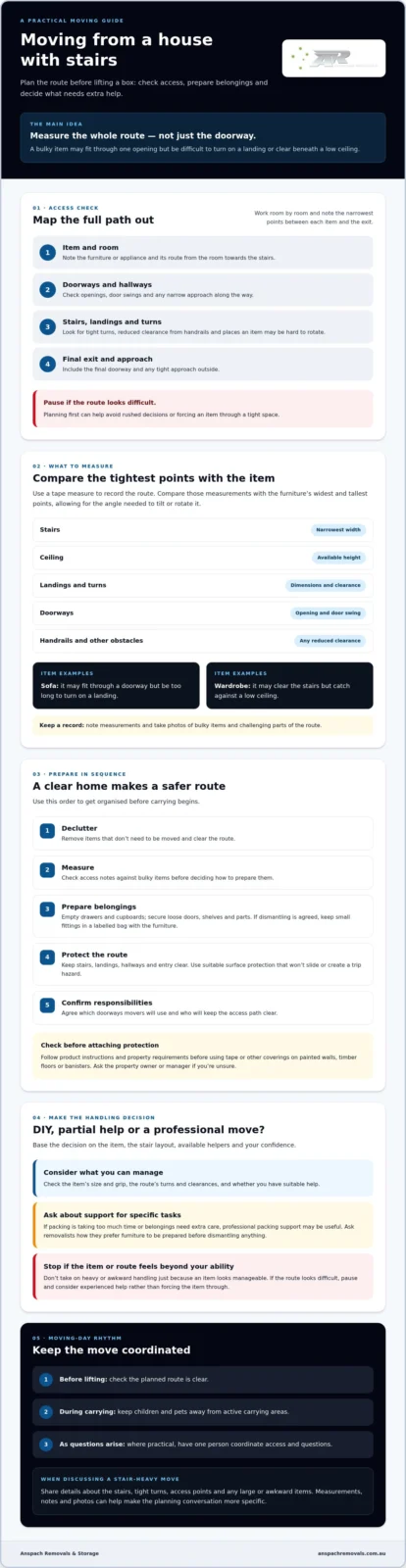
A stair-access check means measuring the route before moving bulky items. Work room by room, noting the narrowest points between each item and the exit. A sofa might fit through a doorway but be too long to turn on a landing. A wardrobe might clear the stairs but catch against a low ceiling. If the route looks difficult, pause to plan instead of forcing the item through.
What should you measure before moving day?
Use a tape measure to record the narrowest stair width, ceiling height, landing dimensions, doorway openings and tight turns. Compare these with the furniture’s widest and tallest points, allowing for the angle needed to tilt or rotate it. Check whether open doors or handrails reduce clearance, and whether removable parts change the measurements. If you’re unsure about handling a heavy item, review these ergonomic guidelines for moving as part of your preparation.
- Bedroom: note the route from the bed and wardrobe to the stairs, including door swings.
- Living area: compare sofa and large cabinet dimensions with turns and landings.
- Kitchen and laundry: record appliance dimensions and check narrow doorways or stair access.
- Entry and exit: include the final doorway and any tight approach outside.
Which items need an early access decision?
Flag mattresses, couches, wardrobes, appliances and anything unusually long, wide or awkward to grip. Measure each item at its widest and tallest points, then photograph the item and the challenging parts of the route. These details make planning conversations more specific. Note which items may need dismantling, a different carrying position or another moving plan. Check the manufacturer’s guidance before taking furniture or appliances apart.
Keep your measurements, notes and photos together so you can refer to them when deciding what to move yourself and what may need professional help. Checking access early gives you time to adjust the plan instead of making rushed decisions on moving day.
How to Prepare Your Home and Belongings for Stair Moving
A clear sequence makes a stair move easier to coordinate: declutter, confirm measurements, prepare belongings, protect the route, then agree who is responsible for each task. Clear and check the route before lifting starts. Boxes, shoes or loose items on a hallway or landing can obstruct people, particularly when someone carrying a bulky item has a limited view of the floor.
How do you prepare stairs and walkways?
Walk the planned route and remove anything that could shift, snag or trip someone. Keep the stairs, landings, hallways and entry clear. Arrange for children and pets to stay away from active carrying areas on moving day. Agree which doorways movers will use, and ask other household members to keep that path clear.
Protect vulnerable surfaces where appropriate, but avoid coverings that could slide or create a trip hazard. Check product instructions and any property requirements before attaching tape or other protection to painted walls, timber floors or banisters. If you’re unsure what’s suitable, ask the property owner or manager.
How should you prepare bulky furniture?
Empty drawers and cupboards so contents don’t shift, then secure loose doors, shelves and parts for transport. If an item is dismantled, put small fittings in a labelled bag and keep them with the relevant furniture. Ask your removalists how they prefer items to be prepared before taking anything apart. Some pieces may be easier to handle intact, while others may need dismantling to clear a tight turn.
Don’t take on heavy or awkward handling just because an item looks manageable. Stanford University’s guidance on proper lifting techniques can help you consider safer ways to handle loads, but stop if the item or route feels beyond your ability. If packing is taking too much time or belongings need extra care, professional packing support may be useful.
- Declutter: remove items that don’t need to be moved and keep the route clear.
- Measure: check your access notes against bulky items before deciding how to prepare them.
- Prepare: empty furniture, secure loose parts and label hardware if dismantling is agreed.
- Protect: use suitable surface coverings that won’t shift or damage the property.
- Confirm: assign someone to manage access and keep children and pets clear of the carrying route.
For moving from a house with stairs, preparation is also the time to confirm expectations rather than make assumptions. If you’re arranging a move in Adelaide, discuss your access details and preparation needs with Adelaide removalists before moving day.
Should You Move Furniture Yourself or Hire Removalists for Stairs?
There isn’t one right answer for moving from a house with stairs. A few manageable boxes are different from a heavy appliance or a couch that needs to turn on a narrow landing. Base your decision on the item, the route, the people available to help and everyone’s confidence. Extra hands alone don’t necessarily make a difficult lift manageable.
The CDC’s safe material handling guidelines highlight the importance of considering hazards in the work area. Use this as a prompt to assess the stairway and obstacles, while recognising that a personal assessment can’t replace professional advice for a difficult lift.
| Option | May suit | Consider carefully |
|---|---|---|
| DIY | Smaller, manageable belongings and a straightforward route, with capable helpers available. | Whether everyone can grip and control the load throughout the stairs and turns. |
| Partial assistance | A move where you can handle straightforward belongings but want help with selected bulky or awkward items. | Confirm exactly which items and tasks the removalists will take on, and share access details in advance. |
| Professional household move | A larger move, complex stair access, or several heavy, fragile or awkward items. | Discuss the route, item dimensions and any concerns so the moving plan can be considered before the day. |
When might a DIY stair move be manageable?
DIY may suit items that the people involved can lift and control comfortably, provided the route is clear and there’s enough help. Consider more than weight: an awkward shape, poor grip or limited space to pause can make an item difficult to manage on stairs. If the load shifts, your grip feels insecure or you can’t see the route, stop and reassess. Don’t push on just to keep to schedule.
When should you ask professional removalists for help?
Consider professional help for bulky furniture, fragile belongings, appliances or stair access with tight turns and limited landing space. Removalists can discuss how items may be handled and how movement through the route could be coordinated. Share measurements, photographs and any dismantling concerns when discussing the move, then confirm what assistance is included. Adelaide readers can find more information about local removalists in Adelaide.
Use a case-by-case test: if an item, route or available help leaves you uncertain, arrange a professional assessment before attempting the lift. Some households may choose professional support for the whole move; others may only need help with the most challenging items.
Moving From a House With Stairs: A Moving-Day Checklist
Moving day can feel busy before the first item leaves the house. Where practical, ask one person to coordinate access and answer questions. The priorities are clear access, clear communication and controlled handling. If the route becomes blocked or circumstances change, pause and agree on what to do next before carrying resumes.
- On arrival: Meet your helpers or removalists and walk through the planned route together. Point out narrow turns, low-clearance spots and areas that need extra care.
- Before carrying starts: Confirm which belongings need special handling and whether any item has an agreed alternative route or preparation plan. Keep essentials, valuables and anything not being moved away from the work area.
- Set the flow: Make sure the stairs and landings are clear. Tell people which route is being used, and pause movement when someone needs to pass rather than squeezing by on the stairs.
- As items move: Work methodically and communicate clearly between people carrying and coordinating. Don’t leave boxes or furniture on stairs or landings, even briefly. If access is blocked, an item shifts or conditions change, stop and tell the coordinator.
- As rooms empty: Check behind larger furniture and inside cupboards, wardrobes and storage areas once items have been removed. This can reveal belongings that were hidden from view.
- Before leaving: Do a final room-by-room check, including cupboards and less-used spaces. Confirm the planned items have been moved and nothing has been left in the stairway or other shared access areas.
Keep the coordinator easy to find, and make sure everyone knows who is answering questions or passing on changes. A clear point of contact helps avoid conflicting instructions while people carry awkward loads. If someone needs to stop, give them room to do so safely.
For moving from a house with stairs, a checklist is useful only when it reflects the actual access and agreed moving plan. If you’re arranging a move in Adelaide and want professional help with the household move, discuss your stair access with Anspach Removals.
Get Help With a Stair-Heavy Move in Adelaide
A stair-heavy move is easier to plan when you work through decisions in order: assess access, prepare the route, choose a level of help that suits the items, then confirm the plan. If stairs, tight turns or heavy belongings make you hesitate, share those details with removalists early. A clear description helps you discuss suitable support before moving day.
What should you tell a removalist when requesting help?
Describe the complete route, not just the number of stairs. Mention stair flights, narrow turns, landing sizes, doorway clearance and entry access at both properties. Include known restrictions, such as limited space to park or a shared accessway that needs to stay clear. Have your measurements ready if you’ve taken them.
Next, list the items that may need special attention. A large couch, wardrobe, mattress or fragile piece may need a different plan from boxes and smaller belongings. Share approximate dimensions and, where useful, photographs of the item and difficult sections of the route. Ask how removalists will assess access and handle the items, then confirm any agreed preparation or dismantling before the move.
When could packing or storage support help?
Preparing a household while managing stairs can be demanding. Packing assistance may be useful if you’re short on time or have belongings that need extra care. Storage is another option to discuss if your move dates or access arrangements don’t line up, rather than trying to manage every item at once.
Anspach Removals & Storage is a South Australian-owned family business founded in 2002. It provides local, country and interstate removals, packing assistance and storage. For related advice on planning the movement of larger belongings, read this guide to furniture removalists in Adelaide.
Before confirming your arrangements, make sure the access details, items needing special handling and agreed responsibilities are understood. If you’re planning a household move in Adelaide, discuss your stair access and moving needs with Anspach Removals & Storage.
Make Your Stair Move Easier to Manage
Planning can take much of the uncertainty out of moving from a house with stairs. Check the full access route before moving day, prepare clear pathways and decide which items you can manage confidently and where professional help makes sense. Keep communication clear as the move progresses so everyone can follow the plan and respond if access changes.
If stairs, tight turns or bulky belongings are making the next steps feel daunting, you don’t have to work it all out alone. Anspach Removals & Storage is a South Australian-owned and operated family business, founded in 2002, providing local removals, packing and storage services. Share your access details and moving needs to start a practical conversation about your household move.
Talk with Anspach about planning your move and take the next step with a clearer plan.
Frequently Asked Questions
Is it safe to move furniture down stairs yourself?
Moving furniture down stairs yourself may be manageable only if the item, route and people involved make it controllable. A bulky sofa or appliance can be difficult to grip and manoeuvre on a landing. Don’t attempt a load you can’t control, block your view or rush. If the item is awkward, heavy or the stairway is tight, pause and ask professional removalists for help.
How do I know whether my furniture will fit down the stairs?
Measure the furniture at its widest and tallest points, then compare those dimensions with the stair width, landings, turns, ceiling clearance and doorways along the full route. Consider whether removable parts, such as legs or shelves, can be safely taken off to improve clearance. If you’re still uncertain, share the measurements or photos of the item and access route with removalists before moving day.
Can removalists move heavy furniture down stairs?
Removalists can assess the item and access route, then advise on a suitable handling plan. That doesn’t mean every item can be carried down every staircase. Tight turns, limited clearance or the item’s shape may affect what’s practical. For an Adelaide move, tell the removalists about restricted access, fragile surfaces, narrow landings and oversized furniture when arranging the move so these details can be considered in advance.
What should I do if a couch will not fit down the stairs?
Stop and don’t force the couch through, as doing so could injure someone or damage the furniture and property. Recheck the couch and stair measurements, including the landing and doorway, and see whether detachable parts can be safely removed. Ask removalists to assess the route and discuss alternatives. Don’t attempt to lift the couch through a window or over a balcony unless a qualified provider confirms a suitable, safe plan.
Should I dismantle furniture before moving it down stairs?
Dismantling may help some furniture fit through a tight turn or make it easier to handle, but not every piece is designed to come apart. Check the manufacturer’s guidance or ask your removalist before starting, particularly for complex or valuable items. If dismantling is appropriate, keep screws and fittings together in a labelled bag and group them with the relevant parts. Avoid cutting, forcing or making unsafe alterations.
How can I protect walls and stairs during a move?
Clear the route first by removing loose rugs, shoes, boxes and other trip hazards. Before moving starts, point out vulnerable walls, corners, floors and banisters so everyone can take care around them. Choose surface protection suited to the property and apply it according to the product instructions, as unsuitable coverings or tape may cause damage or create slipping hazards. Agree with your removalist on protection and access arrangements beforehand.